
Container Gardens
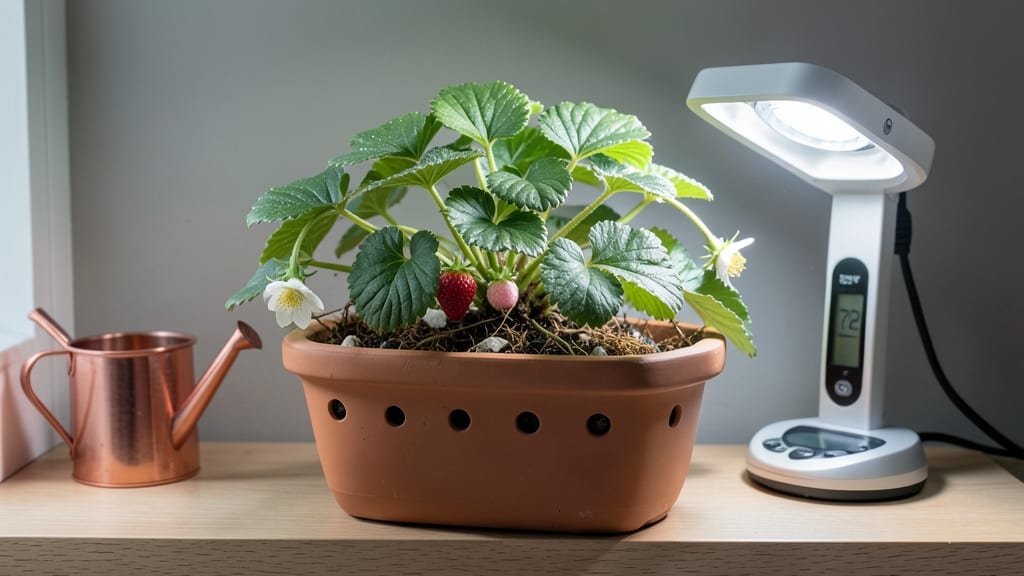
Strawberries grown indoors aren't just possible—they're shockingly lush with the right compact varieties and LED light setup. 🌱 I've grown Alpine strawberries on my kitchen windowsill for three winters straight, and the sweet, tiny berries rival store-bought in flavor.
The secret isn't expensive gear but matching their needs to what they'd want outdoors—just in miniature. You'll need daylight LED grow lights (or a south-facing window), 4-6 inch pots with drainage, and a well-draining soil mix.
Temperature stays between 60-75°F, and humidity should hover around 50%—too dry and the leaves crisp, too damp and rot sets in. Varieties like 'Mignonette' or 'Seascape' stay small but produce reliably, even without bees.
By late spring, you'll be harvesting pint-sized berries every 2-3 weeks, perfect for snacks or desserts. The plants stay productive for 2-3 years with proper care, and the sweet-tart flavor makes the effort worth it. Pollination happens naturally with gentle shaking, and pests rarely find their way indoors.
This method works for apartments, offices, or even greenhouses. The only challenge is space—just rotate plants weekly for even growth. Here's how to set it up right the first time!
📚 In This Guide
- What you need
- Instructions
- Tips and common mistakes
- Wrapping up and next steps
What you need
- ● Strawberry Plants: 3–5 compact or alpine varieties (e.g., 'Alpine,' 'Mignonette,' or 'Seascape'—these thrive in small spaces!).
- ● Ensure they’re organic or pesticide-free for indoor growing.
- ● Containers: 3–5 hanging baskets (6–8 inches deep) or shallow pots with drainage holes.
- ○ Fabric grow bags (10–12 inches deep) for better aeration (optional but recommended!).
- ● Growing Medium: 1–2 bags of well-draining potting mix (avoid garden soil—it compacts!).
- ● Perlite or vermiculite (1 part per 4 parts soil) to improve drainage.
- ● LED Grow Lights: 1 full-spectrum LED grow light (15–25W) with adjustable height (12–18 inches above plants).
- ○ Timer (optional but helpful) to mimic 12–14 hours of light/day.
- ● Watering Supplies: Spray bottle or small watering can with a rose nozzle (for gentle watering).
- ○ Humidity tray (optional—place pebbles + water under pots to boost moisture).
- ● Fertilizer: Balanced liquid fertilizer (5-5-5 or 10-10-10) or slow-release granules.
- ○ Fish emulsion (optional) for a natural nutrient boost.
- ● Support Structures: Small stakes or cages to prop up runners (if your variety spreads).
- ● Thermometer/Hygrometer: To monitor temperature (60–75°F) and humidity (50–70%).
- ● Self-Watering System: Wick-based or drip irrigation kits for consistent moisture.
- ● Reflective Surface: Aluminum foil or a white tray under lights to maximize efficiency.
- ● Pruning Shears: For trimming dead leaves or runners to encourage fruit production.
Step-by-step guide to growing strawberries indoors
Here's how to grow sweet, compact strawberries indoors using the right varieties and LED lighting.
🌱 Step 1: Select the Right Strawberry Varieties
Not all strawberries thrive indoors—choose everbearing or day-neutral varieties bred for containers, like 'Alpine', 'Mignonette', or 'Seascape'. These stay compact (under 12 inches tall) and produce fruit without needing long daylight hours. Avoid June-bearing types; they require winter dormancy and won’t rebloom indoors.
Check the plant tags for "container-friendly" labels. I always opt for bare-root plants in early spring—they establish roots faster than potted starts. Soak the roots in lukewarm water for 30 minutes before planting to jumpstart growth. If you’re using potted plants, repot them immediately to refresh the soil.
🪴 Step 2: Set Up Containers and Drainage
Use 6-8 inch deep pots with drainage holes—strawberries hate soggy roots. I prefer fabric grow bags because they allow excess moisture to evaporate through the sides while still holding enough soil to support the plant. Fill each pot with a well-draining potting mix (never garden soil—it compacts and suffocates roots).
Add a 1-inch layer of perlite or pumice at the bottom for extra drainage. This prevents root rot, which is the #1 killer of indoor strawberries. Mix in a slow-release fertilizer (like 5-10-5) into the top 2 inches of soil—this ensures steady nutrition without burning tender roots. Leave 1 inch of space at the pot’s rim for watering.
☀️ Step 3: Provide LED Light and Temperature Control
Strawberries need 12-16 hours of light daily—a standard household window won’t cut it. Use a full-spectrum LED grow light positioned 6-12 inches above the plants, adjusted as they grow. I run mine on a 14-hour timer to mimic summer daylight. Watch for leggy growth (long, thin stems with sparse leaves)—this means the light is too far away.
Keep temperatures between 60-75°F during the day and 50-60°F at night. A small space heater under the pots (on low) helps maintain warmth if your home runs cool. Avoid drafts—strawberries wilt dramatically when exposed to sudden temperature swings. Humidity matters too; if leaves crisp at the edges, place a humidifier nearby or mist the plants lightly in the morning.
💧 Step 4: Water and Fertilize for Maximum Fruit
Water when the top inch of soil feels dry—strawberries need consistent moisture but despise soggy conditions. Use room-temperature water (cold water shocks roots) and water at the base of the plant to avoid fungal diseases on leaves. I use a self-watering pot for my indoor plants to maintain even moisture without overwatering.
Fertilize every 4-6 weeks with a balanced liquid fertilizer (like 10-10-10) diluted to half strength. Stop fertilizing once flowers appear—too much nitrogen encourages leafy growth at the expense of fruit. Instead, switch to a low-nitrogen, high-phosphorus fertilizer (like 5-10-5) to boost flowering and fruiting. Prune any yellow or diseased leaves immediately to redirect energy to the plant’s core.
✂️ Step 5: Harvest and Encourage Reblooming
Harvest berries when they’re fully red and slightly soft to the touch—this usually takes 4-6 weeks after flowering. Use clean scissors to snip the stem just above the berry; this prevents damage to the plant. I always harvest in the morning when berries are coolest and juiciest. Store them in the fridge for up to 3 days—indoor-grown strawberries are delicate and don’t store as long as outdoor varieties.
After harvesting, trim back any spent flower stalks to encourage new blooms. Pinch off the first few flowers that appear if your plant looks stressed—this lets the roots establish first. With proper care, your indoor strawberries can produce two to three harvests per year. Just keep the light consistent, maintain steady moisture, and avoid overcrowding—your plants will reward you with sweet, homegrown fruit all year.
Tips & tricks for growing indoor strawberries
Here's what I learned after growing strawberries indoors for years—these tricks make all the difference between struggling plants and a thriving harvest.
Variety Selection: When choosing between 'Alpine', 'Mignonette', or 'Seascape', I always pick 'Alpine' for its exceptional cold tolerance and compact size—perfect for small spaces. These varieties produce fruit continuously, so you'll get multiple harvests instead of one big season. The key is to avoid June-bearing types—they won't rebloom indoors and require winter dormancy you can't replicate inside.
Lighting Strategy: The 14-hour LED light schedule is non-negotiable, but I've found that adjusting the height matters more than most people realize. Start with your light 6 inches above the plants, then raise it gradually as they grow—this prevents leggy stems. I also recommend using a timer with a gradual fade feature; sudden light changes can stress the plants. If you notice leaves stretching toward the light, it's time to move it up immediately.
Temperature Management: Maintaining that 60-75°F range during the day is crucial, but I've discovered a simple trick: place your plants on a ceramic tile or heat mat set to low. This creates a microclimate that stays warmer than the surrounding air, especially helpful in cooler homes. At night, I keep my thermostat at 60°F and avoid placing plants near windows or vents where drafts can cause temperature swings that lead to wilting.
Watering Wisdom: The top-inch soil check is perfect, but I've learned to water at the same time every morning to establish a routine. Use a moisture meter for the first few weeks to get a feel for your specific setup. I also recommend using a spray bottle to mist the leaves occasionally—this mimics natural dew and prevents fungal issues. Just avoid getting water on the flowers, as this can cause rot before the berries even form.
Pro Tips for Can Strawberries Be Grown Indoors
- Here's what I learned after growing strawberries indoors for years—these tricks make all the difference between struggling plants and a thriving harvest.
- Variety Selection: When choosing between 'Alpine', 'Mignonette', or 'Seascape', I always pick 'Alpine' for its exceptional cold tolerance and compact size—perfect for small spaces.
- Lighting Strategy: The 14-hour LED light schedule is non-negotiable, but I've found that adjusting the height matters more than most people realize.
Frequently asked questions
Got questions about growing strawberries indoors? You're not alone! Here are some of the most common concerns—plus straightforward answers to help you get started with confidence.
What are the best strawberry varieties for indoor growing?
Look for everbearing or day-neutral varieties like 'Albion,' 'Seascape,' or 'Ozark Beauty.' These compact types thrive in containers and produce fruit reliably under LED lights. Avoid large June-bearing varieties—they need more space and sunlight than indoor setups can provide.
How long does it take for indoor strawberries to bear fruit?
With proper care, you can expect your first harvest in 3–6 months after planting. LED-grown strawberries may take slightly longer than outdoor varieties, but consistent light (12–16 hours/day) and warmth (65–75°F) speed up the process. Patience pays off—smaller batches mean fresher, sweeter berries!
Do I need special LED grow lights for strawberries?
Yes! Strawberries need full-spectrum LEDs (red + blue wavelengths) to mimic sunlight. A minimum of 12–14 hours of light daily is ideal. Budget-friendly options like Spectrum LED grow bulbs work well, but avoid cheap "white" LEDs—they won’t support fruiting.
How do I prevent pests or mold in an indoor strawberry setup?
Indoor gardens are safer, but watch for spider mites or fungus gnats. Use neem oil or insecticidal soap for pests, and ensure good airflow (a small fan helps!). Overwatering causes mold—let the top inch of soil dry between waterings. A humidity tray (with pebbles) keeps air moist without soggy soil.
Can I grow strawberries indoors year-round, or do they need dormancy?
Indoor strawberries don’t need dormancy like outdoor plants, but they’ll produce best with 12+ hours of light daily and consistent warmth. If growth slows, it’s time to adjust light or check for nutrient deficiencies. For continuous harvests, rotate plants every few months to maximize yield.
Wrapping up and next steps
Growing strawberries indoors isn’t just possible—it’s a rewarding way to enjoy fresh, homegrown fruit year-round! With the right compact varieties, LED lighting, and a little care, you can turn your kitchen or balcony into a thriving strawberry patch.
Whether you’re a beginner or a seasoned gardener, this method saves space and brings the joy of gardening indoors.
Ready to get started? Pick your favorite variety, gather your supplies, and begin your indoor strawberry adventure today! 🌱✨