
Container Gardens
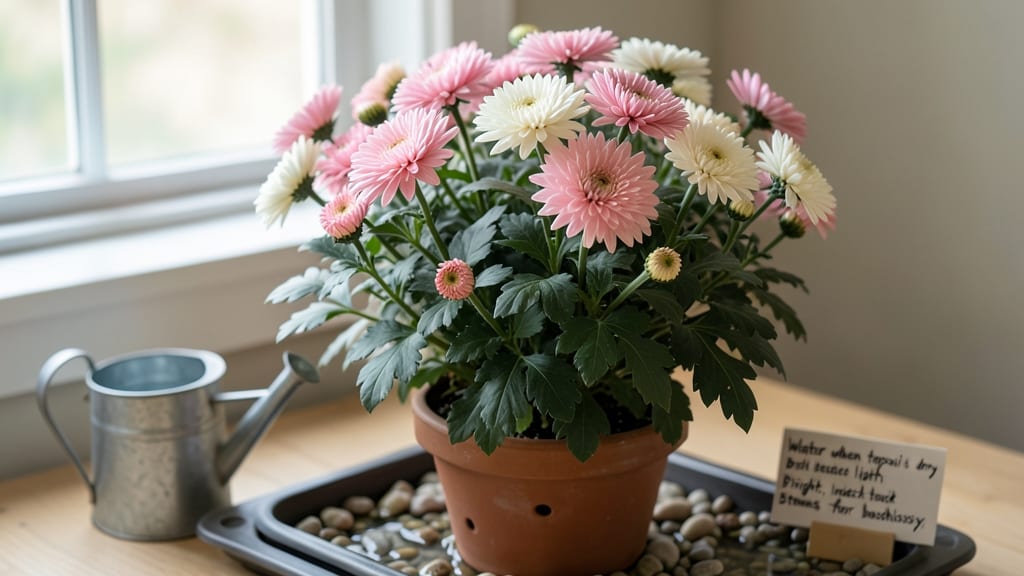
Chrysanthemum indoor plant care transforms winter windowsills into bursts of color—if you get the light, water, and temperature just right. 🌸 I’ve kept mine blooming for years by mimicking their outdoor habits indoors, and the secret starts with 6+ hours of bright light daily (no dim corners). The biggest mistake? Overwatering or letting them dry out completely. Stick your finger in the soil—water when the top 1-2 inches feel dry, and always use room-temperature water. A well-draining potting mix with perlite keeps roots happy, and a humidifier nearby prevents those crispy brown edges. By late summer, pinch back new growth to encourage bushier blooms. When buds form, reduce fertilizer to help them open fully. With the right care, you’ll enjoy months of color—even in deep winter—when most houseplants are just surviving. Works for variety of mums, from compact florist types to trailing varieties. Here’s how to keep yours thriving all season.
📚 In This Guide
- What you need
- Instructions
- Tips and common mistakes
- Wrapping up and next steps
What you need
- ● Chrysanthemum plant: Choose a healthy mums variety (e.g., Chrysanthemum morifolium) from a nursery or garden center. Opt for a well-rooted, blooming plant for best results.
- ● Container: A pot with drainage holes (6–12 inches in diameter, depending on plant size). Terracotta or ceramic pots work well for airflow.
- ● Well-draining potting mix: A high-quality soilless mix (e.g., 60% peat moss, 20% perlite, 20% compost) or a cactus/succulent blend to prevent soggy roots.
- ● Drainage tray or saucer: To catch excess water and protect surfaces.
- ● Watering can with a narrow spout: For precise hydration (avoid overhead watering).
- ● Balanced liquid fertilizer: A 10-10-10 or 20-20-20 formula, diluted to half-strength for feeding.
- ● Pruning shears or sharp scissors: Sterilized and sharp for trimming dead blooms or leggy stems.
- ● Grow lights: LED or fluorescent lights (12–16 hours/day) if natural light is insufficient.
- ● Humidity tray: A shallow tray with pebbles and water to boost moisture levels in dry climates.
- ● Plant food spikes: Slow-release granules for convenience (follow package instructions).
- ● Support stakes or cages: For tall varieties to prevent flopping (e.g., bamboo stakes or decorative cages).
- ● pH testing kit: To monitor soil acidity (ideal range: 6.0–7.0).
Step-by-step instructions for caring for indoor chrysanthemums
These light-loving beauties reward patience with vibrant blooms—here's how to keep them thriving indoors.
🌿 Step 1: Position for Maximum Light Exposure
Chrysanthemums demand bright, indirect light—at least 6 hours daily. Place them near a south- or east-facing window where they receive gentle morning sun. Avoid harsh afternoon rays, which can scorch delicate leaves. You'll notice leaves turning pale or stretching toward the light? That's a sign to move them closer to the window or supplement with a grow light for 12-14 hours daily.
Rotate the pot quarter-turn weekly so all sides receive even light. This prevents lopsided growth and ensures blooms develop symmetrically. If your space lacks natural light, a full-spectrum LED grow light positioned 12-18 inches above the plant mimics sunlight perfectly. Watch for buds forming—this confirms your light strategy is working.
💧 Step 2: Master the Watering Balance
Water when the top 1-2 inches of soil feel dry to the touch. Chrysanthemums hate soggy roots, which leads to root rot and dropped buds. Stick your finger into the soil—if it's damp past your first knuckle, wait another day. Use room-temperature water to avoid shocking the roots, and water until it drains freely from the bottom. Empty the saucer afterward to prevent the plant from sitting in excess moisture.
During bloom time, increase humidity slightly by placing the pot on a tray of pebbles and water (ensure the pot isn't sitting directly in water). You'll see buds last longer and leaves stay crisp rather than crisping at the edges. Reduce watering slightly in winter when growth slows—overwatering is the #1 killer of indoor chrysanthemums.
✂️ Step 3: Prune and Encourage Bushy Growth
Pinch back the top sets of leaves when the plant reaches 6-8 inches tall. This triggers branching and a fuller, bushier shape. Use clean, sharp scissors to snip just above a leaf node, leaving 2-3 sets of leaves on each stem. Repeat this process every 4-6 weeks during the growing season to maintain shape and encourage more blooms. You'll notice new side shoots forming within 2-3 weeks—this is your reward for pruning.
Deadhead spent blooms regularly by cutting the stem back to the nearest leaf node. This redirects the plant's energy into producing fresh flowers instead of seeding. For a more dramatic display, you can also trim back leggy stems by one-third in early spring. Just avoid heavy pruning in fall, as the plant needs time to prepare for dormancy.
☀️ Step 4: Adjust Care for Seasonal Needs
In spring and summer, feed your chrysanthemum with a balanced liquid fertilizer (10-10-10) every 2-3 weeks during active growth. Dilute to half-strength to avoid burning roots. You'll see vibrant new leaves and buds forming as a response. Reduce feeding in late summer as the plant shifts focus to blooming, then stop entirely in fall to encourage dormancy.
During winter, move the plant to a cooler spot (55-65°F) if possible, like a bright basement or unheated garage. Water sparingly—just enough to keep the soil from drying out completely. Chrysanthemums appreciate a dormant period to recharge. If you notice buds forming in winter, it's a sign the plant isn't getting enough rest. Adjust light and temperature to mimic natural seasonal changes.
🪴 Step 5: Repot and Refresh the Soil
Repot every 2-3 years or when roots circle the pot. Choose a container 1-2 inches larger in diameter with drainage holes. Fill the bottom with fresh potting mix mixed with perlite for aeration. Gently remove the plant, loosen the root ball, and place it in the new pot. Fill gaps with additional mix, pressing lightly to secure the plant without compacting the soil.
After repotting, water thoroughly and place the plant in bright, indirect light for a week to reduce stress. You'll see new growth within 3-4 weeks as the plant adjusts. Refresh the soil annually by top-dressing with 2-3 inches of fresh potting mix to replenish nutrients. This simple step keeps your chrysanthemum looking vibrant without the shock of a full repot.
Tips & tricks for perfect chrysanthemum indoor plant care
Here's what nobody tells you about keeping these delicate bloomers thriving indoors—these tricks make all the difference.
Light Strategy: The 6 hours of daily bright, indirect light is non-negotiable, but here's the secret: position your plant 12-18 inches from the window during the harshest afternoon sun (typically 2-4 PM). This prevents leaf scorch while still giving them the energy they need. I've seen chrysanthemums develop sunburnt patches when placed directly against glass—those yellow spots won't recover. For windows facing west or south, consider adding a sheer curtain to diffuse the intensity during peak sun hours.
Watering Wisdom: That "top 1-2 inches dry" rule is your golden standard, but here's how to read it better: press your finger into the soil about 1 inch deep. If it feels like a damp sponge (not dripping), it's ready. The real test? Lift the pot—if it feels heavy, wait another day. I learned this the hard way after losing three plants to root rot from overzealous watering. During bloom time, I increase humidity by placing the pot on a pebble tray with just enough water to create a shallow reservoir—never let the pot sit in standing water.
Pruning Precision: When you pinch back those top sets of leaves at 6-8 inches tall, you're not just shaping the plant—you're triggering a growth spurt. The key is timing: do this in early spring when new growth is just starting. I use clean, sharp scissors (not my kitchen shears!) and make cuts at a 45-degree angle just above the leaf node. This angled cut prevents water from pooling on the stem, which could cause rot. For leggy stems, trim back by one-third in early spring, but never cut into old wood—the plant won't regenerate from there.
Seasonal Transition: The winter care shift to 55-65°F cooler temperatures is crucial, but here's the pro move: if you don't have a cool basement, move your chrysanthemum to the coldest room in your home (often near exterior walls). You'll notice buds forming too early in winter? That's your plant's way of saying it's not getting enough dormancy. Reduce watering to every 10-14 days and stop fertilizing completely—this mimics natural seasonal cues and prevents stress.
Pro Tips for Chrysanthemum Indoor Plant Care
- Here's what nobody tells you about keeping these delicate bloomers thriving indoors—these tricks make all the difference.
- Light Strategy: The 6 hours of daily bright, indirect light is non-negotiable, but here's the secret: position your plant 12-18 inches from the window during the harshest afternoon sun (typically 2-4 PM).
- Watering Wisdom: That "top 1-2 inches dry" rule is your golden standard, but here's how to read it better: press your finger into the soil about 1 inch deep.
Frequently asked questions
Got questions about keeping your chrysanthemum thriving indoors?
You’re not alone! Here are answers to the most common queries—from light needs to troubleshooting—so you can enjoy lush blooms all year.
How much light do indoor chrysanthemums really need?
Chrysanthemums are light-hungry! Aim for 6–8 hours of bright, indirect sunlight daily. A south- or west-facing window is ideal, or supplement with a grow light 12–14 inches away for 10–12 hours/day. Too little light = leggy stems and sparse blooms.
When should I repot my chrysanthemum?
Repot in early spring (before new growth starts) if roots circle the pot or soil dries out too fast. Choose a container 1–2 inches larger with drainage holes. Pro tip: Refresh the top 2 inches of soil annually to replenish nutrients!
Why are my chrysanthemum leaves turning yellow?
Yellow leaves usually mean overwatering or poor drainage. Let the top inch of soil dry between waterings, and ensure the pot has drainage holes. Check for root rot too! If leaves are yellow and crispy, it’s likely underwatering or low humidity.
Can I grow chrysanthemums indoors year-round?
Yes! With the right care, they’ll bloom indoors fall through winter. After flowering, trim back by ⅓, reduce water, and move to a cooler spot (60–65°F) until spring. Bonus: They’ll rebloom the next season with proper light and nutrients!
What’s a good indoor chrysanthemum alternative?
If chrysanthemums seem tricky, try these low-maintenance bloomers:
- African Violet – Thrives in bright, indirect light; blooms year-round.
- Kalanchoe – Drought-tolerant and loves sunlight.
- Orchid (Phalaenopsis) – Elegant blooms with minimal light needs.
Wrapping up and next steps
Caring for an indoor chrysanthemum is all about balance—giving it the right light, water, and attention to keep those vibrant blooms thriving year-round! 🌸 With the right setup, you’ll enjoy months of color and a touch of nature indoors.
Now that you’re armed with the know-how, why not treat yourself to one (or two!)? Grab a pot, choose your favorite variety, and let the cozy gardening adventure begin—your future blooms will thank you!