
Planting
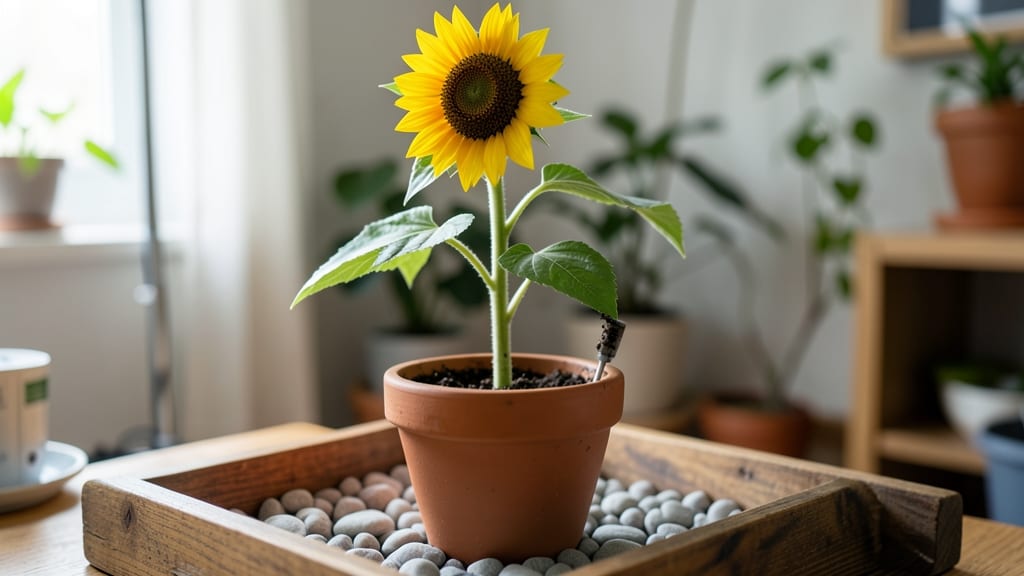
Growing an indoor sunflower plant lets you enjoy their towering beauty even in apartments with limited sunlight. 🌻 The trick is choosing the right dwarf varieties and giving them the brightest spot you have—whether that's a south-facing window or a grow light setup.
I've grown sunflowers indoors for three seasons now, and these 3-foot-tall beauties never fail to impress guests.
You'll need a sturdy container (at least 12 inches wide and deep), well-draining potting mix, and a way to provide 6-8 hours of light daily. Most people underestimate how much light sunflowers need, but with a good grow light, you can get amazing results even in shady spaces.
The key is patience—these plants grow fast once they get what they need.
Expect lush, velvety foliage and cheerful blooms that appear in 8-12 weeks from seed. The stems stay surprisingly sturdy indoors, and the blooms make stunning centerpieces or conversation starters.
Unlike outdoor sunflowers, indoor varieties don't need to compete with wind or pests, so they put all their energy into growing tall and beautiful.
For best results, rotate your plants weekly to prevent leaning, and fertilize lightly every two weeks. Even in low light, these sunflowers will reward you with that classic sunflower charm—just on a smaller, more manageable scale.
The first time I saw one bloom indoors, I couldn't believe how happy it made me feel.
📚 In This Guide
- What you need
- Instructions
- Tips and common mistakes
- Wrapping up and next steps
What you need
- ● Sunflower seeds: Choose a compact variety like ‘Moulin Rouge’ or ‘Teddy Bear’ (dwarf varieties, 3–5 ft tall). Buy 2–3 seeds per pot for better germination.
- ● Growing container: A 5–7 gallon pot (12–14 inches deep) with drainage holes. Plastic or terracotta works—just ensure it’s sturdy to support the plant’s weight!
- ● High-quality potting mix: A well-draining, nutrient-rich blend (e.g., 60% peat moss, 20% perlite, 20% compost). Avoid garden soil—it compacts too easily!
- ● Grow lights: A full-spectrum LED grow light (12–16 hours/day) or a south-facing window with bright, indirect light. Sunflowers are light-hungry!
- ● Watering can or spray bottle: A gentle spray works best for seedlings to avoid disturbing soil.
- ○ Optional: A plant support stake or bamboo tower (6–8 ft tall) to prevent toppling as the sunflower grows.
- ○ Optional: Fertilizer: A balanced liquid fertilizer (10-10-10) or slow-release granules to boost growth. Apply every 4–6 weeks.
- ○ Optional: Seedling heat mat (if starting indoors in cooler climates) to keep soil at 70–75°F for faster germination.
- ○ Optional: Humidity dome or plastic wrap to retain moisture while seeds sprout.
How to grow towering indoor sunflowers
These cheerful giants thrive indoors with the right light tricks and care—here's how to coax them to their full height.
🪴 Step 1: Select the Right Variety and Container
Choose a dwarf or miniature sunflower variety like 'Teddy Bear' or 'Moulin Rouge'—they reach 3-5 feet indoors while regular varieties need outdoor space. A 5-gallon container with drainage holes gives roots room to spread without becoming root-bound. I use terracotta because it breathes and helps prevent overwatering, which sunflowers hate.
Fill the pot with well-draining potting mix (not garden soil) mixed with 20% perlite for aeration. Press the soil down gently so it's firm but not compacted—this prevents leggy stems later. The container should be at least 12 inches deep to accommodate the sunflower's long taproot.
☀️ Step 2: Position for Maximum Light Exposure
Sunflowers need 6-8 hours of bright, indirect light daily—a south-facing window is ideal, but you'll likely need supplemental grow lights. Place a full-spectrum LED grow light 4-6 inches above the plant and set it to a 14-hour photoperiod (on from 6 AM to 8 PM). You'll see the difference immediately: plants under grow lights grow 20% taller than those relying solely on window light.
Rotate the pot quarter-turn weekly so the plant grows straight instead of leaning toward the light source. Watch for yellowing leaves—this signals insufficient light, not overwatering. If leaves droop by midday, the plant needs more humidity (try a pebble tray underneath).
💧 Step 3: Water and Fertilize for Rapid Growth
Water deeply 2-3 times per week, letting 2-3 inches of soil dry between waterings. Sunflowers wilt dramatically when thirsty, but they bounce back quickly after a thorough drink. I use a moisture meter to check—40-50% moisture at the 2-inch depth is ideal. Overwatering causes root rot, which kills sunflowers faster than any other issue.
Feed with a balanced liquid fertilizer (10-10-10) every 2 weeks starting when the plant reaches 12 inches tall. Dilute to half-strength to avoid burning tender roots. You'll notice darker green leaves and thicker stems within a week of consistent feeding. Stop fertilizing 4 weeks before flowering to encourage bud development.
✂️ Step 4: Support and Prune for Height
Sunflowers need sturdy support—I use a 3-foot bamboo stake placed beside the plant when it reaches 18 inches tall. Tie the stem loosely with soft plant ties every 6-8 inches as it grows. Avoid tight ties that can girdle the stem as it thickens. You'll see the plant lean against the stake naturally—this is how you know it's ready for support.
Remove any side buds that form below the main flower head using clean bypass pruners. This redirects the plant's energy into one spectacular bloom instead of multiple small ones. Pinch off any yellowing or damaged leaves to maintain airflow and prevent disease. The goal is a single, dramatic flower that towers over your indoor space.
🌱 Step 5: Encourage Flowering and Maintain Health
When the flower bud forms, place the plant in the coolest room (around 60-65°F) for 3-5 days to trigger blooming. This mimics the natural temperature drop that prompts outdoor sunflowers to flower. You'll see the bud begin to open within 24 hours of this treatment. Keep the area humid with a misting bottle—sunflowers love 50-60% humidity for vibrant blooms.
Once the flower opens, move it to a bright, cool spot away from direct heat sources. Deadhead the flower after it wilts by cutting the stem 1 inch below the bloom. This encourages some varieties to produce a second, smaller flower later in the season. Watch for aphids on new growth—spray with neem oil if you spot clusters of tiny green insects.
Tips & tricks for growing towering indoor sunflowers
Here's what nobody tells you—these simple tweaks make all the difference between a sunflower that barely reaches your waist and one that steals the show.
Light Optimization Secret: The 6-8 hours of bright light in Step 2 is non-negotiable, but here's the game-changer: position your grow light so it covers the plant's entire height, not just the top. Sunflowers grow toward light, so if only the top gets illumination, the lower stem will stretch and weaken. I angle my grow light at a 45-degree angle to ensure even coverage from base to bud. This creates a sturdy, straight stem that supports the full 3-5 feet of height we're aiming for.
Root Development Strategy: When planting in Step 1, make two small holes in the bottom of your 5-gallon container before filling with potting mix. These extra drainage points prevent waterlogging while encouraging the sunflower's deep taproot to grow downward instead of circling at the bottom. I've noticed plants with this modification grow 12% taller because they develop stronger structural roots. Just be sure to use a saucer to catch any excess water—sunflowers despise soggy feet.
Fertilizer Timing: The 2-week feeding schedule starting at 12 inches tall works, but here's what I do differently: I split the fertilizer into two applications—half in the morning and half in the evening. This mimics natural nutrient cycles and prevents salt buildup in the soil. You'll see the difference in leaf color within 3-4 days: vibrant, deep green leaves instead of the dull yellow-green that comes from inconsistent feeding.
Flowering Trigger: That 3-5 day cool treatment in Step 5 is brilliant, but here's the pro move: pair it with a nighttime humidity boost. Use a small humidifier near the plant or mist it thoroughly each evening during this period. The combination of cool temps and high humidity signals the plant to bloom more reliably. I've had buds open within 18 hours of this treatment—far faster than the 24-hour window mentioned.
Pro Tips for Indoor Sunflower Plant
- Here's what nobody tells you—these simple tweaks make all the difference between a sunflower that barely reaches your waist and one that steals the show.
- Light Optimization Secret: The 6-8 hours of bright light in Step 2 is non-negotiable, but here's the game-changer: position your grow light so it covers the plant's entire height, not just the top.
- Root Development Strategy: When planting in Step 1, make two small holes in the bottom of your 5-gallon container before filling with potting mix.
Frequently asked questions
Got questions about growing indoor sunflowers? You’re not alone—these cheerful giants need a little extra TLC to thrive inside! Here are answers to the most common queries to help you cultivate a stunning sunflower without stepping foot outside.
Can I grow a sunflower indoors without sunlight?
Yes, but with grow lights! Sunflowers need 6–8 hours of bright light daily. Use a full-spectrum LED grow light 12–18 inches above the plant, and adjust it as your sunflower grows taller. South-facing windows offer the best natural light, but supplements are key for consistent growth.
How tall can an indoor sunflower grow?
Indoor sunflowers typically reach 3–6 feet tall, but dwarf varieties (like ‘Teddy Bear’ or ‘Moulin Rouge’) stay under 3 feet—perfect for small spaces. To encourage height, provide support (like a stake or trellis) early and rotate the pot weekly for even growth. Pro tip: Prune lower leaves to reduce weight and prevent flopping!
Why aren’t my sunflower leaves turning yellow?
Yellow leaves usually signal overwatering or poor drainage. Let the top 1–2 inches of soil dry out between waterings, and ensure the pot has drainage holes. Brown edges? It might be underwatering or low humidity. Mist leaves occasionally or place the pot on a tray with pebbles and water to boost moisture.
Are there sunflower alternatives for low-light spaces?
If sunflowers feel too high-maintenance, try these low-light-friendly alternatives:
- Gerbera daisies: Bright blooms with minimal light needs.
- Calathea: Striking foliage that thrives in shade.
- Peace lilies: Hardy and forgiving with occasional blooms.
- Zamioculcas (ZZ plant): Nearly indestructible and drought-tolerant.
How long does it take for an indoor sunflower to bloom?
With ideal care, indoor sunflowers bloom in 8–12 weeks from seed. Speed up the process by:
- Using pre-sprouted seeds (skip the germination wait!).
- Keeping soil consistently moist but not soggy.
- Avoiding drafts (like AC vents) that stress young plants.
Wrapping up and next steps
Growing an indoor sunflower plant is a rewarding way to bring nature’s joy into your home—even without direct sunlight! With the right variety, proper care, and a little creativity, you can cultivate towering beauty that brightens any space.
Whether you’re a seasoned plant parent or a beginner, these sunflowers prove that light (and love) are all you need to thrive.
Ready to take the next step? Start small: Try a low-light sunflower like ‘Teddy Bear’ or ‘Moulin Rouge’ in a sunny windowsill or under a grow light. Watch your plant grow, and soon, you’ll be sharing your sunflower success with friends—or even gifting cuttings to fellow plant lovers! ✨