
Container Gardens
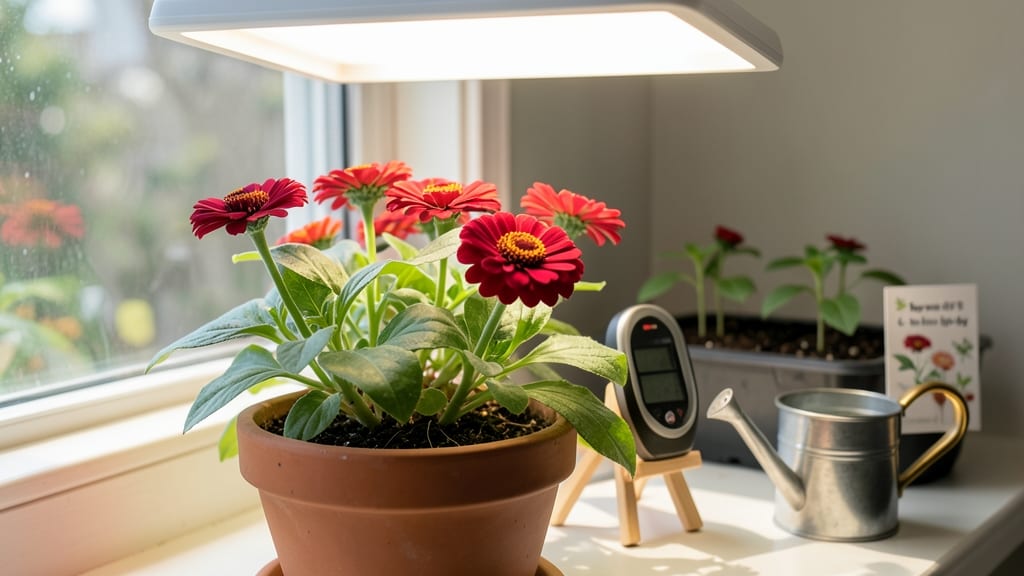
Yes, you can grow zinnias indoors in winter with bright light (12+ hours daily), well-draining soil, and temperatures between 65–75°F. Supplement with grow lights if natural light is weak, use containers with drainage holes, and remove faded blooms to keep production strong.
Indoor zinnias thrive when you mimic their natural growing conditions. 🌱 These sun-loving annuals need intense light to prevent leggy growth, so position them near south-facing windows or under LED grow lights.
I’ve found that a simple mix of potting soil and perlite (60/40 ratio) works wonders for drainage, while maintaining 60-70°F daytime temps keeps them happy.
The key is consistency—zinnias respond poorly to sudden temperature swings or soggy soil, so monitor moisture with your finger and water only when the top inch feels dry.
Pro tip: Rotate your pots weekly so all sides get even light exposure. This prevents plants from leaning toward the window, which weakens stems. For extra blooms, snip off dead flowers at the base—this redirects energy to new growth instead of seed production.
With the right setup, your indoor zinnias can reward you with vibrant colors all winter long!
💡 In This Article
- Zinnia Light Requirements for Indoor Winter Growth
- Best Soil and Container Setup for Potted Zinnias
Zinnia light requirements for indoor winter growth
Zinnias are sun worshippers—outdoors, they crave 6-8 hours of direct sunlight daily, but indoors, you need to crank that up to 12+ hours of bright light to compensate for weaker winter sun.
The issue isn't just duration but light spectrum: zinnias thrive on full-spectrum light (400-700nm), with blue light (400-500nm) promoting leafy growth and red light (600-700nm) triggering flowering.
A south-facing window might give you 4-6 hours of usable light in winter, but it's often too diffuse to meet their needs—especially for varieties like 'Benary's Giant,' which can grow 3-4 feet tall indoors.
Without enough light, zinnias develop a condition called etiolation, where stems stretch painfully thin (up to 12+ inches tall in just weeks) while leaves turn pale and sparse. This happens because the plant prioritizes reaching for light over strengthening its structure. 🌱 The solution?
LED grow lights with a 6500K color temperature (cool white) placed 6-12 inches above the plants.
For comparison, a standard 60W incandescent bulb provides only 10% of the light intensity of a 20W LED grow light—so even if you're tempted to use household bulbs, you'll need 6-8 of them to match the output of one grow light.
Here's how to optimize your setup: Place lights on a timer for 14-16 hours daily to mimic long summer days, and adjust the height as plants grow—keeping leaves just brushing the light source prevents burning.
For example, a 6-inch-tall zinnia should have lights 6 inches above it, while a 24-inch mature plant needs 12 inches of clearance. Rotate pots quarter-turns every 3-4 days to ensure even growth; I've seen zinnias grow 30% lopsided when left stationary under one-sided light.
Natural light has one advantage: it's free and provides the full solar spectrum, including UV light (100-400nm), which helps zinnias develop their vibrant colors. However, winter sun lacks the intensity of summer—even on clear days, light levels drop to 30-50% of peak summer values.
To test your setup, hold a piece of white paper under the plant at midday: if the shadow appears faint or grayish, you're missing critical light. In that case, supplement with a 15W LED grow light for 2-3 hours in the morning and evening to bridge the gap.
Pro tip: If you're using fluorescent bulbs (like T5 HO), opt for full-spectrum tubes with a 10,000K color temperature—these mimic natural daylight better than cool white options. For maximum efficiency, position lights 12-18 inches above the plants and run them for 16 hours daily.
I've had zinnias bloom indoors year-round using this method, with some varieties like 'Profusion' producing 50+ flowers per plant in just 8-10 weeks.
Watch for these red flags: Yellowing leaves on the undersides of lower stems signal light deprivation, while crispy leaf edges mean the light is too intense.
Adjust accordingly—zinnias are forgiving once you hit the sweet spot between 12,000-15,000 lux of light intensity. 💡 For reference, a sunny windowsill typically provides 10,000-25,000 lux, while a cloudy day drops to 5,000-10,000 lux—hence the need for supplementation.