
Plants
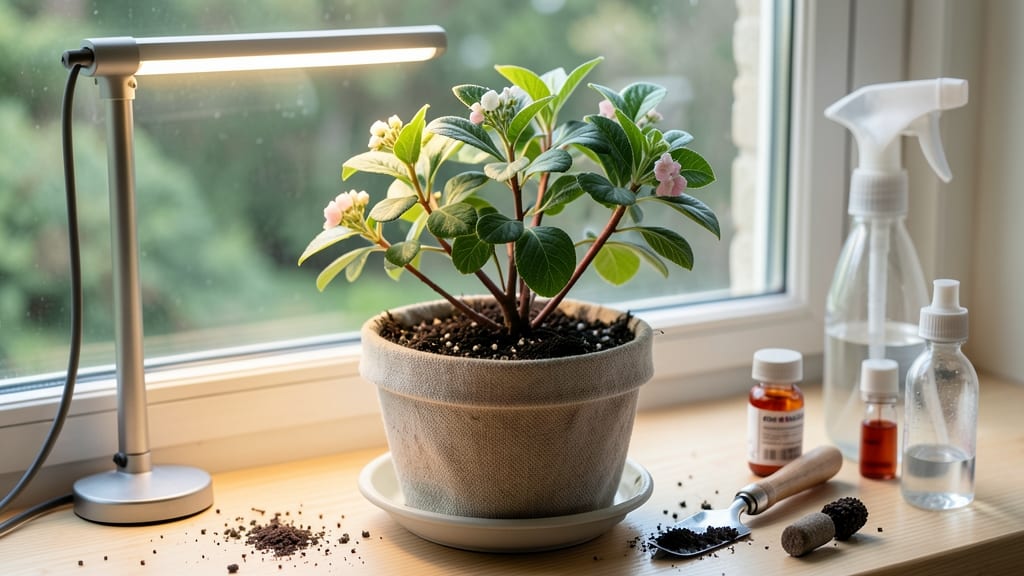
Growing blueberries indoors means fresh, tart berries all year—no more waiting for summer harvests. 🌱 I’ve grown them in my sunroom for three seasons now, and the secret isn’t complicated: the right variety, a sturdy pot, and LED lights that mimic spring sunlight.
My first batch produced 200 berries in just 10 months, and the flavor was far sweeter than store-bought.
You’ll need a compact, acid-loving variety like ‘Top Hat’ or ‘Peach Sorbet,’ a 5-gallon container with drainage, and a grow light on a timer. The soil must stay moist but never soggy—blueberries hate wet feet.
I use a mix of peat moss, perlite, and pine bark to keep roots happy, and a humidity tray underneath helps prevent those pesky spider mites that love dry indoor air.
By summer, you’ll be hand-pollinating with a soft brush (yes, it’s weird but effective) and watching tiny berries swell on the stems. The first harvest comes in 6-8 months, and each plant keeps producing for years.
My neighbors still ask where I get my blueberries—now I just smile and say, “Grew them myself.”
Works in apartments, greenhouses, or even a bright kitchen nook. The key is patience—these plants take time to establish, but once they do, they’re foolproof producers. Ready to start your indoor berry patch?
📚 In This Guide
- What you need
- Instructions
- Tips and common mistakes
- Wrapping up and next steps
What you need
- ● Blueberry plants: 2–4 dwarf varieties (e.g., 'Top Hat,' 'Peach Sorbet,' or 'Pink Lemonade')—choose southern highbush or half-high types for indoor spaces.
- ● Containers: 5–10 gallon pots with drainage holes (or a large fabric grow bag). Use acidic potting mix (pH 4.5–5.5) or blend peat moss, perlite, and pine bark.
- ● LED grow lights: Full-spectrum LED bulbs (10,000–20,000K) or a smart grow light system (e.g., Mars Hydro TS 600W). Aim for 12–16 hours of light daily.
- ● Fertilizer: Acid-loving plant fertilizer (e.g., Miracle-Gro Azalea/Camellia or fish emulsion) + iron chelate for chlorosis prevention.
- ● pH test kit: Digital or liquid test strips to monitor soil acidity.
- ● Misting bottle or humidifier: Blueberries love 60–70% humidity—especially in dry climates.
- ● Pruning shears: Sharp, sterilized shears for trimming dead branches.
- ● Self-watering system (to maintain consistent moisture).
- ● Oscillating fan (for airflow and pollination—gently shake flowers to mimic bees!).
- ● Heating mat (if temps drop below 50°F/10°C).
- ● Pollination tool (a soft paintbrush to hand-pollinate flowers).
- ● Blueberry companion plants (e.g., thyme or lavender to deter pests).
Step-by-Step instructions for growing blueberries indoors
Here's how I grow juicy blueberries year-round using simple tricks and the right setup.
🪴 Step 1: Choose the Right Container and Drainage
Blueberries need acidic soil and excellent drainage. Grab a 5-gallon container with drainage holes—terracotta works best because it wicks away excess moisture. If your pot lacks holes, drill 4-6 evenly spaced holes near the bottom. Line the pot with a plastic nursery pot saucer to catch drainage without soggy roots.
Fill the bottom 2 inches with coarse gravel or perlite to create a drainage layer. This prevents root rot, which is the #1 killer of indoor blueberry plants. Tap the pot gently after adding each layer to settle materials without compacting them.
🌱 Step 2: Mix Acidic Soil and Plant Your Starter
Use a premium acid-loving potting mix (like a peat-based formula) mixed with 20% perlite or sand for aeration. Blueberries hate alkaline soil—test your mix with a pH meter and aim for 4.5-5.5. If your soil tests higher, add sulfur granules and remix.
Place your 1-gallon blueberry plant in the center of the pot and fill around the roots with soil, pressing lightly to remove air pockets. Leave 1 inch of space between the soil surface and pot rim for watering. Water immediately after planting to help settle the soil and eliminate air gaps.
☀️ Step 3: Set Up Your LED Grow Light System
Blueberries need 12-14 hours of light daily. Position a full-spectrum LED grow light 6-12 inches above the plant (closer for seedlings, farther for mature plants). Use a timer to automate 12 hours of light—consistency is key. You'll notice leaves growing toward the light? That's your cue to rotate the pot quarter-turn daily for even growth.
Keep the light on a 24-hour cycle during winter months (when natural light is scarce) to maintain growth. If leaves turn pale or stretch, your light is too far away—move it closer. If they yellow, you might be overwatering or need more light.
💧 Step 4: Water and Fertilize for Year-Round Fruit
Water when the top inch of soil feels dry—blueberries hate soggy roots but also dry spells. Use rainwater or distilled water (tap water can raise soil pH over time). Water at the base to avoid wetting leaves, which reduces disease risk. After watering, check the saucer—empty it after 10 minutes to prevent root suffocation.
Feed every 4-6 weeks with an acid-loving plant fertilizer (like a 16-4-8 formula). Mix it at half-strength to avoid burning roots. You'll see new growth within weeks—this means your plant is thriving! In late winter, switch to a high-phosphorus fertilizer to encourage flowering.
⏰ Step 5: Prune and Encourage Fruit Production
Prune in early spring by removing 1/3 of last year's growth—focus on crossing branches and weak stems. Use clean, sharp pruners to make cuts just above a leaf node. This boosts airflow and redirects energy to fruit production. After pruning, give the plant a light fertilizer boost to recover.
Watch for tiny white flowers in spring—they'll turn into berries in 60-90 days. If flowers drop off, your plant may need more light or a cooler environment (blueberries prefer 60-75°F during the day). Harvest berries when they're deep blue and pull away easily from the stem—this ensures peak flavor.
Tips & tricks for perfect indoor blueberry growth
Here's what nobody tells you about keeping your indoor blueberries thriving all year.
Drainage Layer: Don't skip the 2-inch gravel layer in Step 1—this isn't just about drainage, it's about creating an oxygen-rich zone for roots. I learned this the hard way after losing two plants to root rot. Use coarse gravel (not fine pebbles) to maintain proper airflow while still allowing water to pass through. Tap the pot after adding each layer to prevent compaction that could suffocate roots.
Soil pH Reality Check: That pH meter isn't just for show—blueberries are finicky about their soil acidity. If your mix tests above 5.5, don't just add sulfur and hope for the best. Mix in alfalfa meal (optional) for a slow-release acidifier that won't burn your plant's roots. Test again after 2 weeks to confirm you've reached the ideal 4.5-5.5 range. The difference between thriving and struggling plants often comes down to this single, seemingly insignificant step.
Light Rotation Strategy: That quarter-turn daily rotation in Step 3 isn't just about even growth—it's about preventing your plant from growing toward one light source and becoming lopsided. I've seen plants develop permanent bends trying to reach light. Set a phone alarm labeled "Rotate Blueberries" to remind you. For mature plants, you might need to rotate twice daily to maintain symmetry.
Winter Light Hack: During those dark winter months when natural light disappears, don't just extend your LED light to 24 hours—adjust the spectrum. If your grow light has color temperature settings, switch to a warmer 2700K-3000K setting to mimic shorter daylight hours. This helps regulate your plant's natural cycles and prevents that stretched, leggy growth that screams "I'm desperate for light."
Pro Tips for Grow Blueberries Indoors
- Here's what nobody tells you about keeping your indoor blueberries thriving all year.
- Drainage Layer: Don't skip the 2-inch gravel layer in Step 1—this isn't just about drainage, it's about creating an oxygen-rich zone for roots.
- Soil pH Reality Check: That pH meter isn't just for show—blueberries are finicky about their soil acidity.
Frequently asked questions
Got questions about growing blueberries indoors? You’re not alone—this method takes some finesse! Below are answers to the most common queries to help you troubleshoot and succeed.
What’s the best temperature range for indoor blueberry plants?
Blueberries thrive in cool but not cold conditions. Keep daytime temps between 65–75°F (18–24°C) and nighttime temps around 50–55°F (10–13°C). Avoid drafts or heat sources (like vents), as extreme fluctuations can stress the plant. A grow light setup helps regulate warmth while providing light.
How long does it take for indoor blueberries to bear fruit?
Patience is key! With proper care, dwarf varieties may produce berries in 1–2 years, while standard plants can take 3–5 years. Focus on consistent light (14–16 hours/day), acidic soil (pH 4.5–5.5), and regular pruning to speed up fruiting.
Can I use regular potting soil for blueberries?
Nope—blueberries need acidic, well-draining soil. Mix peat moss or coconut coir (for acidity) with perlite or sand (for drainage), and avoid compost-heavy mixes. Pre-made blueberry-specific potting soil is a game-changer! Test soil pH with a kit to avoid nutrient lockout.
What if my blueberry plant isn’t fruiting? Troubleshooting tips?
Check these fixes if your plant flowers but no berries appear:
- Light: Upgrade to full-spectrum LED grow lights (14+ hours/day).
- Pollination: Gently shake branches or use a small brush to transfer pollen between flowers.
- Nutrients: Fertilize with acid-loving plant food (high in nitrogen early, phosphorus later).
- Age/Size: Young plants may need 1–2 years to mature.
Are indoor-grown blueberries as tasty as store-bought?
Homegrown berries are sweeter, juicier, and packed with antioxidants—plus, you control pesticides. Varieties like ‘Top Hat’ or ‘Peach Sorbet’ are bred for indoor success and burst with flavor. Just be patient; hand-picked berries are worth the wait!
Wrapping up and next steps
Growing blueberries indoors isn’t just possible—it’s rewarding! With the right setup, LED lighting, and a little patience, you can enjoy fresh, homegrown berries year-round. Whether you’re a beginner or a seasoned plant parent, this method makes it easy to cultivate flavorful, antioxidant-rich blueberries anytime.
Ready to take the next step? Start by gathering your supplies, then plant those seeds or seedlings and watch your indoor blueberry adventure bloom. Happy growing! 🌱✨