
Propagation
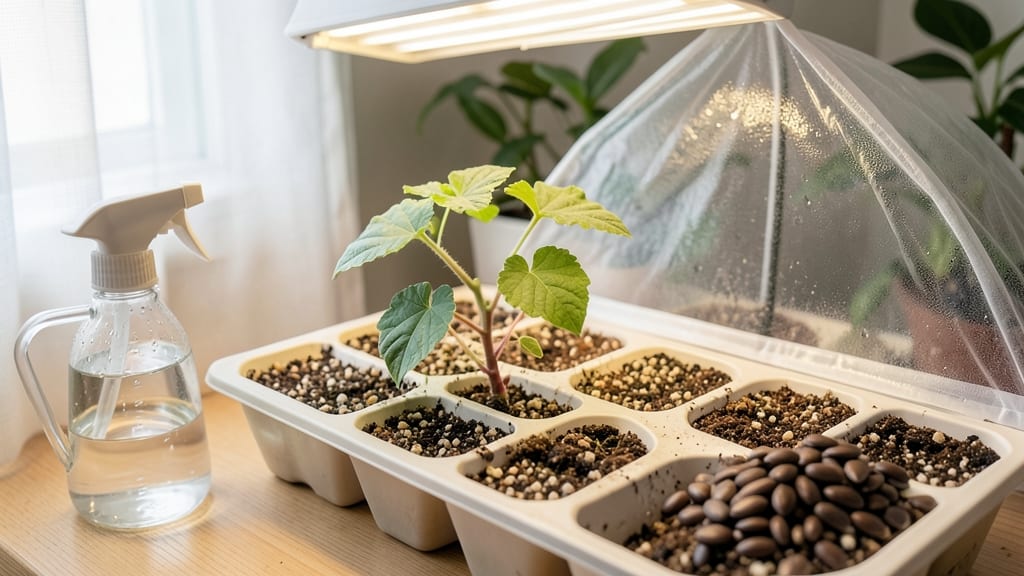
Growing watermelon from seed indoors lets you taste summer fruit even when your balcony is too small for vines. 🌱 I've grown compact varieties like 'Sugar Baby' and 'Tiny Tim' in 5-gallon containers, and they produce fruit just as sweet as their outdoor cousins—if you give them the right light and care.
The key is starting early (8-10 weeks before last frost) so they're ready to transplant outdoors or keep growing under lights.
The secret to success is matching the plant's needs to your space. You'll need a 5-10 gallon container with drainage holes, a fast-draining potting mix, and a grow light or south-facing window that gets at least 6-8 hours of direct light daily.
Temperatures should stay between 75-90°F during the day and never drop below 60°F at night—this is where most indoor growers fail. Humidity trays help when the air gets dry.
By week 4, you'll see those signature watermelon vines with tendrils reaching for support. With proper pollination (hand-pollinate with a small brush if indoors), you'll get mini melons in 8-10 weeks from transplanting—smaller than store-bought but packed with flavor.
The real magic happens when you taste your first slice, knowing you grew it from a seed in a pot. This method works for any sunny windowsill or grow room setup.
Here's the plot twist: you can keep these plants growing indoors year-round in warm climates, producing fruit every 3-4 months. The trick is pruning aggressively to control vine size and using reflective surfaces to maximize light.
Once you master this, you'll never buy watermelons again—just imagine slicing into that first sweet, seedless fruit while your neighbors are still dreaming of summer.
📚 In This Guide
- What you need
- Instructions
- Tips and common mistakes
- Wrapping up and next steps
What you need
- ● Watermelon seeds: Choose compact or dwarf varieties like 'Sugar Baby' or 'Tiny Tim' (2-3 seeds per pot).
- ● Seed-starting containers: 4-6" deep pots with drainage holes (2-3 pots per seed).
- ● High-quality seed-starting mix: Lightweight, sterile, and well-draining (1 bag, ~12 qt).
- ● Grow lights or sunny windowsill: 12-16 hours of light daily (LED grow lights work best).
- ● Spray bottle: For gentle watering (1 small bottle).
- ○ Plastic wrap or humidity dome: To retain moisture (optional but helpful).
- ● Trowel or small shovel: For transplanting seedlings (1 small hand trowel).
- ● Fertilizer: Balanced liquid fertilizer (e.g., 10-10-10) or organic options like fish emulsion (1 bottle).
- ● Support structure: Trellis, stakes, or cages (for vining varieties; 1-2 units).
- ○ Thermometer: To monitor soil temperature (optional but useful for germination).
- ● Pruning shears: For managing vine growth (small pair).
- ● Warmth: Seeds need soil temps of 70–90°F (21–32°C) to germinate (use a heat mat if needed).
- ● Patience: Germination takes 7–14 days—stay consistent with care!
- ● Space: Ensure your setup can accommodate vines (even dwarf varieties need 3–5 ft of space).
Step-by-step instructions for growing watermelon from seed indoors
Here’s how I’ve mastered growing watermelons indoors—compact vines, sweet fruit, and no backyard needed.
🌱 Step 1: Select the Right Variety and Start Seeds Early
Not all watermelons thrive indoors, so choose compact varieties like ‘Sugar Baby,’ ‘Tiny Tim,’ or ‘Crimson Sweet.’ These stay under 6 feet and produce 4-8 pound fruits—perfect for containers. Start seeds 8-10 weeks before your last frost date, or indoors in early March if you’re in a cooler climate.
Watermelon seeds germinate best at 85-90°F, so I use a seedling heat mat to maintain that warmth. Place seeds ½ inch deep in biodegradable pots (they’ll hate root disturbance later). Cover with a humidity dome or plastic wrap to trap heat and moisture—you’ll see sprouts in 5-7 days.
☀️ Step 2: Provide Strong Light and Ventilation
Watermelons need 12+ hours of bright light daily, so a south-facing window won’t cut it. I use a full-spectrum LED grow light on a 14-hour timer, keeping it 6 inches above seedlings until they develop true leaves, then raising it to 12 inches as they grow. Without enough light, vines stretch leggy and weak—watch for pale stems and large gaps between leaves.
Once seedlings have 2-3 sets of leaves, remove the humidity dome and place a small fan 12 inches away to strengthen stems. This mimics outdoor wind and prevents floppy growth. Keep humidity moderate—40-60%—to avoid fungal issues like powdery mildew.
🪴 Step 3: Transplant to Larger Containers and Train Vines
When seedlings are 4-6 inches tall, move them to 5-gallon containers with well-draining potting mix. Watermelons need deep roots, so fill pots ¾ full before transplanting. Gently loosen roots and bury ½ inch deeper than they were in the seedling pot—this encourages stronger root growth.
Train vines along a trellis or sturdy cage to save space. Watermelons are vining plants, so prune side shoots to focus energy on one main vine. When flowers appear, hand-pollinate with a small brush to transfer pollen between male and female blooms (female flowers have tiny fruits at their base).
💧 Step 4: Water Deeply and Fertilize for Fruit Development
Watermelons need consistent moisture—water deeply when the top 2 inches of soil feel dry, but avoid soggy soil. Overwatering leads to blossom-end rot or root rot, while underwatering causes bitter fruit. I use a moisture meter to track soil conditions, aiming for 60-70% moisture during fruiting.
Feed plants with a balanced liquid fertilizer (10-10-10) every 2 weeks once flowers appear. When fruits are golf-ball sized, switch to a low-nitrogen, high-potassium fertilizer (5-10-10) to sweeten the fruit. Watch for yellowing leaves—this often means over-fertilizing or nutrient burn.
⏰ Step 5: Harvest at Peak Ripeness and Extend the Season
Watermelons are ready when the underbelly turns cream-colored, the stem slips easily from the vine, and they thud hollow when tapped. Indoor varieties like ‘Sugar Baby’ mature in 70-80 days. Cut fruit with 2 inches of stem attached to prevent rot.
To extend the season, I move containers outside on warm days (70°F+) and bring them back in at night. This hardening-off process prepares them for cooler temperatures. After harvest, compost vines—don’t save seeds from indoor plants, as they won’t reliably reproduce true to type.
Tips & tricks for growing watermelon indoors
Here's what I learned after growing watermelons indoors for three seasons—these tricks make all the difference with compact varieties.
Variety Selection Matters: The compact varieties like 'Sugar Baby' and 'Tiny Tim' are specifically bred for containers, but even among them, I've found 'Sugar Baby' produces the sweetest fruit indoors. These varieties stay under 6 feet tall, which is critical for indoor growing where space is limited. If you're in a cooler climate, starting seeds indoors in early March aligns perfectly with their 70-80 day maturity window.
Germination Environment: Watermelon seeds need that precise 85-90°F temperature for germination, and a seedling heat mat is your best bet to maintain this consistently. I've tried using warm water soaks and even placing pots on top of refrigerators, but nothing beats the reliability of a heat mat. The ½-inch depth for planting is perfect—too shallow and they'll dry out, too deep and they'll struggle to push through the soil.
Lighting Strategy: That 12+ hours of bright light is non-negotiable, and a south-facing window simply won't provide enough intensity. I use a full-spectrum LED grow light on a 14-hour timer, but I've also had success with two T5 fluorescent lights placed 6 inches above seedlings. The key is maintaining that distance—when you see true leaves appear, raise the lights to 12 inches. Watch for those pale stems and large gaps between leaves as your first warning signs of insufficient light.
Container Size and Depth: The 5-gallon containers are perfect for these compact varieties, but the depth is what really matters. Fill them ¾ full before transplanting to give those deep roots room to establish. I've seen watermelon roots grow down 18 inches in ideal conditions, so that extra depth prevents root binding. When you bury the seedlings ½ inch deeper than their original pot, you're essentially giving them a head start on root development.
Pro Tips for Growing Watermelon From Seed Indoors
- Here's what I learned after growing watermelons indoors for three seasons—these tricks make all the difference with c...
- Variety Selection Matters: The compact varieties like 'Sugar Baby' and 'Tiny Tim' are specifically bred for container...
- Germination Environment: Watermelon seeds need that precise 85-90°F temperature for germination, and a seedling heat ...
Frequently asked questions
Got questions?
Growing watermelon from seed indoors is rewarding but comes with unique challenges. Here are answers to the most common queries to help you succeed—even in small spaces!
When should I start watermelon seeds indoors?
Start seeds 8–10 weeks before your last expected frost date. Watermelons need warmth to germinate, so wait until soil temps reach 70–85°F (21–29°C). If your climate is hot year-round, you can plant anytime—but expect slower growth in cooler months.
Can I grow watermelons indoors without a grow light?
Yes, but expect smaller fruit and slower growth. Watermelons need 12–14 hours of light daily. A sunny windowsill (south-facing) may work for seedlings, but supplement with a basic LED grow light (12–16 watts per sq. ft.) for best results. Lack of light = leggy plants and bitter fruit.
Why aren’t my indoor watermelon seeds germinating?
Check these first:
- Moisture: Keep soil consistently damp (not soggy). Use a spray bottle or bottom-watering tray.
- Temperature: Seeds need warmth—place the tray on a seedling heat mat (70–85°F).
- Depth: Plant seeds ½ inch deep; deeper = slower sprouting.
- Freshness: Old seeds (over 2 years) may fail. Test viability by soaking in water—sinkers are good!
What’s the best container size for indoor watermelons?
Watermelons need space—aim for a 5-gallon container minimum per plant. For compact varieties (like ‘Sugar Baby’), a 10–15 gallon pot works better. Use fabric grow bags or deep containers with drainage holes. Pro tip: Add 3–5 inches of compost to the bottom for root expansion!
How do I pollinate watermelon flowers indoors?
Watermelons rely on bees, so hand-pollinate with a soft paintbrush or cotton swab. Transfer pollen from male flowers (long stems) to female flowers (tiny fruit at base). Do this morning and afternoon for 3–5 days after flowering. Bonus: Gently shake the plant to encourage airflow!
Can I regrow watermelon from store-bought seeds?
Yes! Save seeds from organic, seedless, or heirloom watermelons (hybrid seeds may not produce true fruit). Rinse, dry, and store in a cool, dark place. Note: Store-bought seeds may take longer to germinate (soak overnight in warm water first). Expect smaller, seedy fruit—not identical to the parent.
Wrapping up and next steps
Growing watermelon from seed indoors is a rewarding challenge that proves even small spaces can yield big results! 🌱 With the right setup—like compact varieties, proper lighting, and consistent care—you’ll soon enjoy sweet, homegrown fruit without needing acres of land.
Whether you’re a seasoned gardener or a curious beginner, this method opens doors to year-round growing and creative container gardening.
Ready to take the next step? Start by choosing your seeds—pick a bush or dwarf variety like ‘Sugar Baby’ or ‘Tiny Tim’—and gather your supplies. Then, plant those seeds and watch your tiny vine transform into a thriving, fruiting plant. Happy growing, and may your harvest be plentiful! 🍉✨