
Container Gardens
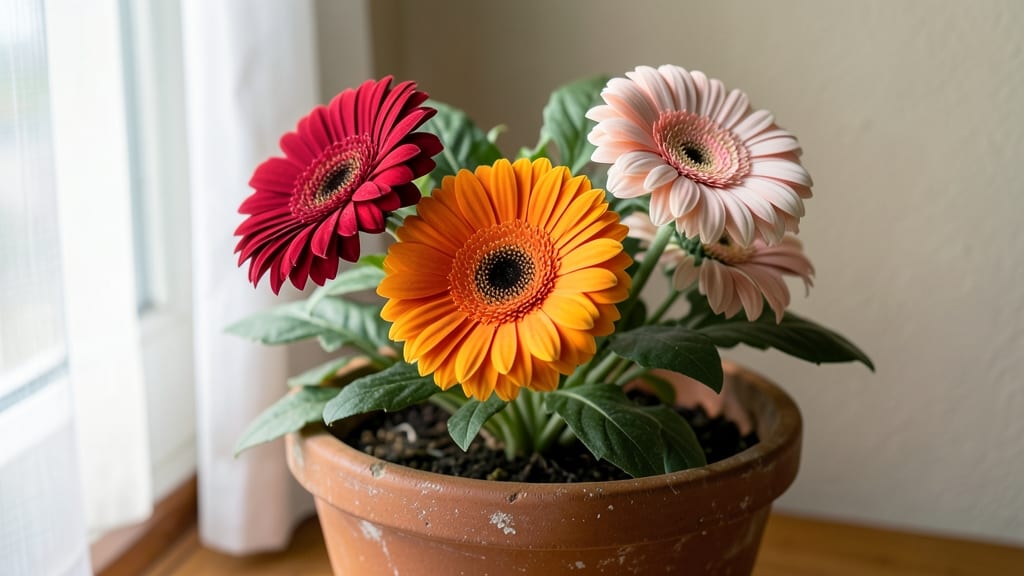
Growing the gerbera indoor plant brings sunshine to your home—even when your windows are small. 🌸 I've kept these cheerful bloomers thriving in apartments with just a few key adjustments to light, water, and air.
The secret isn't fancy equipment but understanding what gerberas naturally crave: bright indirect light, well-draining soil, and consistent moisture without soggy roots.
Most people struggle with gerberas because they treat them like outdoor annuals. Indoors, they need 4-6 hours of bright light daily—a sunny windowsill or a grow light works perfectly. Use a mix of potting soil and perlite for drainage, and water when the top inch feels dry.
Overwatering is the #1 killer, but gerberas also hate dry air, so a pebble tray with water nearby helps.
With proper care, you'll enjoy continuous blooms for months—those vibrant colors popping like summer in winter. The key is removing spent blooms regularly and fertilizing lightly every 4-6 weeks. Even my first attempt produced flowers within 8 weeks, and now I get a fresh batch every 6-8 weeks.
These plants handle indoor conditions beautifully if you avoid drafts and keep them away from heating vents. Perfect for offices, kitchens, or bedrooms—just give them the right light, and they'll reward you with nonstop color all year long. Let's get those blooms going!
📚 In This Guide
- What you need
- Instructions
- Tips and common mistakes
- Wrapping up and next steps
What you need
- ● Gerbera plant: 1 healthy indoor-friendly variety (check for compact, low-light-tolerant cultivars like Gerbera jamesonii).
- ● Pot: 1 container with drainage holes (6–8 inches in diameter; terracotta or ceramic preferred).
- ● Potting mix: 1 bag of well-draining, peat-based or cactus/succulent mix (avoid heavy garden soil).
- ● Gravel or perlite: Small handful (for the pot’s drainage layer).
- ● Watering can or spray bottle: 1 with a fine rose attachment (for gentle hydration).
- ● Fertilizer: 1 balanced, water-soluble fertilizer (5-10-5 ratio; diluted to half-strength).
- ● Pruning shears: 1 pair (sterilized with rubbing alcohol).
- ○ Humidity tray or pebble tray: 1 (optional but helpful for low-humidity homes).
- ● Grow lights: 1–2 LED full-spectrum bulbs (if natural light is < 4 hours/day).
- ● Plant food: Slow-release granules (mix into soil for steady nutrients).
- ● Decorative pot: 1 outer cachepot (ensure it’s slightly larger than the inner pot).
- ● Soil moisture meter: 1 (to avoid over/under-watering).
Step-by-step instructions for growing gerbera indoor plants
Here’s how to coax those cheerful gerbera blooms indoors—no greenhouse required.
🌱 Step 1: Select the Right Gerbera Variety for Indoor Growing
Not all gerbera varieties handle indoor conditions equally. Look for compact, dwarf varieties like 'Mini Star' or 'Tiny Dancer,' which thrive in pots and produce blooms 2-3 inches wide instead of the giant garden types. These smaller cultivars handle lower light better and bloom more reliably indoors.
Check the root ball when purchasing—healthy plants have firm stems and no signs of yellowing leaves. Avoid plants with buds already set; they’ll focus energy on blooming instead of adapting to your space. Instead, pick plants with tight, green foliage and just a few emerging buds.
🪴 Step 2: Prepare a Bright, Well-Draining Container Setup
Gerberas need adequate drainage, so choose a pot with drainage holes and add a 1-inch layer of pebbles or perlite at the bottom. The container should be at least 6 inches deep to accommodate roots while preventing waterlogging. I recommend terracotta pots—they wick moisture away from roots, which gerberas appreciate.
Use a light, airy potting mix designed for flowering plants. Avoid garden soil or heavy mixes; gerberas hate soggy roots. Mix in 20% perlite or pumice to improve drainage. Fill the pot to 1 inch below the rim, leaving room for watering without overflow.
☀️ Step 3: Position for Maximum Light Without Direct Sun
Gerberas need bright, indirect light—think east-facing windows or 6-12 inches from a south-facing window. Direct afternoon sun scorches leaves, while too little light leads to leggy stems and sparse blooms. If your space is dim, supplement with a grow light placed 12-18 inches above the plant for 12-14 hours daily.
Rotate the pot a quarter turn weekly so the plant grows evenly toward the light. You’ll notice leaves leaning toward the window? That’s your cue to adjust the position. Gerberas in ideal light develop deep green foliage and compact growth—not stretched or pale stems.
💧 Step 4: Water Deeply but Sparingly—The Key to Gerbera Success
Water gerberas when the top 1-2 inches of soil feel dry. Stick your finger in the soil—if it’s damp at that depth, wait another day. Overwatering causes root rot, which kills gerberas quickly. When you do water, soak the soil until water runs out the drainage holes, then empty the saucer to prevent soggy roots.
Gerberas are drought-tolerant but hate wet feet. In winter, reduce watering to every 7-10 days as growth slows. You’ll know you’re nailing it when the plant stays lightweight (lift the pot—it should feel manageable) and leaves stay crisp, not wilted or yellowing.
✂️ Step 5: Encourage Continuous Blooms with Strategic Pruning
Deadhead spent blooms by snipping the stem just above a set of leaves with clean scissors. This redirects energy to new buds instead of seed production. I prune gerberas every 2-3 days during peak bloom season—it’s the secret to nonstop color.
If your gerbera gets leggy, trim the longest stems by one-third to encourage bushier growth. Avoid heavy pruning in winter, as the plant needs energy to recover. After pruning, give the plant a balanced liquid fertilizer (diluted to half-strength) to support regrowth.
Tips & tricks for perfect gerbera indoor plants
These insider tricks will help your gerbera thrive indoors—no gardening experience required.
Variety Matters: The dwarf varieties like 'Mini Star' or 'Tiny Dancer' are your best bet for indoor success. I've learned the hard way that larger garden varieties struggle with indoor light conditions—they'll either bolt (send up a flower stalk) or produce sparse blooms. Look for compact plants with tight foliage and just a few emerging buds at the store; these adapt best to indoor environments.
Light Management: Gerberas need bright, indirect light—think east-facing windows or 6-12 inches from a south-facing window. If your space is dim, supplement with a grow light placed 12-18 inches above for 12-14 hours daily. I rotate my plant weekly to prevent it from leaning toward one light source, which keeps the growth balanced and compact.
Watering Wisdom: The top 1-2 inches of soil should be dry before watering—stick your finger in to check. Overwatering is the #1 killer of gerberas, so always empty the saucer after watering to prevent soggy roots. In winter, reduce watering to every 7-10 days as growth naturally slows. You'll know you're doing it right when the pot feels lightweight and leaves stay crisp.
Pruning Payoff: Deadheading spent blooms every 2-3 days during peak bloom season is non-negotiable for continuous color. I use clean scissors to snip just above a set of leaves, which redirects energy to new buds. For leggy stems, trim by one-third to encourage bushier growth—but avoid heavy pruning in winter when the plant needs to conserve energy.
Pro Tips for Gerbera Indoor Plant
- These insider tricks will help your gerbera thrive indoors—no gardening experience required.
- Variety Matters: The dwarf varieties like 'Mini Star' or 'Tiny Dancer' are your best bet for indoor success. I've lea...
- Light Management: Gerberas need bright, indirect light—think east-facing windows or 6-12 inches from a south-facing w...
Frequently asked questions
Got questions about keeping your gerbera daisy thriving indoors?
Here are answers to the most common ones—because even vibrant blooms need a little TLC!
Can gerbera indoor plants survive in low light?
While gerberas love bright, indirect light, they can tolerate some low-light conditions—just expect fewer blooms. Place them near a north-facing window or use a grow light for 6–8 hours daily. Avoid dark corners, or your plant may become leggy or stop flowering.
How often should I water my gerbera indoor plant?
Water your gerbera when the top inch of soil feels dry—usually every 5–7 days, depending on humidity and light. Overwatering is the #1 killer! Use well-draining soil and a pot with drainage holes to prevent soggy roots. Pro tip: Let excess water drain completely to avoid root rot.
What’s the ideal temperature for indoor gerberas?
Gerberas thrive in temperatures between 60–75°F (15–24°C). Avoid drafts (like AC vents or heaters) and sudden temperature swings, which can stress the plant. If your home gets chilly at night, move it away from windows to protect it.
Why are my gerbera leaves turning yellow?
Yellow leaves usually signal overwatering, but they can also mean underwatering or nutrient deficiencies. Check the soil moisture first—if it’s soggy, reduce watering. If the soil is dry, water thoroughly. For persistent issues, fertilize lightly with a balanced houseplant food every 4–6 weeks.
Are there low-maintenance alternatives to gerberas?
If gerberas seem too fussy, try spider plants (tolerate low light) or peperomias (drought-resistant). For color lovers, African violets or calatheas are great indoor picks with fewer demands. Just ensure they match your light conditions!
Wrapping up and next steps
Bringing a gerbera indoor plant into your home isn’t just about adding color—it’s about embracing a low-maintenance, cheerful companion that brightens up even the coziest spaces! 🌸 With the right care, these vibrant blooms will reward you with stunning petals and a touch of nature’s joy.
Now that you’re armed with tips on light, water, and soil, why not take the next step?
🌱 Ready to grow? Grab a pot, pick your favorite gerbera variety, and let your indoor garden flourish—one cheerful bloom at a time! 💬 Got questions or tips of your own? Share them below and let’s grow together!