
Blooming
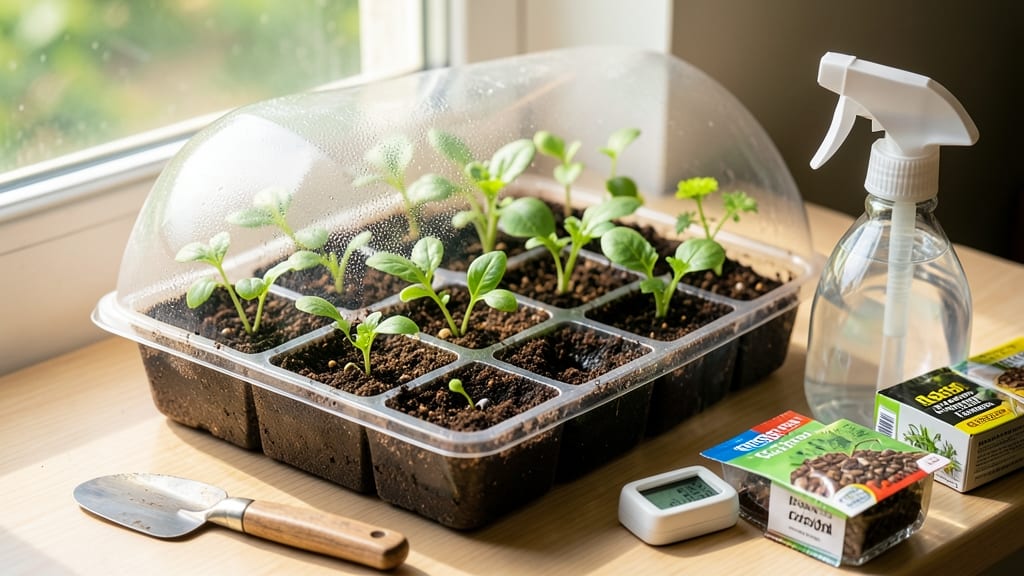
How long for seeds to sprout indoors depends on the variety: fast growers like radishes emerge in 3–7 days, while slower types such as beans or tomatoes can take 7–21 days. Creating optimal conditions with warmth, moisture, and proper light exposure significantly speeds up germination, though maintaining consistent soil conditions prevents common pitfalls like mold or stunted growth.
Seed sprouting speed isn't just about time—it's a science of balance. 🌱 For example, lettuce seeds often sprout within 5–10 days when kept at 65–75°F, but dropping temperatures below 50°F can delay germination by weeks.
The key is replicating natural conditions: most seeds need 60–80% humidity and 12–16 hours of light daily to activate their growth enzymes. I've found that using a seedling heat mat (set to 70–75°F) can cut sprouting time by nearly half for slower varieties like tomatoes.
What many beginners overlook is seed viability—old or improperly stored seeds may take twice as long or fail entirely. A simple water test (soaking seeds overnight) reveals which ones are still capable of sprouting.
For stubborn seeds like chives or parsley, pre-soaking for 4–8 hours before planting can trigger faster emergence. Consistency matters more than intensity: even a slight daily temperature swing can confuse a seed's internal clock, leading to uneven sprouting.
💡 In This Article
- Germination Timeline for Common Indoor Seed Types
- Optimizing Indoor Seed Sprouting Conditions
Germination timeline for common indoor seed types
Seed germination speed is determined by the plant's genetic programming, which dictates how quickly its enzymes activate to break down stored nutrients. Fastest sprouting seeds like radishes and arugula typically emerge in 3-7 days because they've evolved to germinate rapidly in optimal conditions.
Their small size and thin seed coats allow moisture to penetrate quickly, triggering enzyme activity within 12-24 hours of planting. These seeds often contain high levels of gibberellins—plant hormones that signal the seed to grow—explaining their almost explosive emergence when conditions are right.
The middle tier includes popular vegetables like lettuce, spinach, and green onions, which usually sprout in 5-14 days.
Lettuce seeds, for example, require 5-10 days at ideal temperatures of 65-75°F, but their germination process involves a fascinating two-phase system: first, the radicle (root) emerges downward, then the shoot pushes upward.
Herbs like basil and cilantro fall into this category too, though basil often takes 7-21 days because its seeds have a natural dormancy period that requires light exposure to break. 🌱 The slowest category—beans, peas, and tomatoes—can take 7-21 days because their thicker seed coats and larger embryos require more time for enzyme activation and nutrient mobilization.
What most gardeners don't realize is that seed dormancy plays a huge role in timing variations. Some seeds, like peppers and tomatoes, have hard seed coats that need to soften before germination can begin. This is why pre-soaking these seeds for 4-8 hours can cut sprouting time by 30-50%.
The science behind this involves the seed's ability to absorb water through microscopic pores—once these open, enzymes called amylases begin breaking down starches into sugars that fuel early growth.
For comparison, a tomato seed's complete germination process involves 12 distinct biochemical steps, making it one of the more complex sprouting cycles among common vegetables.
Light exposure also dramatically affects timing for certain seeds. Photoblastic seeds like lettuce and parsley require light to germinate, which is why they often emerge 2-3 days faster when planted just below the soil surface. The light triggers phytochrome proteins that activate growth hormones.
In contrast, seeds like beans and peas are photoneutral—they'll germinate in light or dark conditions, though they may take 1-2 extra days without proper light exposure once they've sprouted. This explains why some gardeners see uneven germination when planting seeds too deeply.
Temperature fluctuations create another critical variable. Most seeds germinate best within a 10°F range—for example, 68-78°F for tomatoes. Dropping below 50°F can delay germination by 5-10 days because cold temperatures slow enzyme activity. The optimal range triggers a perfect balance where water absorption, oxygen availability, and metabolic processes align.
I've noticed that using a seedling heat mat (maintaining 70-75°F) can cut germination time for tomatoes from 14 days to just 7 days—this works because the heat accelerates the seed's metabolic rate by 2-3 times compared to room temperature.
One often-overlooked factor is seed age. Seeds lose viability at different rates—radishes maintain 80% germination for just 1 year, while tomato seeds can remain viable for 4-6 years when stored properly.
The older a seed gets, the more its internal membranes degrade, requiring more time (and often higher temperatures) to trigger germination. This is why some gardeners swear by storing seeds in the refrigerator to slow this degradation process.
For maximum success, always check the seed packet for the recommended planting window—this gives you the most accurate expectation for sprouting times.