
How To
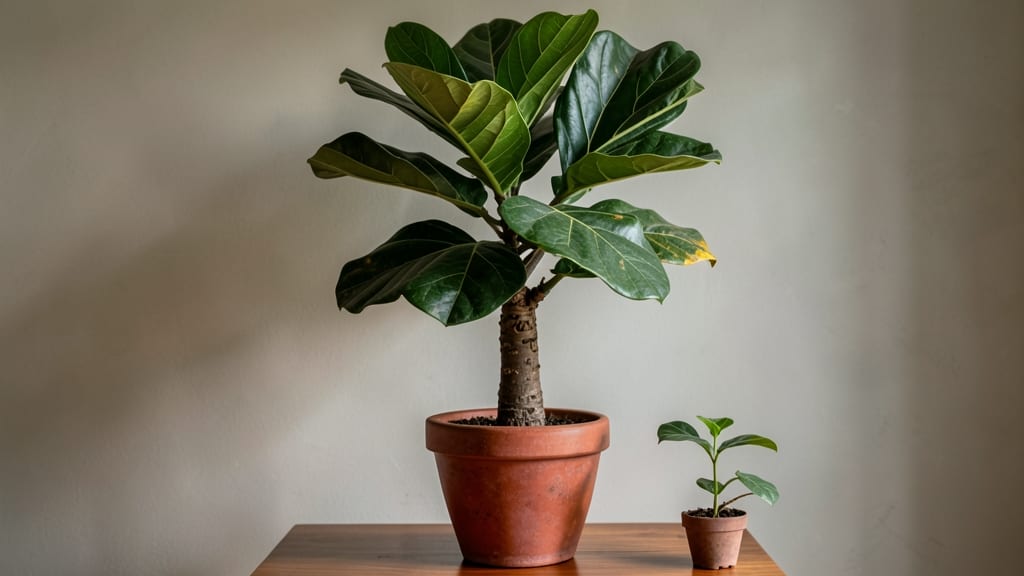
Fiddle leaf figs indoors grow to 6-10 feet tall when left unchecked, but with the right care, you can shape them to fit any space—even a tiny apartment.
Picture this: your stunning 🌿 fiddle leaf fig stretching toward the ceiling, brushing against light fixtures, or worse, blocking your favorite reading spot. It’s not just about aesthetics—uncontrolled growth can lead to leggy stems, sparse leaves, and a plant that’s harder to care for.
The good news? You don’t have to live with a jungle in your living room.
Height isn’t just about genetics—light, pruning, and even your watering habits play a huge role in how tall (or short) your fiddle leaf fig becomes.
Below, I’ll break down the year-by-year growth you can expect, the pruning secrets to keep it compact, and how to tweak your care routine for a plant that stays at your ideal height without sacrificing its health.
Ready to stop guessing and start controlling your fiddle leaf fig’s growth? Let’s dive into the science—and the simple hacks—that will keep your plant thriving and fitting your space perfectly.


Natural indoor height range for fiddle leaf figs: what to expect year by year
Your fiddle leaf fig (Ficus lyrata) is a stunning tropical showstopper, but its growth rate can feel like a mystery—especially when you're eyeing that ceiling fan and wondering if your plant will soon crash into it.
The truth? With proper care, you can predict and control its height year by year. Understanding its natural growth stages helps you set realistic expectations and adjust care to keep it at your desired size.
Indoor fiddle leaf figs grow at different rates based on their age, environment, and care routine. In ideal conditions, a healthy fiddle leaf fig can reach 6-10 feet tall indoors over 5 years. However, many plant parents prefer to keep theirs between 4-6 feet for aesthetic balance in smaller spaces.
The key is knowing what to expect each year and how to identify growth plateaus versus stunted growth.
Growth varies dramatically from year to year. For example, a 1-year-old fiddle leaf fig might only grow 2-3 feet tall, while a 3-year-old plant could surge to 6-8 feet with optimal conditions. Below, we break down the average height increases by age, along with the environmental factors that influence these numbers.
🌿
During the first year, your fiddle leaf fig focuses on root development rather than dramatic height gains. You'll notice small, 2-3 inch leaves and a height increase of just 2-3 feet.
This is normal—don't rush to fertilize heavily, as young plants are sensitive to over-fertilization, which can stunt growth or burn roots.
By year two, your plant enters its fastest growth phase. With proper care—like placing it near a bright east-facing window and using a well-draining potting mix—you can expect a 2-3 foot jump in height.
This is when many fiddle leaf figs reach their most dramatic growth spurt, so keep an eye on its pot size. If roots start circling, it's time to repot into a larger container.
Years three through five mark the maturity phase, where growth slows but the plant becomes more robust. A 3-year-old fiddle leaf fig often reaches 6-8 feet tall, while a 5-year-old plant may plateau at 8-10 feet.
This is when you'll need to prune strategically to maintain your desired height, as unchecked growth can lead to a lanky, top-heavy plant that's prone to dropping leaves.
One of the biggest misconceptions about fiddle leaf figs is that stunted growth always means poor care. In reality, growth plateaus are natural, especially in mature plants.
Look for these signs to distinguish between the two: stunted growth often includes yellowing leaves, dropped leaves, or small, sparse foliage, while a plateau simply means slower height increases with healthy, dark green leaves.
Environmental factors play a huge role in whether your fiddle leaf fig hits these average height ranges. For example, low light conditions can slow growth significantly, while too much direct sun may cause leaf scorch and stress.
Similarly, overwatering or underwatering can both stunt your plant's height potential. Aim for bright indirect light and consistent moisture—never letting the soil dry out completely—to encourage steady, healthy growth.
If you're dealing with a root-bound plant, its height growth may also slow until you repot into a larger container. Roots circling the pot restrict nutrient and water uptake, forcing the plant to focus on root expansion rather than leafy growth.
Check for root-bound conditions by gently removing your plant from its pot—if you see roots wrapping around the edges, it's time to upgrade to a 2-4 inch larger pot.
🌳
Pro tip: Rotate your fiddle leaf
5 Proven pruning techniques to control fiddle leaf fig height in small spaces
If your fiddle leaf fig is reaching for the ceiling, don’t panic—pruning is your secret weapon for maintaining a manageable height. With the right techniques, you can shape your plant while encouraging bushier, fuller growth.
The key is timing, clean cuts, and minimal stress to keep your plant thriving. Whether you're dealing with leggy stems or rapid vertical growth, these methods will help you control the height without sacrificing health.
Before you grab your shears, remember that fiddle leaf figs respond best to pruning during their active growing season, which runs from spring through early summer. Avoid heavy pruning in fall or winter, as this can stress the plant when it’s already slowing down.
Always use sterilized pruning tools to prevent disease, and never trim more than one-third of the plant’s foliage at once.
- 1 Tip Pruning: Trim the top 2-3 inches of leggy stems to encourage branching. Use clean, sharp bypass pruners and make cuts at a 45-degree angle just above a leaf node.
- 2 Air Layering: Propagate new plants by wrapping a moist sphagnum moss pad around a stem and securing it with plastic. Roots will form in 4-8 weeks, allowing you to cut below the rooted section and repot.
- 3 Selective Stem Removal: Remove one or two main stems to redirect energy to side branches. Choose stems that are thicker than a pencil for best results.
- 4 Defoliation Pruning: Remove older leaves from the bottom half of the plant to improve airflow and encourage new growth. Focus on leaves that are yellowing or dry.
- 5 Root Pruning: Gently tease out circled roots during repotting to slow vertical growth. This encourages the plant to focus on bushier foliage instead of reaching upward.
After pruning, your fiddle leaf fig will need extra care to recover. Place the plant in a bright, indirect light spot and avoid fertilizing for 4-6 weeks to reduce stress.
New growth should appear within 4-8 weeks, and with patience, you’ll achieve a fuller, more compact shape. For best results, repeat pruning every 6-12 months depending on growth rate.
Pro tip: Save your pruned cuttings! Place them in water with a rooting hormone to propagate new plants. This way, you’ll have backups and even more fiddle leaf figs to fill your space—without the height worries.
Just remember, consistency is key, and your plant will thank you with lush, healthy growth.
With these techniques, you’ll keep your fiddle leaf fig at the perfect height for your space while ensuring it stays vibrant and full of life. Happy pruning! ✂️🌿