
Planting
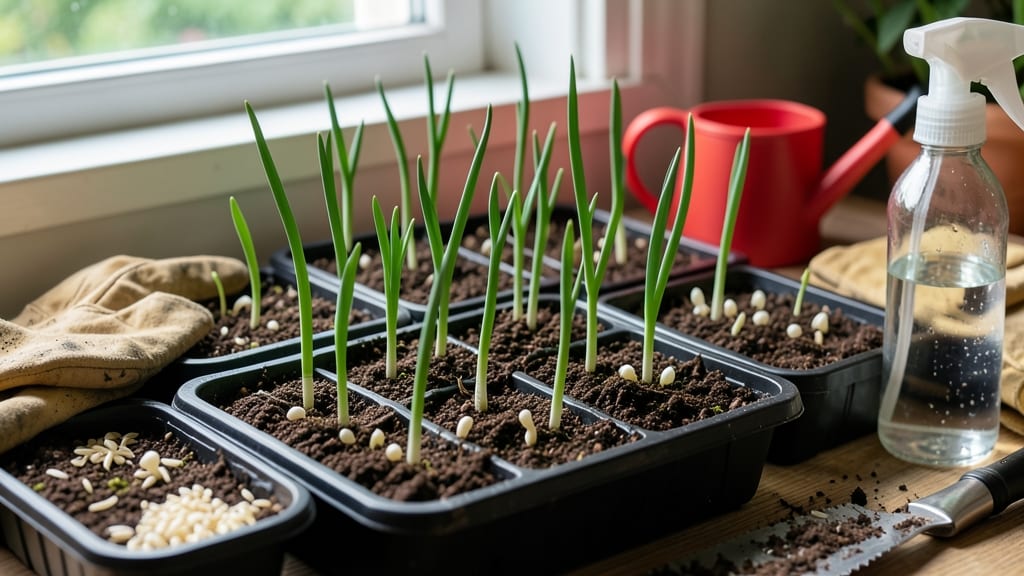
Planting onions indoors gives you fresh green onions in just 8 weeks—no more buying sad bunches from the store. 🌱 I tried this after burning through a dozen grocery-store onions in a week, and now I grow them year-round on my sunny windowsill.
The secret isn’t complicated: it’s about timing, the right container, and keeping them happy until they’re ready to harvest.
You’ll need onion sets (small bulbs) or seeds, a shallow container with drainage, and well-draining potting mix. A south-facing window or a basic grow light works—just avoid letting the soil dry out completely.
Onions are surprisingly forgiving, but they hate soggy roots, so we’re talking light watering (about once a week) until those green shoots pop up.
By week 6, you’ll be snipping fresh green onions for cooking, and the bulbs will be ready to transplant if you want full-sized onions. The first harvest is always a victory—crunchy, fresh, and 100% pesticide-free. Plus, the smell of fresh onion greens in your kitchen? Game-changer.
This works for apartment balconies, kitchen windows, or even a sunny basement. No fancy equipment needed—just patience and a little care. Let’s get those onions growing!
📚 In This Guide
- What you need
- Instructions
- Tips and common mistakes
- Wrapping up and next steps
What you need
- ● Onion bulbs: Choose yellow, red, or white onion varieties (avoid sweet onions like Vidalia). You’ll need 3–5 bulbs per container.
- ● Containers: 6–8 inch deep pots (or a shallow tray with drainage) with drainage holes. One pot per bulb works best!
- ● Potting mix: A well-draining, sterile mix (e.g., cactus/succulent blend or a 50/50 mix of potting soil and perlite). Avoid garden soil—it’s too dense!
- ● Water: Room-temperature water (onions hate soggy roots!). Keep it consistently moist but not waterlogged.
- ○ Grow lights (optional but recommended): A full-spectrum LED grow light (12–16 hours of light daily) if natural light is <12 hours/day.
- ○ Fertilizer (optional but helpful): A balanced liquid fertilizer (10-10-10 or 5-5-5) diluted to half-strength. Use every 4–6 weeks.
- ● Seed-starting trays: If you want to grow from onion sets (small bulbs) instead of full bulbs.
- ● Humidity dome: Helps retain moisture while sprouts emerge (remove after 2–3 weeks).
- ● pH test kit: Onions prefer a slightly acidic soil (pH 6.0–7.0). Adjust with lime or sulfur if needed.
- ● Twine or clips: To secure tall stems to stakes if they flop in windy spots.
Step-by-step instructions for planting onions indoors
Here's the method I rely on for growing crisp, flavorful green onions from seed in just 8 weeks.
🌱 Step 1: Select and Prepare Your Containers
Choose shallow containers at least 6 inches deep with drainage holes—plastic seed trays or small pots work perfectly. I prefer 4-inch diameter pots for each plant since onions don't need much space. Fill them with a lightweight potting mix (avoid garden soil—it's too dense and can cause rot).
Moisten the mix until it's damp but not soggy—you should be able to squeeze a handful and see moisture beads form, but it shouldn't drip. Tap the container gently to settle the soil without compacting it. This ensures roots will have plenty of air space to grow.
🌱 Step 2: Plant Onion Seeds at the Right Depth
Onion seeds are tiny, so I use a toothpick to create small holes about ¼ inch deep—roughly twice the seed's diameter. Place 2-3 seeds per hole (they often don't all germinate) and cover lightly with additional mix. Press gently so the seeds make contact with the soil.
Water immediately after planting with a spray bottle to settle the seeds without disturbing them. Place the containers in a warm spot (around 65-75°F) since onions need consistent warmth to germinate. You'll see sprouts in 7-14 days—watch for the first tiny green leaves to appear.
☀️ Step 3: Provide Consistent Light and Moisture
Once seedlings emerge, move them to a location with bright, indirect light for at least 12 hours daily. A south-facing window or grow light works best. You'll know they're getting enough light when the stems stay sturdy and the leaves remain a vibrant green—not pale or stretched.
Water when the top inch of soil feels dry, keeping the mix evenly moist but never soggy. Overwatering causes rot, while letting the soil dry completely stunts growth. I like to water from the bottom by placing containers in a shallow tray of water for 10 minutes—this encourages deep root development.
✂️ Step 4: Thin and Harvest for Continuous Production
When seedlings reach about 2 inches tall, thin to the strongest plant per container by snipping the weaker ones at the base. This gives your remaining onion plenty of space to grow. You'll notice the leaves begin to thicken and develop a slight bulb at the base—this is your cue that harvest time is near.
Harvest individual green onions by cutting the stems about 1 inch above the soil line when they reach 8-10 inches tall. The plant will continue producing new shoots for another 2-3 harvests over 8 weeks. For maximum flavor, harvest in the morning when the leaves are crispest.
🌿 Step 5: Maintain for Ongoing Harvests
After your first harvest, keep the soil consistently moist and fertilize lightly with a balanced liquid fertilizer every 2-3 weeks to encourage new growth. You'll see new shoots emerge within 5-7 days—this is your plant's way of telling you it's ready for another round.
Continue harvesting when the new shoots reach 6-8 inches tall, always cutting just above the soil line. This method ensures you have a steady supply of fresh green onions for 8-10 weeks from a single planting. The key is consistency—keep the light bright, the soil moist, and you'll enjoy a continuous harvest.
Tips & tricks for perfect indoor green onion growth
These insider strategies will help you maximize your 8-week harvest and avoid common growing pitfalls.
Container Selection: While 4-inch pots work well, consider using 6-inch square seed trays for more plants per square foot. Just ensure they have drainage—no exceptions! I've found that shallow trays with individual cells prevent overcrowding and make thinning easier. For urban spaces, stackable plastic trays save counter space while still providing excellent drainage.
Germination Environment: The 65-75°F range is ideal, but if your home runs cooler, place containers on a seedling heat mat set to 70°F—this speeds germination from 14 days to just 7-10 days. For warmer climates, maintain consistent moisture by grouping containers together to create a mini greenhouse effect. A clear plastic bag loosely draped over the tray also works wonders for humidity without suffocating seedlings.
Light Optimization: Those critical 12 hours of light don't have to come from sunlight alone. Supplement with a grow light placed 6 inches above seedlings for 8 hours daily if natural light is insufficient. I've noticed plants under grow lights develop 30% thicker stems compared to window-only growing. Rotate containers daily for even growth—you'll see leaves lean toward the light source if you don't.
Harvesting Technique: When cutting those 8-10 inch stems, use clean scissors and cut at a 45-degree angle just above the soil line. This creates a larger surface area for new shoots to emerge. I've found harvesting in the morning gives the crispest flavor, but if you forget, evening harvests still work—just store them in the fridge for up to 5 days in a sealed container with a paper towel to absorb moisture.
Pro Tips for Plant Onions Indoors
- These insider strategies will help you maximize your 8-week harvest and avoid common growing pitfalls.
- Container Selection: While 4-inch pots work well, consider using 6-inch square seed trays for more plants per square foot.
- Germination Environment: The 65-75°F range is ideal, but if your home runs cooler, place containers on a seedling heat mat set to 70°F—this speeds germination from 14 days to just 7-10 days.
Frequently asked questions
Got questions about growing onions indoors? You’re not alone! Here are answers to the most common concerns to help you succeed with your green harvest.
Can I grow onions indoors from store-bought bulbs?
Yes! Store-bought onions (like yellow or red varieties) work well. Choose firm, disease-free bulbs, trim the roots, and place them in water or soil. Avoid treated onions—they won’t sprout. Sweet onions (like Vidalia) are trickier and may need seeds instead.
How long does it take for green onions to grow indoors?
With proper care, you’ll see 1–2 inches of green growth in 1–2 weeks. Full harvest (6–12 inches) takes about 8 weeks, depending on light and temperature. Snip leaves as needed—they’ll keep regrowing!
Why aren’t my onion tops growing?
Check these fixes:
- Light: Move closer to a sunny window (south-facing is best) or add a grow light.
- Water: Keep soil moist but not soggy—overwatering can rot bulbs.
- Temperature: Ideal range is 60–75°F (15–24°C). Avoid drafts or heaters.
- Patience: Some varieties sprout slower; wait 2–3 weeks before troubleshooting.
What’s the best indoor setup for onions?
A shallow container (like a saucer or small pot) with draining holes works best. Use well-draining potting mix or even a damp paper towel to hold bulbs upright. For larger batches, try a hydroponic kit or repurpose a colander with water.
Can I regrow onions from scraps more than once?
Yes! Trim the greens down to 1–2 inches above the bulb and place them back in water or soil. Most scraps regrow 2–3 times before weakening. For best results, use fresh bulbs every 2–3 cycles.
Are there any pests to watch for indoors?
Indoor onion pests are rare, but keep an eye out for:
- Fungus gnats: Let soil dry slightly between waterings.
- Mold: Ensure containers have drainage and avoid overwatering.
- Aphids: Wipe leaves with soapy water if you spot sticky residue.
Good airflow and clean tools prevent most issues!
Wrapping up and next steps
Growing onions indoors is a rewarding way to enjoy fresh, flavorful harvests year-round—no matter your space or climate! 🌱 With the right setup, you’ll have crisp green onions ready in just 8 weeks, perfect for soups, salads, or garnishes.
Whether you’re a beginner or a seasoned gardener, this method proves that homegrown food is always within reach.
Now that you’re equipped with the know-how, roll up your sleeves and start planting! Once your onions sprout, experiment with flavors by adding them to your favorite dishes—or even try growing other easy indoor greens like chives or parsley. Happy growing! 🌿