
Planting
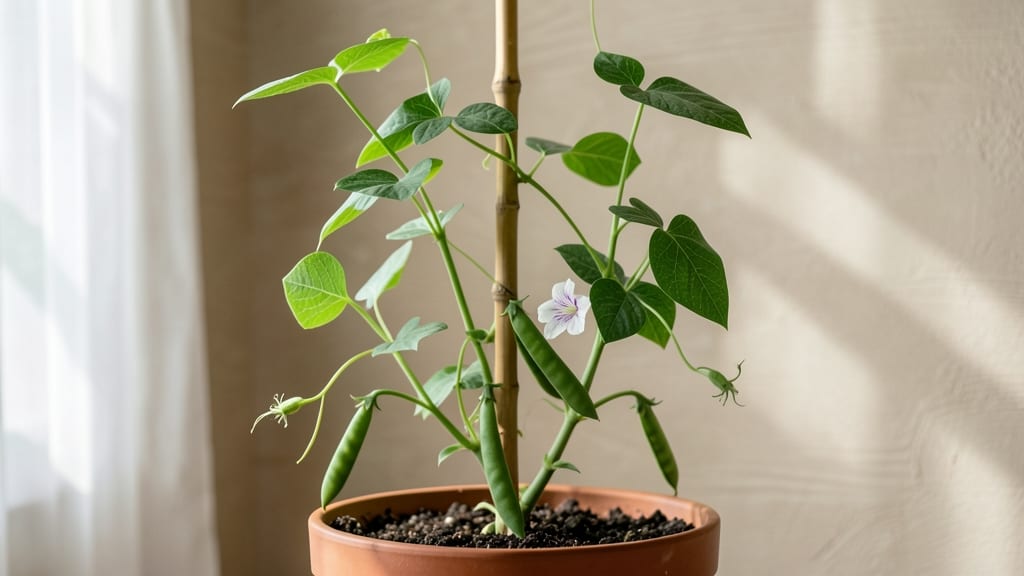
Growing an indoor green bean plant successfully requires containers with bright indirect light, nutrient-rich soil, and steady watering to support compact vines perfect for small spaces like windowsills or balconies. Opt for bush varieties like 'Blue Lake Bush' and harvest pods every 2-3 days to keep plants productive.
Green beans love warmth and light, but they can't handle direct sun—think of it like giving them a sunny patio without the harsh midday glare. 🌱 The key is finding that sweet spot where they get 6+ hours of bright, filtered light daily, which mimics their outdoor growing conditions.
I've found that south- or west-facing windows work best, but if your space is dim, a grow light on a timer can save your harvest.
As for soil, they need something airy yet moist—think of a mix that drains well but holds enough water to keep roots happy without drowning them. Adding compost or a balanced fertilizer (like 10-10-10) every 4-6 weeks gives them the nutrients they crave to produce those sweet, tender pods.
When it comes to varieties, dwarf or bush types are your best bet for indoor growing—they stay compact and don't need trellises, making them perfect for containers. 'Blue Lake Bush' is a crowd-pleaser, but don't overlook 'Contender' or 'Mascotte' for their disease resistance and steady production.
The secret to a bountiful harvest? Consistency is everything. Keep the soil evenly moist (not soggy) and harvest regularly—those pods won't wait around if you're not paying attention!
💡 In This Article
- Light, Soil, and Water Needs for Indoor Green Beans
- Best Compact Green Bean Varieties for Small Spaces
Light, soil, and water needs for indoor green beans
Green beans are sun-worshippers, but they have a delicate balance—too much direct light causes leaf scorch, while too little results in leggy, weak plants. The ideal scenario mimics their natural habitat with 6-8 hours of bright, indirect sunlight daily.
Think of it like giving them a morning coffee and afternoon tea: morning sun (east-facing windows) builds energy, while afternoon shade (west-facing with sheer curtains) prevents heat stress. 🌿 If natural light is scarce, a full-spectrum LED grow light placed 6-12 inches above the plants for 12-16 hours/day can replicate sunlight's spectrum, including the blue and red wavelengths crucial for photosynthesis.
The soil's secret weapon is its pH balance—green beans thrive in slightly acidic to neutral soil with a pH of 6.0-7.0. This range ensures they can absorb essential nutrients like nitrogen (for leafy growth), phosphorus (for root development), and potassium (for disease resistance).
A mix of 50% potting soil, 30% compost, and 20% perlite or vermiculite creates the perfect airy, well-draining medium. Too much clay or compacted soil suffocates roots, leading to yellowing leaves—a classic sign of poor oxygen circulation.
Watering becomes an art: keep the top 1-2 inches of soil consistently moist but never soggy, as green beans hate "wet feet." Overwatering triggers root rot, while underwatering causes pods to toughen and lose sweetness.
Here's where the science gets interesting: green beans use a process called transpiration to pull water and nutrients from the soil.
When humidity drops below 40% (common in indoor heating systems), plants struggle to absorb moisture efficiently, leading to stunted growth. 💧 A simple solution is to place a tray of water near your plants or use a humidifier to maintain 50-60% humidity.
This mimics the moisture-rich environments they'd find in a greenhouse. Fertilizing every 4-6 weeks with a balanced liquid fertilizer (like 5-5-5) gives them a steady nutrient supply, but avoid overdoing it—excess salts in the soil can burn roots, causing brown leaf edges.
Watch for these red flags: yellowing leaves often signal nitrogen deficiency or overwatering, while brown spots on pods mean calcium deficiency (add crushed eggshells to the soil). Stunted growth with small leaves? It's likely a phosphorus shortage—try a quick boost with bone meal.
The key to preventing these issues is observation and adjustment. Green beans communicate their needs through subtle changes in leaf color, stem strength, and pod development. For example, dark green leaves with purple stems indicate phosphorus deficiency, while pale yellow leaves suggest nitrogen issues.
Adjust your care routine based on these visual cues, and your plants will reward you with crisp, flavorful pods.
Seasonal adjustments are critical for year-round indoor growing. During winter, when natural light dims, supplement with grow lights and reduce watering slightly (soil stays moist longer in cooler air).
In summer, increase airflow with a small fan to prevent fungal diseases like powdery mildew, which thrives in stagnant, humid conditions. 🌱 The goal is to create a microclimate that stays consistent—green beans are forgiving but finicky, and they'll let you know when something's off through their growth patterns.
Pay attention, and you'll master the art of indoor green bean cultivation.