
Watering
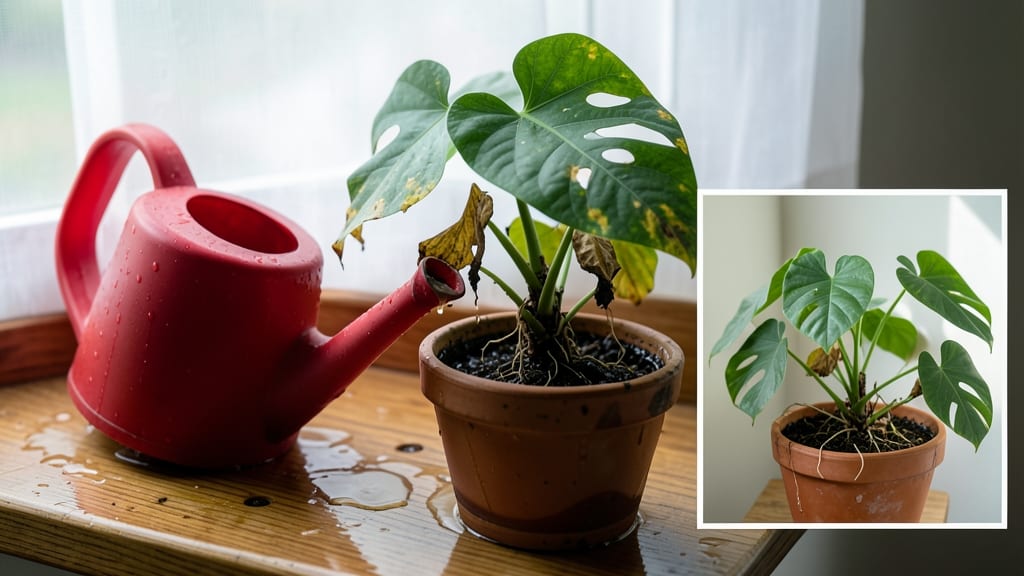
Your drooping overwatered indoor plant might be drowning, not thirsty. 🌱 I’ve pulled back more plants from the brink of root rot than I’d like to admit—here’s how to rescue yours in 3 simple steps that work for pothos, snake plants, and even finicky ferns.
The first clue? Yellowing leaves, mushy stems, or soil that smells like a swamp. Overwatering suffocates roots by cutting off oxygen, and the damage spreads fast. Most people think wilting means thirsty plants, but soggy soil actually starves them—even if the pot feels heavy.
By the end of these steps, you’ll have firm, green leaves and soil that smells fresh, not sour. We’re talking revived growth in 2-4 weeks with the right care. The key is patience—roots need time to heal, but they will bounce back.
This method works for any common houseplant, whether you’ve got a single pot or a whole windowsill full of casualties. Let’s turn that sad, soggy mess into a thriving green friend again.
The Hidden Triggers Behind Soggy Roots
Overwatering isn’t just about giving your plant a little too much love—it’s a sneaky combo of environmental factors, human habits, and plant biology working against your green friend.
Understanding these root causes (pun intended) is the first step to fixing the problem. Let’s break down why your indoor plant might be drowning in its own pot.
Most indoor plants need well-draining soil to prevent root suffocation. Without proper drainage, excess water pools at the bottom of the pot, starving roots of oxygen and creating a breeding ground for root rot. Here’s why it happens:
- Compacted or heavy soil: Clay-heavy or peat-based mixes retain moisture like a sponge. If your soil doesn’t crumble easily when dry, it’s likely the culprit. Actionable fix: Amend with perlite, orchid bark, or coconut coir to improve aeration.
- No drainage holes: Pots without holes act like waterproof containers, trapping moisture indefinitely. Even "self-watering" pots can backfire if overfilled. Actionable fix: Repot into a container with drainage holes or elevate the pot on a saucer with pebbles.
- Glazed or plastic pots: These materials don’t allow water to evaporate through the sides, keeping the soil damp longer. Actionable fix: Opt for terracotta, ceramic, or fabric pots for better moisture regulation.
Sticking to a rigid watering calendar—like every Monday or Wednesday—is a fast track to overwatering. Plants don’t follow your routine; their needs fluctuate based on light, humidity, and season. Here’s how misjudged timing leads to soggy soil:
- Ignoring the "finger test": Sticking your finger 1–2 inches into the soil is the gold standard for checking moisture. If it’s still damp, hold off! Pro tip: Use a moisture meter for precision, especially with thirsty plants like ferns or calatheas.
- Overwatering in low light: Plants in dim corners (e.g., bathrooms or north-facing windows) photosynthesize slowly, so they absorb less water. Yet, many owners water them as frequently as sun-loving plants. Actionable fix: Reduce watering by 30–50% for low-light plants.
- Seasonal neglect: Winter slows plant growth, meaning they need far less water. A summer watering schedule in December? Disaster. Pro tip: Cut back in fall/winter and resume normal watering in spring.
High humidity or sudden temperature drops can trick you into thinking your plant is thirsty when it’s actually waterlogged. Here’s how climate plays a role:
- Humid environments (e.g., kitchens, bathrooms): Moist air slows evaporation, keeping soil damp longer. A peace lily or pothos in a steamy bathroom may only need water every 2–3 weeks, not weekly. Actionable fix: Monitor soil moisture closely and reduce watering frequency.
- Cold drafts or AC units: Cool air reduces transpiration (water loss through leaves), making plants retain moisture longer. Pro tip: Keep plants away from vents or doors and avoid placing them near air conditioning.
- Sudden temperature swings: Moving a plant from a warm windowsill to a chilly floor can disrupt its water balance. Actionable fix: Keep plants in consistent microclimates and avoid relocating them frequently.
Not all plants are created equal—and neither are their water needs. Mixing up a succulent’s drought tolerance with a monstera’s thirst for moisture is a recipe for disaster. Here’s how misjudging your plant’s needs backfires:
| Plant Type | Water Needs | Overwatering Red Flags |
|---|---|---|
| Succulents/Snakes (e.g., Sansevieria) | Every 3–4 weeks (let soil dry completely) | Yellowing leaves, mushy stems, blackened roots |
| Tropicals (e.g., Fiddle Leaf Fig, Calathea) | Every 1–2 weeks (top inch dry) | Brown leaf tips, drooping, fungal spots |
| Air Plants (Tillandsia) | Mist 1–2x weekly or soak monthly | Blackened, rotting bases, foul odor |
Actionable fix: Research your plant’s native habitat (e.g., desert vs. rainforest) to gauge its water tolerance. When in doubt, underwater—plants recover faster from drought than from rot.
A pot that’s too large for your plant’s root system holds excess moisture for weeks, suffocating roots. Here’s why this happens:
- Overpotting at purchase: Nursery pots are often oversized to accommodate root growth during shipping. A 6-inch pothos in a 12-inch pot will stay soggy for months. Actionable fix: Repot into a container just 1–2 inches larger than the root ball.
- Slow-growing plants in big pots: Plants like ZZ plants or snake plants have minimal root systems but can languish in oversized containers. Pro tip: Choose pots that match the plant’s mature size (e.g., a 4-inch pot for a small snake plant).
Now that you know the why, the next step is diagnosing your plant’s specific symptoms (yellow leaves? Drooping? Moldy soil?). Stay tuned for our 3-step revival guide to bring your soggy friend back to life! 🌿✨
Revive Your Plant in 3 Steps
Overwatering can feel like a death sentence for your leafy friend, but don’t panic—most plants can bounce back with the right care. The key is acting fast, diagnosing the damage, and adjusting your routine.
Below, we’ll break down cause-specific fixes to nurse your plant back to health, plus tips to keep it thriving long-term.
---
Before you act, check how severe the overwatering is. Plants show stress in different ways, and your next steps depend on the symptoms:
| Symptom | What It Means | Urgency Level | |---------------------------|--------------------------------------------|-------------------| | Yellowing leaves | Root rot may be starting (early stage) | Medium | | Mushy, black stems/roots | Advanced root rot (act fast!) | High | | Wilting despite wet soil | Roots can’t absorb water (oxygen deprivation) | Critical | | Brown, crispy leaf edges | Overwatering + possible fertilizer burn | Medium |
💡 Pro Tip: Gently tug on the plant. If it slides out of the pot easily, the roots are rotting and need immediate attention.
---
**🔥 For early-stage overwatering (yellowing leaves, no mushiness): 1. Stop watering immediately – No more H₂O until the soil dries out.
2. Repot in fresh, dry soil – Remove the plant, trim any mushy roots (use sterilized scissors), and transfer to a pot with drainage holes (if it lacks them, drill some!).
3. Let it dry out – Place the plant in a spot with bright, indirect light (no direct sun yet—it’s stressed!). Avoid misting or watering for 5–7 days.
🍳 For advanced rot (black stems, foul smell, wilting): 1. Trim the damage – Cut away all black, mushy roots and stems with clean scissors. Healthy roots are firm and white. 2. Disinfect the pot – Scrub it with a 1:10 bleach-water mix (or soapy water) to kill fungus/bacteria. Rinse well. 3. Repot in fresh, well-draining mix – Use a cactus/succulent mix or add perlite/pumice to regular soil (aim for 30–50% drainage material). 4. Bottom-water only – Place the pot in a tray of water for 10–15 minutes, then drain completely. Repeat every 7–10 days until you see new growth.
🌡️ Pro Tip: If your plant is severely compromised, propagate healthy cuttings in water or soil before repotting the main plant. Some plants (like pothos or snake plants) root easily from stem cuttings!
---
Now that your plant is stable, change your watering habits to avoid future disasters:
#### 🔥 H3: Fix #1 – Soil and Pot Problems - Use the right pot: Terracotta (unglazed) wicks away moisture, while plastic traps it.
If repotting, size up only 1–2 inches—too much space = more water retention. - Amend heavy soil: If your mix holds water like a sponge, add perlite, orchid bark, or coconut coir (20–30% of the mix). - Check drainage: If your pot has no holes, drill them or use a cache pot (a decorative outer pot with a saucer to catch excess water).
#### 🍳 H3: Fix #2 – Watering Mistakes - Test soil moisture: Stick your finger 1–2 inches deep. If it’s damp, wait.
If it’s dry, water slowly until it runs out the bottom. - Water less often: Most indoor plants need water every 1–2 weeks (even "thirsty" plants like monstera!). Adjust based on light, humidity, and season (plants sleep in winter!). - Use the right amount: Drown = bad.
Sip = good. Bottom-watering (placing the pot in a tray of water) often prevents overwatering better than top-watering.
#### 👨🍳 H3: Fix #3 – Light and Humidity - Move to brighter light: Low light = slower drying.
Most plants thrive in bright, indirect light (east or north windows are ideal). - Reduce humidity around the plant: If your home is humid (e.g., bathroom), move it to a drier spot or use a small fan to improve airflow. - Avoid cold drafts: Chilly windowsills can shock roots, making them more susceptible to rot.
--- Once your plant recovers, keep it happy with these habits: - ✅ Water only when the top 1–2 inches of soil are dry. - ✅ Use pots with drainage holes (or cache pots if aesthetics matter). - ✅ Fertilize lightly (every 2–3 months in spring/summer; never when soil is soggy). - ✅ Dust leaves to help them absorb light and breathe. - ✅ Monitor for pests (overwatering attracts fungus gnats—use yellow sticky traps if needed).
--- 🎯 Final Thought: Overwatering is the #1 killer of houseplants, but it’s also the easiest mistake to fix. With these steps, your plant should perk up in 2–4 weeks**—just give it time and patience! 🌿💚
Frequently asked questions
Why does my indoor plant wilt even when the soil feels wet?
Wilting in soggy soil means your plant’s roots can’t absorb water—they’re suffocating from lack of oxygen. When roots rot, they lose their ability to transport water and nutrients, causing leaves to droop. This is a classic sign of overwatering, not thirst.
How can I tell if my plant has root rot?
Gently remove your plant from its pot and examine the roots. Healthy roots are firm and white, while rotten roots are mushy, black, or brown. If you smell a foul odor or see moldy soil, that’s another red flag—time to trim the damaged roots and repot.
Can I save my overwatered plant if the stems are already mushy?
Yes, but act fast! Trim away all black or squishy stems and roots with sterilized scissors, then repot in fresh, well-draining soil. For severe cases, propagate healthy cuttings in water—many plants like pothos or snake plants will grow new roots while you nurse the main plant back.
Will my plant recover if I just stop watering it?
Stopping water is a start, but not enough alone. Roots need time to dry out and heal, which is why repotting in fresh, dry soil with proper drainage is crucial. Without these steps, the damage can spread even after you stop watering.
How often should I water my plant after recovery?
Wait until the top 1–2 inches of soil are completely dry before watering again. For most indoor plants, this means every 1–2 weeks, but adjust based on your home’s light and humidity. Always check with your finger—when in doubt, wait longer!