
Pruning
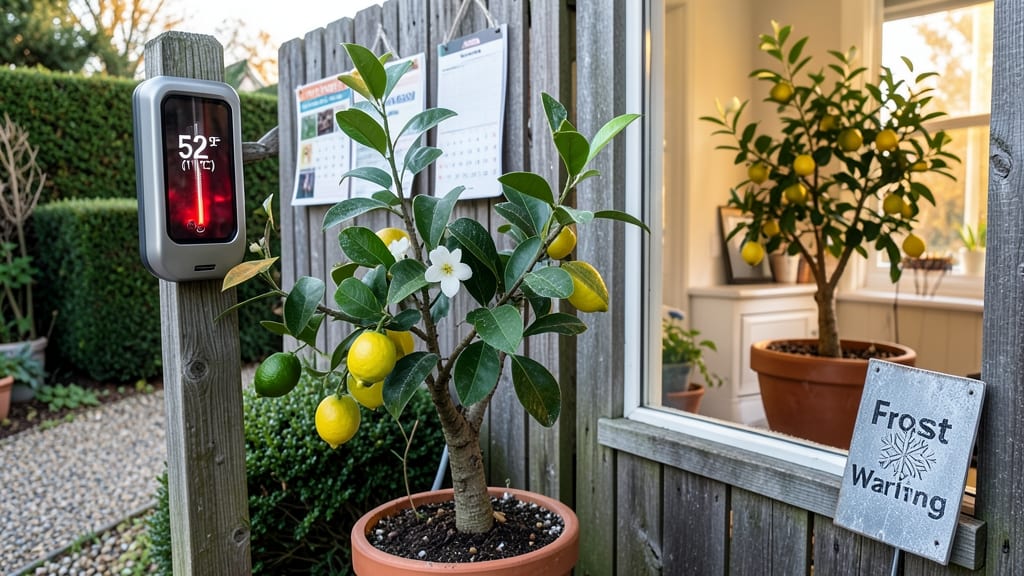
Bringing your lemon tree indoors at the right time protects its fruit and keeps it thriving through winter.
Your lemon tree 🍋 thrives in sunshine, but when temperatures drop, those golden fruits can disappear overnight—unless you act fast. Knowing the exact moment to bring your lemon tree indoors is the difference between a thriving citrus plant and a lost investment.
Most gardeners wait until nighttime temperatures consistently dip below 50°F, but that’s just the start. Regional differences matter: in USDA Zone 9, you might move it indoors by late October, while colder zones could need to act by September.
Here’s how to spot the signs—from leaf changes to growth slowdowns—and prepare for a smooth transition that keeps your tree healthy all winter long.
Climate-based signs your lemon tree needs indoor shelter
Lemon trees (Citrus limon) are tropical plants that struggle when temperatures dip below 50°F (10°C). Even a single frost event can kill your tree, so timing is everything.
The key is understanding your local climate and USDA hardiness zone—because what’s safe in Zone 10 (like Southern California) is deadly in Zone 5 (like Minnesota).
Most lemon trees thrive outdoors year-round only in Zones 9-11. Gardeners in colder regions must move their trees indoors before the first 32°F (0°C) frost warning.
But don’t wait until the last minute—temperature drops below 60°F (15°C) can already stress your tree, slowing growth and reducing fruit production.
Here’s how to read your climate like a pro and act before it’s too late:
Your local microclimate matters just as much as your zone. A tree in a sunny, sheltered spot near a brick wall may survive 5°F cooler than one in an open, windy area.
Pay attention to frost advisories and adjust your timeline accordingly—especially if you’re in a transition zone like Zone 8a (where frosts can still occur).
Even in mild climates, watch for unseasonal cold snaps. A sudden drop to 45°F (7°C) can shock your lemon tree, causing leaves to yellow or drop.
If you see new growth slowing or buds failing to open, it’s a clear sign your tree is struggling with cooler temps and needs indoor shelter.
Don’t rely solely on calendar dates—use a minimum-maximum thermometer near your tree to track nighttime lows. When temps consistently dip below 60°F (15°C) at night, it’s time to act. Pro tip: Container-grown lemon trees cool down faster than in-ground plants, so move them indoors earlier if they’re in pots.
If you’re in Zone 9 or warmer, you might only need to bring your lemon tree indoors during unusually cold winters. But if you’re in Zone 7 or colder, treat indoor shelter as a yearly ritual.
The goal is to preserve your tree’s health and ensure it’s ready to burst into growth when spring arrives.
One common mistake? Waiting until you see frost damage before moving your tree. By then, it’s often too late to save leaves or fruit. Instead, plan ahead: acclimate your tree to indoor conditions over 7-10 days before the big move to minimize shock.
This means gradually reducing sunlight exposure and adjusting watering routines.
Remember, a lemon tree’s fruit production depends on consistent warmth. If you let it suffer through cold stress, you might lose both leaves and lemons. But with the right timing, your tree can thrive indoors and reward you with juicy lemons year after year. 🍋
Leaf and growth changes indicating indoor transition time
Your lemon tree 🍋 communicates its needs through visual cues long before temperatures drop. Watch for yellowing leaves along the edges—this signals nutrient stress from reduced sunlight or cooler air.
Even healthy trees may drop a few leaves as they prepare for dormancy, but excessive shedding means it’s time to act.
Pay attention to new growth patterns. If your tree’s buds stop forming or existing ones remain dormant longer than usual, this is a clear sign it’s struggling to adapt.
Lemon trees in USDA Zones 9-11 may slow growth naturally, but stunted shoots or thin stems indicate stress from outdoor conditions.
🚨 WARNING: Delaying the move can cause irreversible damage 🚨
⚠️ Critical Signs Your Lemon Tree Needs Indoor Shelter NOW
- ✂️ Leaf drop: Losing more than 10% of foliage in 2 weeks
- 🌡️ Growth halt: No new leaves or buds for 30+ days
- 🍂 Yellowing veins: Beyond just edges—entire leaf discoloration
- 🐛 Pest invasion: Spider mites or aphids thriving in cooler temps
💡 Action: Move indoors before nighttime temps drop below 50°F (10°C) to prevent root shock or fungal infections.
Check for leaf curling or puckering, which often means your tree is reacting to dry air or temperature fluctuations. Even if your region hasn’t had frost, humidity drops below 40% can stress citrus trees. If leaves feel dry or crispy to the touch, it’s a red flag.
Observe the fruit development. If existing lemons stop ripening or new blooms fall off before setting fruit, your tree is conserving energy for survival. This is nature’s way of saying, "I need protection". Don’t wait for frost—act when you see 3+ of these signs combined.
Finally, inspect the soil and roots. If roots are pulling away from the pot or soil stays bone-dry longer than usual, your tree is struggling to absorb moisture.
This often happens when outdoor temps drop below 60°F (15°C), signaling it’s time to transition indoors for consistent care.
By tuning into these subtle but critical cues, you’ll catch the perfect window to move your lemon tree indoors—before stress becomes permanent. Trust your tree’s signals, and it’ll reward you with years of fruit production indoors. 🌱