
Vegetables
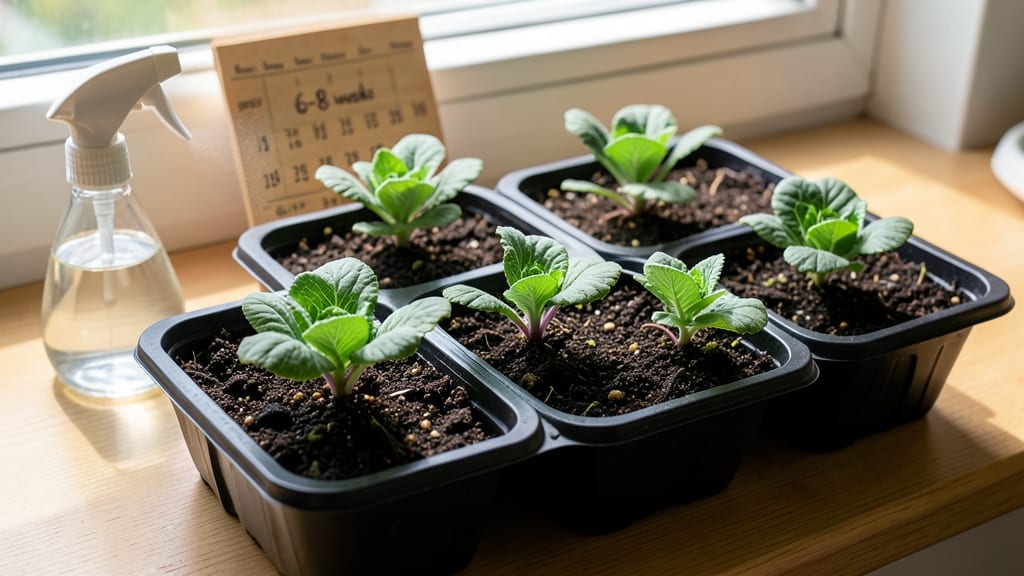
Starting cabbage seeds indoors 8 weeks before your last frost ensures sturdy, frost-resistant plants ready for transplant—no more wimpy seedlings struggling in cold soil.
Picture this: you’ve got a 6-week-old cabbage 🥬 that’s already 6 inches tall, its leaves thick and vibrant, just as the soil warms. That’s the difference between a harvest and a gamble.
Timing isn’t just about dates—it’s about matching your variety’s maturity to your climate’s quirks, whether you’re in chilly Zone 4 or mild Zone 10.
Most gardeners miss the mark by starting too late, only to watch their seedlings bolt or freeze. But with a simple 8-week countdown from your last frost date—and a few tweaks for early or late zones—you’ll nail the perfect window.
Below, I’ll break down the exact math, plus how to adjust for slow starts or extended seasons.
You’ll leave here knowing your ideal start date, how to spot a healthy seedling, and when to harden it off—so your cabbage goes from seed to table with confidence, not chaos.
Optimal indoor seed starting dates by US hardiness zones
Getting your cabbage seeds indoors at the right time ensures strong, frost-resistant seedlings ready for transplant. Since cabbage needs 75-90 days to mature, timing is critical—especially in colder zones where frost arrives early.
The 8-week rule (counting back from your last frost date) works best for most varieties, but exact dates vary by zone. Let’s break it down so you can start seeds with confidence.
Your last frost date is the starting point for all calculations. For example, if your zone’s average last frost is April 15th, you’d start seeds around February 20th to give seedlings 8 weeks to harden off before transplanting.
But in Zone 3, where frosts linger until May 15th, you’d start seeds March 15th instead. Use the table below for precise zone-by-zone guidance.
Why 8 weeks? Cabbage seedlings need time to develop 4-6 true leaves and a sturdy root system before facing outdoor conditions. Rushing this process risks weak, leggy seedlings that struggle after transplanting. In warmer zones like Zone 10, you might even stretch to a 6-week schedule, but always prioritize seedling robustness over speed.
Here’s the summary-table with your zone-specific indoor starting windows, calculated using the 8-week pre-frost rule and adjusted for regional variations:
For Zone 3-5 gardeners, I recommend starting seeds on the earlier side of the window. Cooler indoor temperatures slow germination, so give yourself a buffer. In Zones 6-10, you can experiment with successive plantings—just adjust your start dates by 2 weeks for a staggered harvest.
For example, in Zone 7, starting a second batch on February 15th gives you a late-summer crop.
Pro tip: Use a grow light to supplement weak winter sunlight. Cabbage seedlings need 14+ hours of light daily to prevent legginess. Without enough light, they’ll stretch toward your window, becoming weak and prone to damping off. Place your seed trays
Key factors that affect cabbage seed starting timing
Starting cabbage seeds indoors requires more than just checking your USDA zone. While zones provide a baseline, your exact start date depends on three critical factors: variety maturity days, soil temperature, and light exposure.
These variables determine whether your seedlings will be robust enough to handle transplanting and thrive in your garden.
For example, a 45-day variety like Early Jersey Wakefield needs a completely different timing approach than a 90-day variety like Golden Acre. The same goes for soil that's too cold (below 55°F) or too hot (above 85°F), which can stunt germination or cause leggy seedlings.
Let's break down how these factors interact to create your perfect schedule.
Your Cabbage Seed Starting Checklist
- Step 1: Choose your variety and check maturity days (45-90 days). Subtract this from your last frost date to get your indoor start window.
- Step 2: Ensure your seed-starting mix is between 55-85°F. Use a heat mat if soil is too cold (55°F) or move to a cooler spot if too hot (85°F+).
- Step 3: Provide 14+ hours of light daily using grow lights if natural light is insufficient. Leggy seedlings result from low light and weaken transplant success.
- Step 4: Adjust your schedule 2 weeks earlier for northern zones (Zones 3-5) or 2 weeks later for southern zones (Zones 8-10) to account for longer/shorter growing seasons.
- Step 5: Harden off seedlings for 7-10 days before transplanting. Skip this, and your seedlings will bolt or wilt in outdoor conditions.
Let’s say you’re in Zone 6a with a last frost date of April 15. If you’re growing a 75-day variety, you’ll need to start seeds by February 1 to ensure maturity before frost.
But if your soil stays cold until May 1, you’d push your start date to March 1 instead. This flexibility is where most gardeners go wrong—they assume a one-size-fits-all approach.
Another game-changer is light exposure. Cabbage seedlings need 14+ hours of light daily to prevent etiolation (those weak, stretched stems). Without sufficient light, your seedlings will struggle to develop the compact roots needed for successful transplanting.
If your windows don’t provide enough light, invest in a LED grow light placed 2-3 inches above seedlings for optimal growth.
Don’t overlook soil temperature either. Cabbage seeds germinate best in soil between 55-85°F. If your home stays chilly, use a seedling heat mat to maintain consistent warmth.
Conversely, if your indoor space overheats (common in Zones 8-10), move your seed trays to a cooler spot like a basement or garage to avoid damping off, a fungal disease that kills young seedlings.
Finally, regional adjustments are key. Gardeners in northern climates (Zones 3-5) should start seeds 2-3 weeks earlier than the general guideline to compensate for shorter growing seasons. Meanwhile, those in southern zones (Zones 8-10) can delay starts by 2 weeks and still avoid frost issues.
Always double-check your local frost dates and adjust accordingly—your cabbage’s success depends on it!