
How To
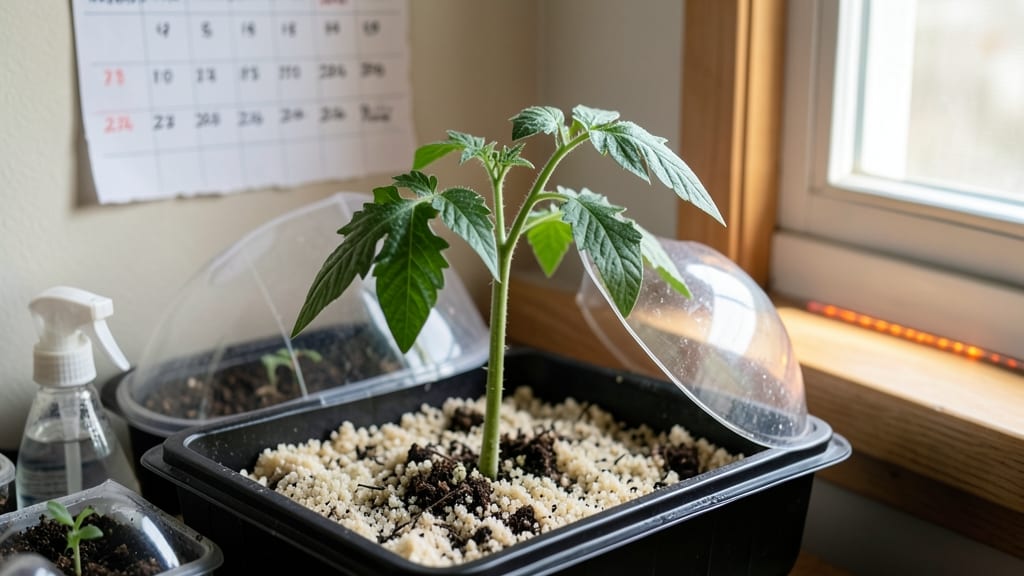
Starting seeds indoors in Ohio requires precision—timing them 6-8 weeks before your last frost is the key to strong, transplant-ready 🌱 plants.
Ohio gardeners know timing is everything—start seeds too early, and they’ll bolt; too late, and frost will kill them. But with Ohio’s unpredictable climate, when exactly should you begin your indoor seed starting?
Most Ohio gardeners aim for mid-March to early April, but the right window depends on what you’re growing. Heat-loving crops like tomatoes and peppers need an early start, while cold-hardy greens can wait until late March or even early April.
Below, I’ll break down Ohio’s frost dates by region, how to adjust for early vs. late varieties, and the exact seed-starting schedule for your favorite vegetables, herbs, and flowers.
Ohio’s last frost dates by region: critical timing for seed starting
Ohio’s last frost dates vary dramatically across its USDA Zones 4-7, making precise timing essential for seed starting. Northern Ohio (Zone 4) faces late spring frosts often until May 15, while southern Ohio (Zone 7) typically warms up by April 15.
These dates determine when to start seeds indoors to ensure healthy transplants ready for the garden.
To avoid frost damage or overcrowded seedlings, calculate your seed-starting window by counting backward from your region’s last frost date. Most vegetables need 6-8 weeks indoors before transplanting, while herbs and flowers may require 4-6 weeks. Let’s break down Ohio’s frost-free zones and their ideal planting schedules.
Key takeaway: Northern Ohio gardeners should start seeds 4-6 weeks earlier than southern Ohio counterparts to account for later frost dates. For example, tomatoes in Zone 4 may need indoor starts by March 1, while Zone 7 gardeners can wait until March 15. Always verify with local Cooperative Extension data for year-to-year variations.
For heat-loving crops like tomatoes and peppers, begin seeds indoors in late January to early February—even in southern Ohio—to give them enough time to mature before summer’s heat. These plants thrive with warm soil temperatures (70°F+), so consider using heat mats to speed up germination.
Cold-hardy vegetables like lettuce, spinach, and kale can often be direct-sown after your last frost date, but starting them indoors 4-6 weeks early gives you a head start. These greens tolerate cooler temperatures and may even bolt less quickly if transplanted as young seedlings.
Ohio’s first frost dates (typically October 15 in the north to November 1 in the south) also influence when to start fall crops like broccoli or radishes. For these, calculate backward from your first frost date minus the plant’s days to maturity.
For example, a 50-day broccoli variety should be started indoors by August 25 in Zone 6.
Always cross-reference seed packet instructions with your local frost dates—some varieties are bred for early maturity and can handle shorter growing seasons. For instance, ‘Early Girl’ tomatoes mature in 55 days, while ‘Brandywine’ takes 85 days, making the former a better choice for northern Ohio’s shorter season.
Use this backward calculation method:
- Note your last frost date (e.g., May 15 for Zone 4).
- Subtract the plant’s days to maturity (e.g., 60 days for tomatoes).
- Subtract 6-8 weeks for indoor growth time.
- Start seeds by March 1 for Zone 4 tomatoes.
Pro tip: Keep a gardening journal to track your local frost dates year-to-year—Ohio’s climate can shift dramatically. For example, 2018’s late frost in April delayed planting for many gardeners, while 2021’s early warm spell allowed for earlier starts.
Adjust your schedule based on 3-5 year averages rather than relying solely on seed packet guidelines.
🌱
Best plants to start indoors in Ohio: frost-sensitive vs. cold-tolerant
Ohio’s unpredictable frost dates mean your indoor seed starting timeline must balance plant sensitivity with local climate risks. Some plants, like tomatoes and peppers, need warm soil and heat mats to germinate, while others, like lettuce and spinach, thrive in cooler conditions.
Understanding these differences ensures your seedlings are ready for Ohio’s average last frost (April 15) without bolting or stunting.
For frost-sensitive plants, start seeds indoors 6-8 weeks before your region’s last frost date. In Ohio, that’s typically mid-March to early April. Use grow lights for 14-16 hours/day to compensate for short winter days.
For cold-tolerant varieties, like kale or peas, you can delay starting until late March or early April and even transplant earlier if soil temps allow.
| Plant Type | Indoor Start Time (Ohio) | Transplant Window | Grow Light Needs | Heat Mat Needed? |
|---|---|---|---|---|
| Tomatoes (Frost-Sensitive) | Mid-March (8 weeks before last frost) | Early May (after soil warms to 60°F+) | 14-16 hrs/day (LED or fluorescent) | ✅ Yes (70-80°F soil) |
| Peppers (Frost-Sensitive) | Late February (10 weeks before last frost) | Mid-May (soil 70°F+) | 16 hrs/day (full-spectrum) | ✅ Yes (75-85°F soil) |
| Lettuce (Cold-Tolerant) | Early March (4-6 weeks before last frost) | Early April (soil 40°F+) | 12-14 hrs/day (cool white) | ❌ No (50-60°F ideal) |
| Marigolds (Cold-Tolerant) | Late March (3-4 weeks before last frost) | Late April (soil 55°F+) | 10-12 hrs/day (natural light OK) | ❌ No (60-70°F ideal) |
| Basil (Frost-Sensitive) | Late March (6 weeks before last frost) | Early May (soil 65°F+) | 14-16 hrs/day (warm white) | ✅ Yes (70°F+ soil) |
*Adjust timelines 1-2 weeks earlier for southern Ohio (warmer microclimates) or later for northern Ohio (colder zones).
If you’re using heat mats, place them under seed trays to maintain 70-80°F soil temps for tomatoes, peppers, and basil. These plants won’t germinate well in cooler soil. For cold-tolerant crops, like spinach or peas, skip the heat mat and keep soil temps between 50-60°F.
A simple thermometer buried in the soil ensures accuracy—too cold delays germination, and too hot can rot seeds.
Pro tip: Use grow lights on timers to simulate Ohio’s lengthening daylight in late winter. For frost-sensitive plants, extend light to 16 hours/day until transplanting.
For cold-hardy greens, reduce to 12 hours/day to prevent bolting. My LED grow lights pay for themselves in faster, healthier seedlings—no more leggy, etiolated stems!
Northern Ohio gardeners should err on the side of starting earlier (early March) for tomatoes and peppers, while southern Ohio growers can delay until late March. Always check your local frost-free date (USDA Zone 5-7 in Ohio) and adjust by 1-2 weeks based on recent weather patterns.
A seedling heat mat and grow light combo gives you that extra buffer against Ohio’s late spring frosts.
Remember: Transplant shock is real! Harden off seedlings by gradually reducing grow lights and increasing airflow 1 week before moving them outdoors. For frost-sensitive plants, wait until nighttime temps stay above 50°F—even if days are warm.
My tomato seedlings once wilted overnight after a 55°F dip, but they recovered after a week of protection under frost cloth.