
Plants
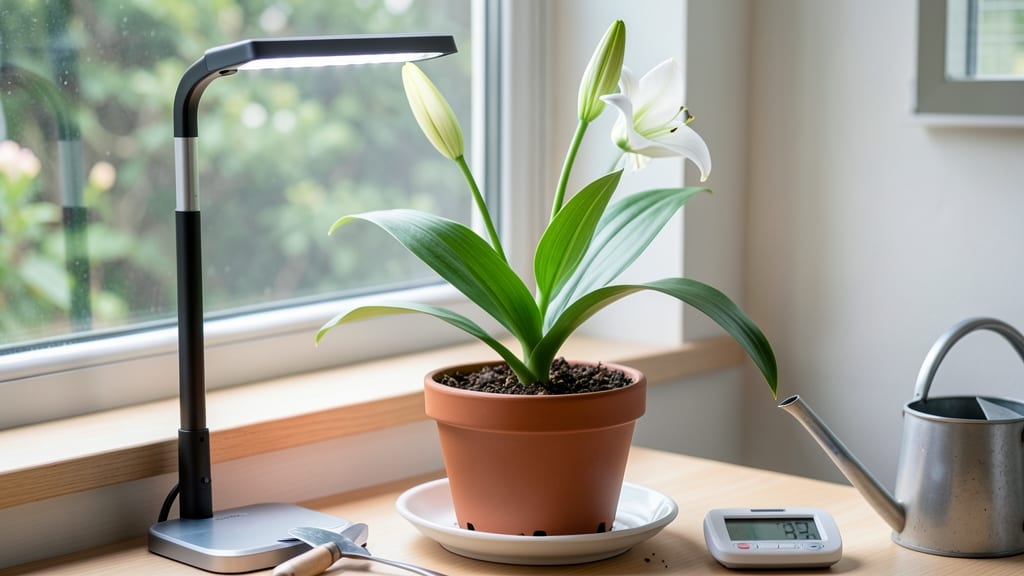
You can grow lilies indoors by selecting the right varieties—such as Peace Lilies or Calla Lilies—since true lilies (Lilium species) need bright, direct sunlight and higher humidity that most homes can't provide. Opt for low-light-tolerant types and use well-draining soil for best growth.
Indoor lily cultivation hinges on choosing the right houseplant-friendly varieties like Spider Lilies or Calla Lilies, which thrive in moderate to low light conditions. 🌿 Unlike their outdoor counterparts, these adapt well to indoor environments when given proper care—think bright indirect light near east-facing windows or under grow lights.
The key is mimicking their natural habitat with consistent moisture and occasional misting to maintain humidity levels.
For blooming success, I recommend using a well-aerated potting mix with perlite or orchid bark to prevent root rot. Water only when the top inch of soil feels dry, and avoid letting them sit in standing water.
During winter, reduce watering slightly as growth slows, but keep the environment consistently moist to prevent leaf browning.
💡 In This Article
- Best Indoor Lily Varieties and Their Light Needs
- Indoor Lily Care Guide: Soil, Watering, and Humidity Tips
Best indoor lily varieties and their light needs
Not all lilies thrive indoors—only specific varieties adapt well to low-light conditions. The Peace Lily (Spathiphyllum) tops the list, tolerating low to bright indirect light and even flourishing under fluorescent bulbs.
Its dark green leaves and white blooms make it a classic choice, but it's technically not a true lily (Lilium). For a closer match, Calla Lilies (Zantedeschia) offer dramatic foliage and blooms with minimal light needs, though they prefer bright indirect light near east-facing windows. 🌿
True lilies (like Easter Lilies or Tiger Lilies) require 6+ hours of direct sunlight daily and high humidity—conditions most homes can't replicate. Instead, these varieties need grow lights (12-14 hours/day) or a sunny south-facing window, which few indoor spaces provide.
The Spider Lily (Hymenocallis) is another exception, thriving in moderate to bright indirect light and tolerating slightly drier air, making it a better fit for indoor growers.
Light placement is critical—east or west windows offer the gentlest light, while south-facing windows can scorch delicate leaves. If natural light is insufficient, LED grow lights (5,000-6,500K color temperature) placed 6-12 inches above plants can supplement. Rotate pots weekly to ensure even growth, as lilies lean toward light sources.
For example, a Peace Lily near a north window may grow leggy without supplemental light, while a Calla Lily in a west-facing spot blooms more prolifically. ✨
Humidity levels also influence light tolerance—dry indoor air forces plants to work harder to absorb moisture, making them more sensitive to light fluctuations. A hygrometer (30-50% humidity range) helps monitor conditions, while a pebble tray or humidifier near the plant can mimic tropical environments.
True lilies, for instance, wilt faster in dry air under insufficient light, while indoor-friendly varieties like Spider Lilies adapt better to average home humidity (40-60%).
Seasonal adjustments matter too. During winter, when light intensity drops, lilies may enter dormancy or slow growth. Reduce watering but keep soil lightly moist to prevent stress.
In contrast, spring and summer boost growth—this is when Calla Lilies produce their signature arrow-shaped blooms, provided they receive 12+ hours of light daily. For indoor growers, extending light exposure with timers ensures consistent blooming cycles. 💫
Consider these key factors when choosing:
- Light tolerance: Peace Lilies (low light) vs. Calla Lilies (bright indirect)
- Humidity needs: Spider Lilies (moderate) vs. true Lilies (high)
- Grow light setup: LED bulbs for supplemental light, positioned 6-12 inches away