
Container Gardens
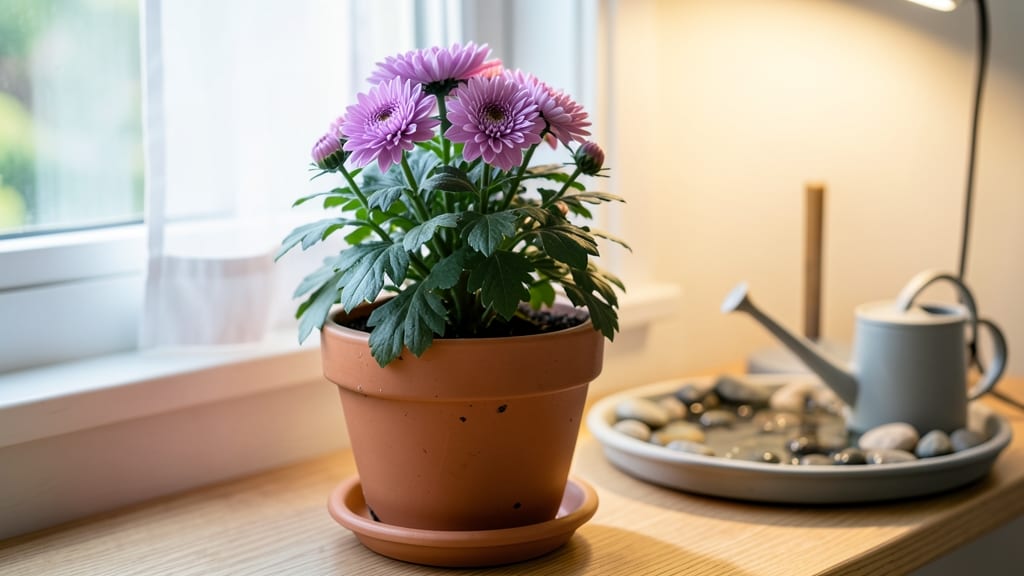
Growing mums indoors is absolutely possible with the right conditions: bright, indirect light for 6+ hours daily, cooler temperatures between 60-65°F, and consistent moisture. Opt for compact varieties, supplement with grow lights if needed, and repot every 2-3 years to keep them thriving.
Indoor chrysanthemums thrive best when you mimic their natural autumn environment. 🌿 The key is balancing light exposure—too little causes leggy growth, while direct sun can scorch delicate leaves.
I’ve found that east-facing windows provide the perfect gentle light, but if your space lacks natural brightness, LED grow lights (12-16 hours/day) work wonders. For blooms to last, maintain 50-60% humidity and fertilize lightly every 4-6 weeks with a bloom-boosting formula.
Here’s a pro tip: Rotate your plants weekly so all sides get even light exposure. This prevents uneven growth and keeps those vibrant blooms coming. Just remember—indoor mums need a 6-8 week chilling period (below 60°F) before blooming, so plan ahead if you want year-round color.
💡 In This Article
- Indoor Light Requirements for Thriving Chrysanthemums
- Step-by-Step Indoor Mum Care Guide for Long-Lasting Flowers
Indoor light requirements for thriving chrysanthemums
Chrysanthemums need bright, indirect light to thrive indoors, ideally receiving 6-8 hours of light daily—this mimics their natural autumn blooming cycle. The light spectrum matters too: these plants prefer blue and red wavelengths (400-500nm and 600-700nm), which promote photosynthesis and flowering.
Without enough light, you'll see etiolation—stretched stems with sparse leaves—as the plant reaches for any available light source, often resulting in weak blooms or no flowers at all.
East-facing windows provide the best natural light because they offer gentle morning sun without harsh afternoon rays that can scorch delicate mum foliage. South-facing windows work too, but you'll need to filter the light with sheer curtains to prevent leaf burn.
If natural light is insufficient, LED grow lights (6000-6500K color temperature) are superior to fluorescent bulbs—they use 30-50% less energy while delivering the full spectrum needed for flowering. Position lights 6-12 inches above the plants and keep them on for 12-16 hours daily to compensate for indoor conditions.
What most people don't realize is that light duration directly affects blooming. Mums need 12-14 hours of darkness each day to trigger flower buds—this is called photoperiodism. If your indoor space has artificial lights on past sunset, consider using timer switches or smart bulbs that dim automatically.
Without this darkness period, your mums may produce foliage but skip flowering entirely. 🌟 The balance between light and dark is what makes indoor mum-growing an art rather than just science.
Watch for these light deficiency signs: leaves turning pale yellow (chlorosis), stems elongating excessively, and buds failing to open. These are clear signals your plant isn't getting enough light.
Even with grow lights, rotate your plants quarter-turn weekly so all sides receive equal exposure—this prevents lopsided growth and ensures those vibrant blooms develop uniformly. Remember, the goal isn't just survival but prolific flowering, which requires careful light management.
For maximum impact, combine natural light with supplemental lighting. Place your mums near a bright window during the day, then switch on grow lights for 2-4 hours in the evening if needed. This hybrid approach gives you the best of both worlds: natural light's warmth and grow lights' precision spectrum.
The result? Mums that bloom 2-3 times longer than those with inadequate light, with flowers that stay vibrant and full.