
Flowers
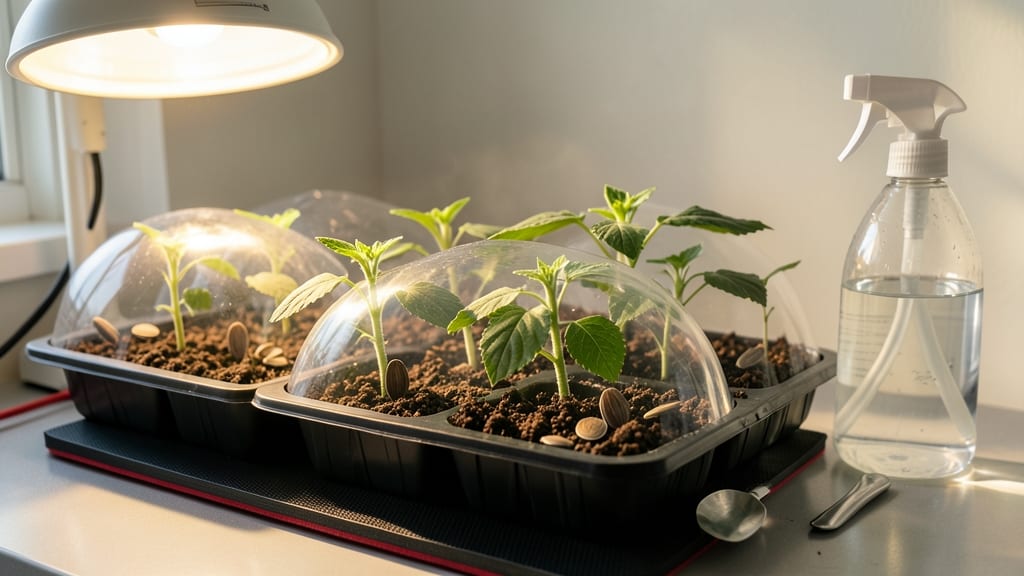
Yes, sunflowers can be started indoors, but it requires careful attention to light and timing; plant seeds 6-8 weeks before your last frost date in biodegradable pots under strong grow lights or a south-facing window, then move them outside once soil warms and seedlings are sturdy.
Sunflowers thrive best with 12-16 hours of direct light daily, which is tricky indoors unless you use grow lights.
Without enough light, seedlings stretch toward any available source, becoming weak and prone to falling over. 🔥 I’ve found that placing pots near a bright window—like a south-facing one—helps, but supplementing with LED grow lights (12-16 inches above seedlings) is often necessary for strong, healthy growth.
The key is consistency: keep temperatures between 70-75°F and maintain moisture without overwatering, as sunflower seeds need warmth and just enough dampness to sprout.
Once seedlings reach 4-6 inches tall and have 3-4 true leaves, they’re ready for transplanting. Harden them off gradually over 7-10 days by moving them outside for increasing lengths of time each day.
Choose a spot with full sun and well-draining soil, spacing plants 12-24 inches apart to give their roots room to spread. Transplant on a cloudy day or in the evening to reduce stress on the seedlings.
💡 In This Article
- Indoor Sunflower Germination and Light Needs
- Transplanting Sunflower Seedlings Outdoors: Best Practices
Indoor sunflower germination and light needs
Sunflower seedlings grow best when exposed to 12-16 hours of direct light daily, but indoor conditions often fall short. Without sufficient light, seedlings stretch unnaturally toward any available source—a condition called etiolation—resulting in weak, spindly stems that can't support their own weight.
This happens because the plant prioritizes reaching light over thickening its stem, which is why indoor-grown sunflowers often flop over. The ideal light spectrum for sunflowers mimics natural sunlight, with a focus on blue and red wavelengths (400-700nm), which drive photosynthesis and stem strengthening.
To replicate these conditions indoors, place seedlings within 12-16 inches of a south-facing window or use LED grow lights that emit full-spectrum light. A 15-watt LED bulb per square foot is a good starting point, positioned just above the seedlings to avoid overheating.
Maintain a consistent 70-75°F temperature range, as cooler conditions slow germination and growth. Sunflower seeds need warmth to activate enzymes that break down stored nutrients, which is why a seedling heat mat set to 75°F can speed up germination from 7-14 days to just 5-7 days. 🔥
The challenge with indoor sunflower growth isn’t just light—it’s also space. Sunflowers develop deep taproots, which need room to grow downward while the stem stretches upward. Using 6-inch biodegradable pots gives roots enough space to establish before transplanting, but avoid overcrowding, as competition for nutrients weakens seedlings.
Water gently at the soil surface to prevent disturbing the roots, and keep the soil consistently moist but never soggy, as excess water can cause root rot or fungal issues like damping-off.
Leggy seedlings are a common pitfall, but you can correct mild cases by rotating pots daily to ensure even light exposure and burying stems up to the first true leaves. This technique, called "stem burial," encourages the plant to develop thicker stems by promoting lateral root growth.
If seedlings are already too tall, consider transplanting them outdoors earlier than planned—just be prepared to protect them from late frosts with row covers or cloches. The goal is to balance indoor growth with outdoor readiness, ensuring seedlings are sturdy enough to handle wind and weather once moved outside.
For those without grow lights, a south-facing window combined with a reflective surface (like aluminum foil on the windowsill) can boost light exposure by up to 30%.
However, this setup still falls short of natural sunlight, so supplementing with a 10-12 hour daily light cycle from a grow light is ideal.
The key is consistency: sunflowers respond best to predictable light and temperature conditions, so avoid moving pots frequently or exposing them to drafts, which can stress the plants and stunt growth. 💫