
Orchid Care
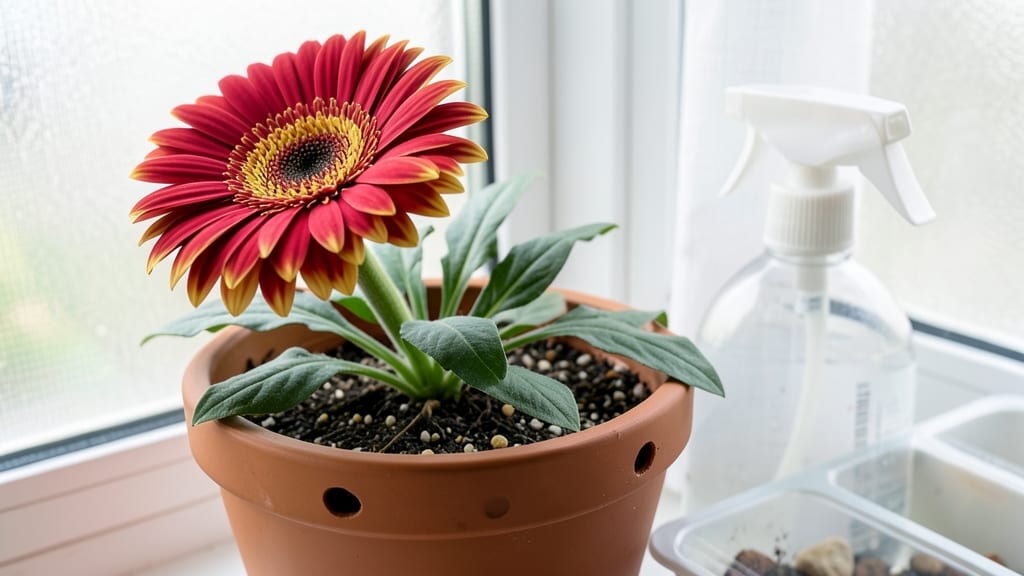
Gerbera care indoors requires bright light and careful pruning to keep these daisies blooming all year. 🌸 I've learned the hard way—too little light means sparse flowers, while overwatering turns leaves yellow. But with the right balance, these vibrant blooms become the star of any room. Start with a sunny window or grow lights for 6-8 hours daily—gerberas are light-hungry. Use well-draining potting mix and water only when the top inch feels dry. Too much moisture causes root rot, while neglect leads to crispy petals. The key is consistency: water, wait, then water again. Pruning spent blooms encourages more flowers, and pinching back leggy stems keeps the plant bushy. I repot every 2-3 years to refresh the soil, and fertilize lightly during growing season. The payoff? Nonstop color that outshines store-bought bouquets. They thrive in 65-75°F and higher humidity, making them perfect for bathrooms with natural light. Just watch for pests like spider mites—neem oil works wonders if you spot tiny webs. With these tricks, your gerberas will bloom like they're in a greenhouse!
📚 In This Guide
- What you need
- Instructions
- Tips and common mistakes
- Wrapping up and next steps
What you need
- ● Gerbera daisy plant(s) – Choose healthy, blooming varieties (e.g., 'Annette Hegg,' 'Maya,' or 'Crimson Beauty'). Opt for 1-3 plants per container for better airflow.
- ● Well-draining pot – 6-8 inches in diameter with drainage holes. Terracotta or ceramic pots work best.
- ● High-quality potting mix – 1 bag (5-10 quarts) of light, airy mix (e.g., 50% peat moss, 30% perlite, 20% sand). Avoid heavy garden soil!
- ● Drainage tray or saucer – 1 per pot to catch excess water.
- ● Watering can with a rose attachment – 1 (for gentle, targeted watering).
- ○ Fertilizer – Balanced liquid fertilizer (10-10-10 or 20-20-20), 1 bottle (16 oz). Optional: Slow-release granules for convenience.
- ● Pruning shears or sharp scissors – 1 pair (sterilized with rubbing alcohol).
- ● Humidity tray or pebble tray – 1 (to boost humidity if your home is dry).
- ● Grow lights – LED full-spectrum bulb (15W-20W) if natural light is less than 6 hours/day.
- ● Plant food booster – Fish emulsion or seaweed extract (1 bottle) for extra nutrients.
- ● Decorative mulch – Orchid bark or coconut coir to retain moisture and add aesthetics.
- ● Spray bottle – 1 (for misting leaves on dry days).
- ● Plant labels – 1-2 (to track varieties and care schedules).
Step-by-step indoor gerbera daisy care for year-round color
Here's how I keep my gerberas blooming indoors—bright, happy, and full of life all year.
🪴 Step 1: Set Up the Perfect Lighting Environment
Gerberas need bright, indirect light for at least 6-8 hours daily—a south-facing window is ideal. If your space is dim, supplement with a grow light positioned 12-18 inches above the plant. I notice leaves stretching toward the window? That’s your cue to move the plant closer or add a light.
Rotate the pot quarter-turn weekly so all sides get even light exposure. You’ll see fuller, more uniform growth within a few weeks. Avoid direct midday sun—it scorches delicate petals. If leaves yellow near the edges, that’s a sign of too much heat or light.
💧 Step 2: Master Watering Without Overdoing It
Water when the top inch of soil feels dry—gerberas hate soggy roots. I use room-temperature water and pour slowly at the base to avoid wetting leaves, which causes brown spots. Let excess water drain completely; these plants despise sitting in saucers of water.
In winter, when air is dry, water every 5-7 days instead of weekly. You’ll know it’s right when the soil feels damp but not wet. Yellow lower leaves? Often a sign of overwatering—let the soil dry out more between waterings.
✂️ Step 3: Prune for More Blooms and Healthier Growth
Deadhead spent blooms immediately—this redirects energy to new flowers instead of seed production. Use clean scissors and cut just above a leaf node. I prune leggy stems back by one-third to encourage bushier growth. Watch for new buds forming within 2-3 weeks after pruning.
Trim any yellow or brown leaves with your fingers—gerberas don’t need harsh pruning. If the plant gets too tall and floppy, cut the main stem back to 4-6 inches above the soil. It’ll look sad for a week, but you’ll get a fresh flush of blooms.
☀️ Step 4: Feed and Refresh for Long-Term Vibrancy
Use a balanced liquid fertilizer (10-10-10) every 4-6 weeks during spring and summer. Dilute it to half-strength—gerberas are sensitive to salt buildup. I mix mine with water and apply it after watering to avoid burning roots. Stop fertilizing in fall and winter.
Repot every 2-3 years into fresh soil with good drainage. I notice roots circling the pot? That’s your sign it’s time to upgrade. Choose a container just 1-2 inches larger than the current one—gerberas prefer being slightly root-bound for best blooming.
Tips & tricks for perfect indoor gerbera daisy care
Here's what nobody tells you about keeping your gerberas thriving indoors—these little details make all the difference.
Lighting Strategy: If your south-facing window isn't enough, invest in a simple LED grow light on a timer. I set mine for 6-8 hours daily to mimic natural daylight—this prevents that sad, leggy growth you see in many indoor gerberas. Place it 12-18 inches above the plant and adjust as your gerbera grows. The key is consistency: keep that timer set and your plant will reward you with those vibrant blooms.
Watering Wisdom: The top inch test is your best friend, but here's the trick: use your finger to check moisture at the base of the plant, not just the surface. Gerberas have shallow roots that dry out faster than you'd think. I've ruined plants by watering on schedule rather than checking—don't make my mistake! Also, always water at the base to avoid those unsightly brown spots on the petals from wet foliage.
Pruning Payoff: When you're deadheading those spent blooms, take a moment to examine the stem. If you see any brown or mushy spots, trim those off too—it's like giving your plant a mini health check. I've noticed that plants I prune this way get their next flush of blooms about 2-3 weeks faster. And here's a pro move: after pruning leggy stems, give the plant a good drink of water to help it recover quickly.
Fertilizer Finesse: That half-strength 10-10-10 mix is crucial, but timing matters just as much. I've learned the hard way that fertilizing in winter can burn those sensitive roots—gerberas go dormant in cooler months. Start fresh in spring and stick to that 4-6 week schedule until fall. And always water first, then fertilize—this prevents salt buildup that can stress your plant.
Pro Tips for Gerbera Care Indoor
- Here's what nobody tells you about keeping your gerberas thriving indoors—these little details make all the difference.
- Lighting Strategy: If your south-facing window isn't enough, invest in a simple LED grow light on a timer.
- Watering Wisdom: The top inch test is your best friend, but here's the trick: use your finger to check moisture at the base of the plant, not just the surface.
Frequently asked questions
Why aren’t my gerbera daisies blooming indoors?
Gerberas need bright, indirect light (6+ hours daily) to bloom. If they’re not flowering, check their spot: dim corners or north-facing windows often cause the problem. Move them near a south- or west-facing window, or supplement with a grow light (12–14 hours/day). Overcrowded pots or excess fertilizer can also stunt blooms—prune spent flowers and feed lightly every 4–6 weeks.
How often should I water my indoor gerbera?
Water when the top 1–2 inches of soil feel dry (usually every 2–3 days, but adjust for humidity). Gerberas hate soggy roots—use pots with drainage holes and empty saucers after watering. Pro tip: Water at the base (not overhead) to prevent fungal spots on petals. In winter, they’ll need less water due to lower light levels.
My gerbera leaves are yellowing—what’s wrong?
Yellow leaves usually mean overwatering or nutrient deficiency. Check the roots: mushy soil = root rot (reduce watering and repot in fresh soil). Pale yellow leaves? Feed with a balanced liquid fertilizer (diluted to half-strength). Brown edges? It’s likely dry air—mist leaves occasionally or use a pebble tray to boost humidity.
Should I trim my gerbera after it blooms?
Yes! Prune spent blooms (cut the stem ¼ inch above the next leaf or node) to encourage new flowers. Avoid heavy pruning—just remove wilted blooms to redirect energy. Bonus: Pinch back leggy stems in spring to promote bushier growth. Skip pruning in winter when the plant rests.
Can gerberas survive winter indoors without extra light?
They’ll linger but may go dormant or drop leaves without enough light. If natural light is scarce, add a LED grow bulb (6–12 inches away) for 10–12 hours/day. Reduce watering (let soil dry more between waterings) and avoid fertilizing until spring. A cool (60–65°F) spot with bright light mimics their outdoor winter habits.
Wrapping up and next steps
Caring for gerbera daisies indoors is totally doable—even for plant parents just starting out! 🌸 With the right balance of bright, indirect light, well-draining soil, and a little pruning love, you’ll enjoy those cheerful blooms all year.
Remember: consistency is key, and a happy gerbera rewards you with vibrant colors and fresh petals.
Ready to level up your indoor garden? Start by picking your favorite variety, gathering your supplies, and giving your gerbera the perfect home. Watch those petals pop!