
Container Gardens
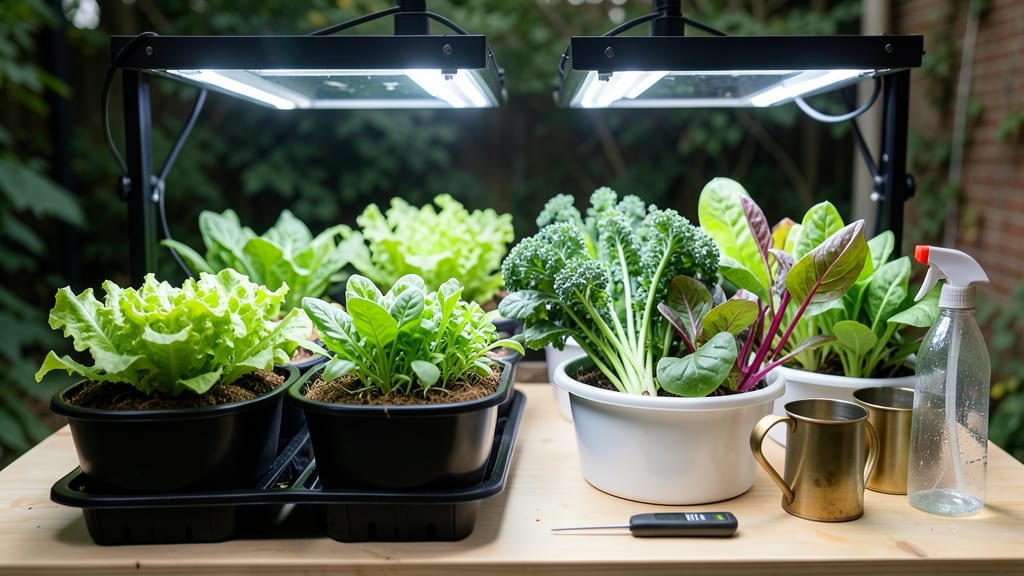
Growing leafy greens indoors gives you crisp salads in just 3 weeks—no sunlight required. 🌱 I’ve grown enough kale and spinach to feed my family year-round using nothing but a basic setup and a few smart tricks.
The key isn’t fancy equipment but matching your greens’ needs to what you can provide indoors.
Start with fast varieties like baby spinach, arugula, or microgreens—they thrive in shallow containers and tolerate lower light. You’ll need a grow light (or a sunny windowsill), well-draining soil, and a spray bottle for gentle watering.
Most people overwater, which causes more problems than lack of light. The secret to fast growth? Keep the soil consistently moist but never soggy.
By week 3, you’ll be harvesting baby leaves for sandwiches or full-sized greens for salads. The plants stay productive for 6+ weeks if you snip outer leaves and let the center regrow. No leggy stems, no bitter flavors—just crisp, fresh greens whenever you want them.
This works for apartments, offices, or even a sunny hallway. The same principles scale from a single pot to a mini indoor garden. Let’s get those seeds sprouting!
Root Causes Of Indoor Growth Struggles
Understanding why your leafy greens indoors aren’t thriving starts with identifying the hidden factors that sabotage their growth. Even with artificial lighting, indoor gardening can hit roadblocks—here’s why, broken down into actionable science.
---
Leafy greens like kale, spinach, and lettuce rely on photosynthesis, a process that converts light into energy. Without enough light—or the right kind—your plants stall or stretch unnaturally (a condition called etiolation).
- Too little light: Most leafy greens need 12–16 hours of light daily.
If your setup provides less (e.g., a weak bulb or short photoperiod), growth slows dramatically. Solution: Use full-spectrum LEDs (10,000–20,000 lux) and adjust bulb height (6–12 inches above plants). - Wrong light spectrum: Standard white bulbs lack blue light (critical for compact growth) and red light (essential for photosynthesis). Fix: Opt for grow lights with a 6400K–6600K color temperature or add a red-blue LED combo for balance. - Inconsistent light cycles: Plants need predictable day-night cycles.
Erratic lighting (e.g., leaving lights on 24/7) confuses them, leading to weak stems. Pro tip: Use a smart timer to mimic natural daylight patterns.
---
When plants compete for nutrients, light, and air, they fight for survival—often at the expense of your harvest.
Overcrowding triggers: - Stunted growth: Plants grow tall and leggy, stretching toward light instead of producing dense foliage. - Pest magnets: Humid, cramped conditions attract fungus gnats and powdery mildew. - Nutrient depletion: Roots can’t access enough soil resources, leading to yellowing leaves (chlorosis).
Actionable fix: - Spacing rules: Leafy greens need 4–6 inches between plants (or rows). For microgreens, 1–2 inches is ideal. - Thinning: If seedlings are packed, snip the weakest ones at soil level to give others room to breathe. - Vertical gardening: Use tiered shelves or hanging planters to maximize space without sacrificing light.
---
Water is the lifeblood of your greens, but imbalance leads to disaster. Here’s how it backfires:
| Problem | Cause | Signs | Fix | |---------------------------|------------------------------------|------------------------------------|---------| | Overwatering | Poor drainage, soggy soil | Yellow leaves, mushy stems, mold | Use well-draining soil (50% potting mix + 50% perlite) and water only when top inch is dry. | | Underwatering | Infrequent watering, small pots | Crispy edges, wilting, slow growth | Bottom-watering (place pots in trays with 1 inch of water) keeps moisture consistent. | | Inconsistent moisture | Erratic watering schedules | Uneven growth, root stress | Automate with a self-watering system or group plants with similar needs. |
💡 Pro tip: Leafy greens hate wet feet—ensure pots have drainage holes and avoid saucers that trap excess water.
---
Indoor plants can’t forage for nutrients like outdoor ones, so soil or hydroponic mixes must be precise.
Common mistakes: - Lack of nitrogen: Essential for leafy growth, but overlooked in indoor setups. Symptom: Yellow lower leaves (older leaves first). - Fix: Use a balanced fertilizer (e.g., 5-5-5 or 3-1-2 NPK ratio) and feed every 2–3 weeks. - Over-fertilizing: Too many salts burn roots, causing brown leaf tips or crusty soil. Solution: Flush soil with water monthly to leach excess salts. - Micronutrient deficiencies: Without magnesium (for chlorophyll) or iron, leaves develop interveinal yellowing. Fix: Add Epsom salt (magnesium sulfate) or a chelated iron supplement.
--- Indoor environments can swing from too hot, too cold, or too dry, stressing plants in subtle ways.
- Temperature stress: - Below 50°F (10°C): Growth stops; roots slow down. Fix: Keep temps 60–75°F (15–24°C) with a small space heater or insulated grow tent. - Above 85°F (29°C): Leaves wilt or develop sunburn spots (even with grow lights). Fix: Use a fan for airflow and avoid placing lights too close. - Humidity issues: - Too dry (<40% humidity): Leaves curl or develop brown edges. Fix: Use a humidifier or place a pebble tray with water near plants. - Too humid (>70%): Encourages mold and mildew. Fix: Improve ventilation with an oscillating fan or dehumidifier.
--- Indoor gardens aren’t pest-proof. Hidden invaders like aphids, spider mites, or powdery mildew thrive in warm, humid conditions, draining your plants’ energy.
- Early signs to watch for: - Sticky leaves = aphids or whiteflies. - Webbing = spider mites. - White powdery coating = powdery mildew. - Preventive actions: - Inspect new plants under a magnifying glass before adding to your setup. - Neem oil spray (weekly preventive treatment). - Yellow sticky traps to monitor for flying pests.
--- Not all pots and soil are created equal. Cheap or compacted soil and small containers strangle root growth.
- Root-bound stress: - Symptoms: Roots circling the pot, sudden wilting despite watering. - Fix: Repot into a 12–18 inch container (or use fabric grow bags for better aeration). - Poor soil structure: - Compacted soil = poor drainage and anaerobic roots (roots suffocate). - Fix: Amend soil with coco coir, vermiculite, or worm castings for fluffiness. - pH imbalances: - Too acidic (<6.0) or alkaline (>7.5): Nutrients become unavailable, causing yellowing between veins. - Fix: Test soil with a pH meter and adjust with lime (to raise pH) or vinegar (to lower pH).
--- 🔥 Key Takeaway: Most indoor growth failures boil down to light, space, water, or nutrients. Diagnose the issue by checking: 1. Leaves (color, texture, spots). 2. Stems (thin, weak, or sturdy). 3. Roots (healthy or circling). 4. Environment (temp, humidity, airflow).
Once you pinpoint the culprit, adjust one variable at a time to see improvements within 7–10 days.
Quick Fixes for Indoor Green Growth
Indoor leafy greens are a game-changer for fresh, homegrown produce—even without sunlight! But when problems pop up, they can quickly turn your thriving plants into a sad, wilted mess. 🌱💨 Don’t panic—most issues have simple, practical fixes.
Below, we’ve mapped out the most common challenges (from the Why It Happens section) to easy solutions, plus prevention tips to keep your greens happy long-term.
---
Cause: Too much water, not enough light, or poor soil nutrition. Fix It: 🔥 Drainage First – If your container has no drainage holes, transfer your greens to a pot with them (or add a layer of pebbles at the bottom). Water only when the top inch of soil feels dry. 🍳 Boost Nutrients – Switch to a balanced hydroponic nutrient solution (like 20-20-20) or add compost tea to your soil. For quick results, sprinkle a pinch of Epsom salt (for magnesium) or fish emulsion (for nitrogen) into the soil. 👨🍳 Light Check – Move your plants closer to your grow light (6–12 inches away) or extend their light exposure to 12–16 hours/day. If using natural light, rotate the pot daily for even growth.
Prevention Tip: 💡 Use well-draining soil mixes (like 60% potting soil + 40% perlite/coco coir) and water only when needed—stick your finger in the soil to test!
---
Cause: Stretching toward light means your greens aren’t getting enough intensity or duration. Fix It: 🔥 Upgrade Your Light – If using LEDs or fluorescent bulbs, swap for full-spectrum grow lights (like 6500K daylight LEDs). Avoid cheap bulbs—they won’t cut it! 🥘 Adjust Height & Angle – Position lights 2–4 inches above the tallest leaves and angle them slightly to prevent one-sided growth. Raise the light as plants grow. ⏰ Stretch the Light Schedule – Set a timer for 14–16 hours of light/day. Even a cheap plug-in timer ($10) automates this for you.
Prevention Tip: 🌡️ Rotate your plants daily (even ¼ turn) to ensure even growth. This avoids lopsided, weak stems!
---
Cause: Too much moisture in the air (from overwatering + poor airflow). Fix It: 🔥 Improve Airflow – Place a small fan (even a USB-powered one) near your plants for 1–2 hours daily. This mimics outdoor breezes and dries leaves faster. 🍳 Reduce Watering – Let the top 1–2 inches of soil dry out between waterings. If humidity is extreme, water in the morning so leaves dry by night. 👨🍳 Space Them Out – Crowded plants trap moisture. Thin seedlings to 2–3 inches apart and avoid stacking trays too closely.
Prevention Tip: ✨ Use a dehumidifier (or open a window) if your home feels like a jungle. Aim for 40–60% humidity—your greens will thank you!
---
Cause: Roots circling the pot or compacted, exhausted soil. Fix It: 🔥 Repot If Needed – If roots are poking out of drainage holes, upgrade to a slightly larger container (just 1–2 inches bigger in diameter). Loosen roots gently before replanting. 🥘 Refresh the Soil – Mix in fresh potting soil (or a 50/50 blend of soil and worm castings) to revive nutrients. Avoid garden soil—it compacts and holds too much moisture. 🔪 Trim Damaged Roots – If roots look mushy or black (signs of rot), snip them with sterilized scissors before repotting.
Prevention Tip: 🎯 Rotate crops—don’t grow greens in the same container for more than 3–4 harvests. Fresh soil = happier plants!
--- Cause: Spider mites, aphids, or fungus gnats love tender indoor greens. Fix It: 🔥 Isolate & Inspect – Move infested plants away from others.
Check undersides of leaves for webs (mites) or sticky residue (aphids). 🍳 Spray Solutions – - For mites/aphids: Mix 1 tsp dish soap + 1 quart water in a spray bottle.
Test on a small leaf first! - For fungus gnats: Let the soil dry out completely between waterings and top with cinnamon or diatomaceous earth (natural pest barriers). 👨🍳 Neem Oil (Last Resort) – For severe cases, spray neem oil (1 tsp per quart of water + a drop of soap) every 3–4 days until pests vanish.
Prevention Tip: 💡 Quarantine new plants for a week before adding them to your indoor garden. Better safe than sorry!
--- Track what works (and what doesn’t) by noting: - Watering schedule - Light hours & distance - Soil changes - Pest sightings
This helps you spot trends and adjust faster next time. Happy growing—your crisp, homegrown greens are just a fix away! 🥬✨
Frequently asked questions
What are the fastest leafy greens to grow indoors?
Start with microgreens (ready in 7–14 days) or baby spinach/arugula (3–4 weeks). These thrive in shallow containers and tolerate lower light better than mature greens. For quick salads, try radish greens—they’re ready in just 10–14 days!
Do I need expensive grow lights for indoor greens?
Not at all! A basic LED bulb (6500K color temp) or even a south-facing windowsill (6+ hours of sunlight) works for beginner setups. For faster growth, add a $20–$30 clip-on LED grow light—it’s more effective than natural light alone.
How often should I water my indoor leafy greens?
Water when the top 1 inch of soil feels dry—usually every 2–3 days, but check daily in hot climates. Overwatering is the #1 killer! Use a spray bottle for gentle watering to avoid disturbing roots. Bottom-watering (placing pots in trays) keeps moisture consistent.
Can I grow leafy greens indoors without soil?
Try hydroponics (water-based systems) or aeroponics for faster growth. Use a simple Kratky method (just water + nutrients) or a deep water culture system with a small air pump. Microgreens do especially well in water—just place seeds on a damp paper towel near light!
Why are my indoor greens turning yellow?
Yellow leaves usually mean overwatering, nutrient deficiency, or root stress. Check for soggy soil first—if dry, it’s likely nitrogen deficiency. Add a balanced fertilizer (5-5-5) or Epsom salt (for magnesium). If roots look mushy, repot with fresh, well-draining soil immediately.