
Container Gardens
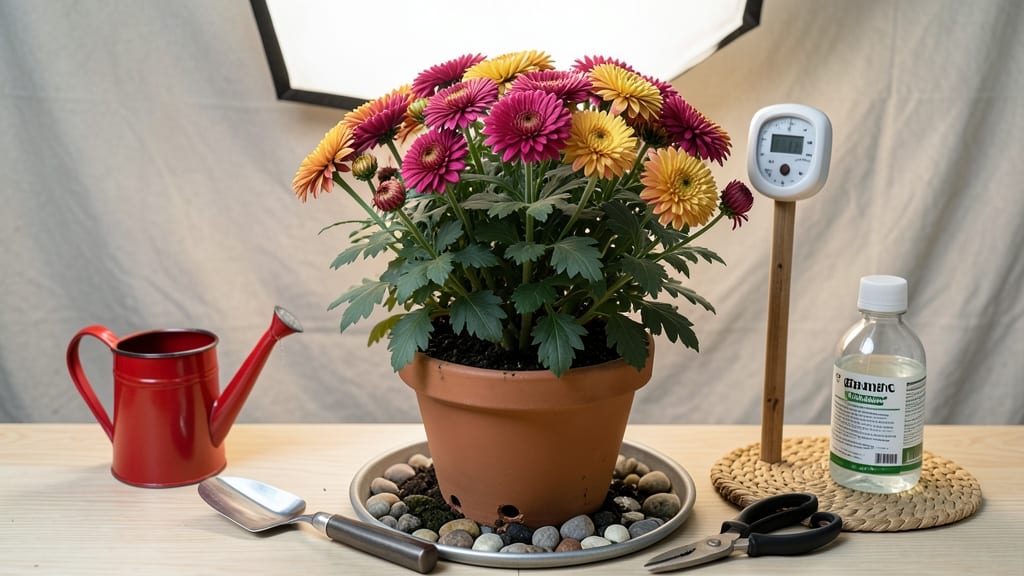
Taking care of mums indoors means year-round color—but only if you master their light and moisture needs. 🌸 I’ve kept my chrysanthemums blooming through winter by mimicking their natural fall conditions, and the secret lies in balancing bright light, cooler temps, and precise watering.
Most people overwater or crowd them, which leads to leggy stems and lost blooms. Let me show you how to avoid those mistakes and keep your mums thriving all year.
The biggest challenge indoors is light—mums need 6-8 hours of bright, indirect sunlight daily. A south- or west-facing window works best, but if that’s not an option, a grow light for 12-14 hours a day will save your plants.
Use well-draining potting mix (never garden soil) and a pot with drainage holes to prevent root rot. Water only when the top inch of soil feels dry, and always use room-temperature water to avoid shocking the roots.
With the right care, your mums will reward you with bold blooms for months. Prune spent flowers regularly to encourage new growth, and fertilize lightly every 4-6 weeks during the growing season.
The key is patience—indoor mums take time to adjust, but once they do, they’ll outshine any cut flowers you could buy. Here’s how to keep them looking their best all winter long.
For those tricky winter months, move your mums away from heat sources like vents or radiators—they prefer 60-65°F during the day and can tolerate cooler nights. If the air in your home is dry, a pebble tray with water or a humidifier nearby will help.
And if your mums start wilting? Don’t panic—often, they just need a drink and a little extra light. Let’s troubleshoot the common issues so you can enjoy their beauty without the guesswork.
📚 In This Guide
- What you need
- Instructions
- Tips and common mistakes
- Wrapping up and next steps
What you need
- ● Mums (Chrysanthemum plants): 3–5 healthy, blooming mum plants (choose compact varieties like ‘Dazzler’ or ‘Bonanza’ for indoor success). Pro tip: 💡 Buy from a trusted nursery or propagate your own from cuttings!
- ○ Containers: 1–2 pots per plant (6–8 inches in diameter) with drainage holes. Optional: Self-watering pots for convenience.
- ● Potting mix: 1 bag of high-quality, well-draining peat- or coconut-coir-based mix (avoid garden soil—it compacts!). Bonus: Add perlite or vermiculite (1 part per 4 parts soil) for extra aeration.
- ● Pruning shears: Sharp, clean pair (sterilize with rubbing alcohol between cuts!).
- ● Grow lights: 1–2 full-spectrum LED grow lights (12–16 inches above plants) for 12–14 hours/day. Budget tip: 💡 A simple fluorescent bulb can work in a pinch!
- ● Fertilizer: Balanced liquid fertilizer (10-10-10 or 20-20-20) or slow-release granules. Note: Dilute to half-strength to avoid burning roots.
- ● Humidity tray: 1 shallow tray + pebbles (or a humidifier) to maintain 50–60% humidity. Why? Mums love moisture in the air!
- ● Thermometer/hygrometer: 1 digital unit to monitor temperature (65–75°F) and humidity.
- ● Rooting hormone (for propagating cuttings).
- ● Plant food spikes (slow-release for convenience).
- ● Decorative pots or saucers (to match your decor!).
- ● Spray bottle (for gentle misting).
- ● Plant labels (to track varieties and care notes).
Step-by-Step guide to caring for mums indoors
Bringing mums inside for winter keeps their vibrant blooms going—here’s how to do it right.
🪴 Step 1: Choose the Right Spot for Light
Mums need bright, indirect light to stay healthy indoors. Place them near an east- or west-facing window where they’ll get 4-6 hours of sunlight daily. South-facing windows work too, but watch for leaves scorch—if they look crispy, move the plant back a few feet.
You’ll know the light is perfect when the foliage stays deep green and the blooms stay vibrant. If the leaves turn pale or stretch toward the light, your mums need more intensity. A grow light on a timer for 12-14 hours daily works in a pinch, but natural light is best.
💧 Step 2: Water Wisely Without Overdoing It
Water your mums when the top inch of soil feels dry to the touch. Stick your finger in the soil—if it’s damp, wait another day. Overwatering is the #1 killer of indoor mums, so always check before adding more water. Use room-temperature water to avoid shocking the roots.
Empty the saucer under the pot after 10 minutes to prevent soggy roots. Mums in pots dry out faster than garden beds, so consistency is key. Yellowing leaves often mean you’re watering too much—let the soil dry out more between waterings.
✂️ Step 3: Prune for Health and More Blooms
After the first frost, trim back the stems by one-third to encourage fresh growth. Use clean, sharp scissors to cut just above a leaf node. This helps the plant focus energy on new blooms rather than maintaining dead stems.
Deadhead spent blooms regularly—pinch or snip them off at the base. This prevents the plant from wasting energy on seed production and keeps the foliage looking tidy. Prune lightly every 2-3 weeks during the growing season to maintain shape and encourage bushiness.
☀️ Step 4: Keep Temperatures and Humidity in Check
Mums thrive in 60-65°F during the day and can tolerate cooler nights, but avoid drafts or sudden temperature swings. A cool basement or garage is ideal for winter storage, but if keeping them indoors, keep them away from heating vents.
Indoor air is often dry, which can stress mums. Mist the leaves lightly once a week or place the pot on a tray of pebbles with water to increase humidity. You’ll notice healthier foliage and fewer brown leaf tips when humidity is just right.
⏰ Step 5: Plan for Next Season’s Growth
In early spring, fertilize lightly with a balanced, water-soluble fertilizer (like 10-10-10) every 2-3 weeks to encourage new growth. Reduce watering slightly at first—overwatering can drown tender new shoots.
Watch for new buds forming in late spring. If your mums stay indoors year-round, they may need a cool, dark period (like a garage) for 4-6 weeks in winter to reset their blooming cycle. This mimics their natural dormancy and ensures vibrant flowers next season.
Tips & tricks for perfect indoor mum care
Keeping mums thriving indoors takes a few key adjustments—here's how to avoid common pitfalls and get the most vibrant blooms all year.
Light Intensity Check: Those 4-6 hours of sunlight are non-negotiable, but here's the thing: indoor light quality matters just as much as quantity. If you notice leaves stretching toward the window (called etiolation), it's a sign your mums need more intense light. I've found that rotating the pot quarter-turns every 3-4 days helps prevent uneven growth toward the light source. And if you're using a grow light, position it 6-12 inches above the plant for optimal coverage.
Pruning Precision: When you're trimming back those stems by one-third in Step 3, focus on cutting just above a leaf node—this is where new growth will emerge. I've learned the hard way that cutting too close to the base can damage the plant's ability to regenerate. For spent blooms, use your fingernail to pinch them off at the base rather than snipping with scissors. This prevents tearing and keeps the plant looking tidy while encouraging more blooms.
Watering Wisdom: That 10-minute saucer drainage rule is critical, but here's what nobody tells you—the soil type makes all the difference. If your mum's soil is sandy, it'll dry out faster than the top inch suggests, so check every 3-4 days. For heavier clay soils, you might only need watering every 5-7 days. Always use room-temperature water—cold water can shock the roots and cause the plant to wilt suddenly.
Temperature Transition: The 60-65°F range is ideal, but the real secret is gradual acclimation. If you're bringing mums indoors after frost, don't move them straight from freezing temperatures to a warm house. Let them sit in a sheltered outdoor spot for 2-3 days first to prevent shock. Also, avoid placing them near heating vents—even if the air feels comfortable, the direct heat can dry out the soil and leaves faster than you'd expect.
Pro Tips for Take Care Of Mums Indoors
- Keeping mums thriving indoors takes a few key adjustments—here's how to avoid common pitfalls and get the most vibrant blooms all year.
- Light Intensity Check: Those 4-6 hours of sunlight are non-negotiable, but here's the thing: indoor light quality matters just as much as quantity.
- Pruning Precision: When you're trimming back those stems by one-third in Step 3, focus on cutting just above a leaf node—this is where new growth will emerge.
Frequently asked questions
Got questions about keeping your mums thriving indoors?
Here are answers to the most common concerns—so you can enjoy vibrant blooms year-round without stress!
How much light do indoor mums really need?
Mums thrive on bright, indirect light (6+ hours daily). Place them near east- or south-facing windows, or use a grow light 12 inches above the plant for 14–16 hours/day. Avoid harsh direct sun—it scorches leaves!
Can I keep mums indoors all winter, or should I let them rest?
While you can overwinter mums indoors, they’ll need a 6–8 week "rest" period (cool temps, 50–60°F, minimal water) in late fall to rebloom next year. Skip this, and they’ll focus on growth, not flowers. Think of it like hibernation for plants!
Why are my indoor mums’ leaves turning yellow?
Yellow leaves usually mean overwatering (check soil moisture—top inch should dry out) or nutrient deficiency. Flush the soil with water to remove salts, then fertilize with a balanced 10-10-10 mix every 4–6 weeks. Yellow edges? It’s likely low humidity—mist leaves or use a pebble tray!
What’s the best pot size and drainage for indoor mums?
Use a pot only 1–2 inches larger in diameter than the root ball to prevent soggy soil. Ensure it has drainage holes—no exceptions! Add a saucer or tray to catch excess water. Pro tip: Elevate pots on feet to improve airflow and prevent fungal issues.
How do I prevent pests like spider mites on indoor mums?
Spider mites love dry air! Increase humidity (40–60%) with a humidifier or group plants together. Wipe leaves with neem oil solution (1 tsp oil + 1 quart water) weekly as a preventative. Caught an infestation? Isolate the plant and spray with insecticidal soap.
Wrapping up and next steps
Caring for mums indoors is all about balancing light, love, and a little green thumb magic—and you’ve got this! 🌿 With the right pruning, proper lighting, and a cozy environment, your chrysanthemums can bloom beautifully year-round. Remember, consistency is key, so check in regularly and adjust as needed.
Ready to keep those blooms thriving? Start by monitoring their progress and tweaking care as seasons change. Happy gardening—your indoor oasis awaits! 🌸