
Companion Plants
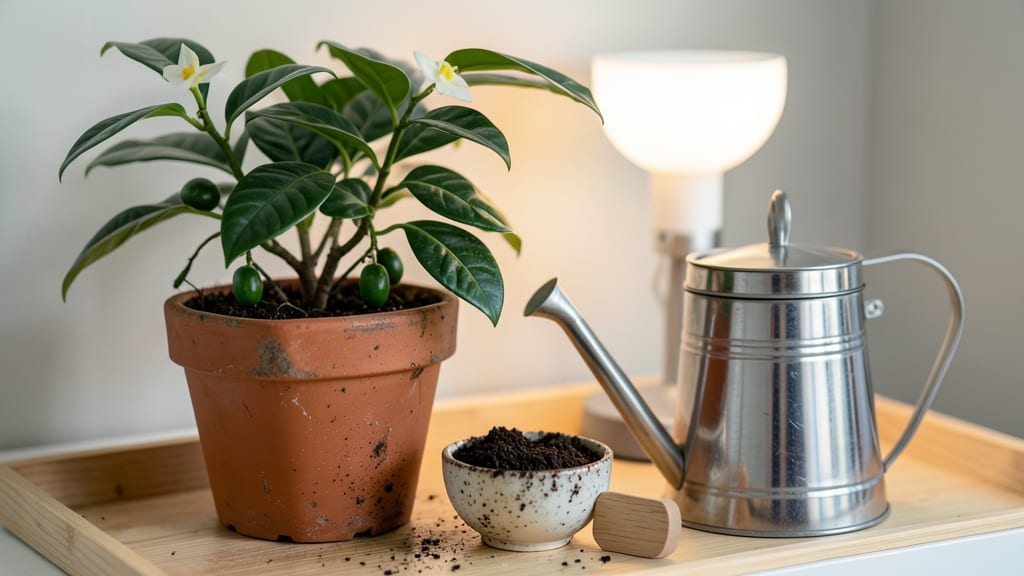
Coffee can be good for indoor plants when used carefully, as it provides nitrogen-rich nutrients that promote leafy growth, but too much can harm roots by increasing soil acidity. Always use diluted brew for soil or foliar applications.
Coffee's natural nitrogen content—especially in used grounds—makes it a popular organic fertilizer for houseplants like ferns and herbs. 🌱 The key lies in balance: while nitrogen fuels leaf production, concentrated coffee can disrupt soil pH and suffocate roots.
I've found that a 1:4 coffee-to-water ratio works best for soil amendments, applied no more than once a month. For foliar sprays, even stronger dilution (1:10) prevents leaf burn while still delivering nutrients.
What sets coffee apart is its dual-action: it repels pests like ants and slugs while feeding plants. However, this works best for moisture-loving species—succulents and cacti should avoid coffee entirely, as their roots prefer alkaline conditions.
Always let coffee grounds dry completely before mixing into soil, and monitor your plants for signs of stress like brown leaf tips.
💡 In This Article
- How Coffee Nutrients Boost Indoor Plant Growth
- Safe Ways to Use Coffee for Indoor Gardening
How coffee nutrients boost indoor plant growth
Coffee grounds and brewed coffee provide a nutrient trifecta that directly fuels plant growth: nitrogen (N), phosphorus (P), and potassium (K). Used coffee grounds contain about 2% nitrogen by weight—similar to compost but more concentrated than many synthetic fertilizers.
This nitrogen is primarily in organic form, which releases slowly as microbes break it down, providing a steady supply for leaf production. The phosphorus in coffee (around 0.2%) supports root development and energy transfer during photosynthesis, while potassium (about 0.5%) helps regulate water uptake and disease resistance.
The magic happens when these nutrients interact with your plant's biology. Nitrogen triggers chlorophyll production, which is why coffee-fed plants often develop darker, richer green leaves within 2-3 weeks of proper application.
For example, a potted fern like a Boston fern (Nephrolepis exaltata) shows dramatic growth when treated with diluted coffee—its fronds unfurl faster and develop a glossier finish.
The potassium in coffee also strengthens cell walls, making plants more resilient to pests like spider mites, which explains why many gardeners swear by coffee sprays for pest control.
However, the real science lies in the pH impact. Coffee is naturally acidic, with a pH ranging from 4.85 to 5.10 for brewed coffee and even lower (4.5) for used grounds.
This acidity can be a double-edged sword: while it mimics the slightly acidic conditions preferred by many houseplants (like calatheas), it can harm plants that thrive in neutral or alkaline soils. Succulents, for instance, prefer pH levels between 6.0 and 7.5, so coffee would be detrimental to them.
The key is monitoring your plant's response—if leaves develop yellow edges or brown spots, the coffee is likely making the soil too acidic.
Let's break down the nutrient ratios for clarity. A typical cup of coffee contains roughly 0.15 grams of nitrogen, 0.03 grams of phosphorus, and 0.07 grams of potassium.
When you dilute coffee for soil use (1 part coffee to 4 parts water), you're effectively creating a weak fertilizer that delivers about 0.0375 grams of nitrogen per cup—enough to give a small potted plant a gentle growth boost without overwhelming it.
This is roughly equivalent to a 0.01% nitrogen solution, which is far gentler than commercial fertilizers that often contain 10-30% nitrogen.
What most people don't realize is how coffee affects soil structure. The fibrous texture of used grounds improves soil aeration when mixed in, creating tiny air pockets that roots love. This is particularly beneficial for houseplants in dense potting mixes.
However, the caffeine in coffee (about 0.1-0.2% by weight in grounds) acts as a natural herbicide at high concentrations—this is why you should never use undiluted coffee directly on plants.
The caffeine can burn leaves and inhibit seed germination, so always dilute to less than 0.01% caffeine concentration for safe use.
For visual learners, imagine this: A potted peace lily (Spathiphyllum) treated with diluted coffee weekly will develop larger, more vibrant leaves within a month, while one treated with undiluted coffee may show brown leaf tips and stunted growth.
The difference comes down to concentration and frequency—think of coffee for plants like a vitamin supplement rather than a daily multivitamin. 🌿