
Planting
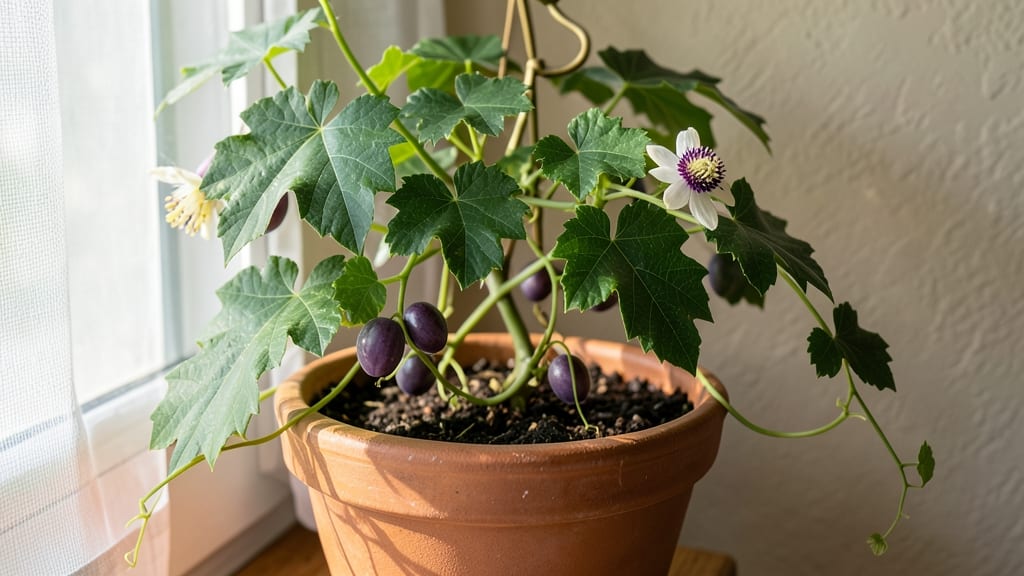
Growing a passion fruit plant indoors means tropical sweetness on your kitchen windowsill. 🌱 I've turned my balcony into a mini jungle with this vine, and the secret isn't expensive gear—it's the right variety, light, and a little patience.
The first ripe fruit appeared after just 10 months, and now I harvest year-round.
Start with a compact variety like 'Panama Red' or 'Sweet Granadilla'—they thrive in containers and produce fruit faster than outdoor types. You'll need a 10-15 gallon pot with drainage holes and a trellis to guide the vine upward.
The soil should be well-draining but moisture-retentive, like a mix of potting soil and perlite.
Here's the game-changer: 6 hours of bright light daily, either from a south-facing window or a full-spectrum LED grow light. Keep humidity high with a pebble tray or humidifier, and water when the top inch of soil feels dry.
Prune leggy growth to encourage bushier vines and more fruit.
Pollination is the trickiest part indoors—hand-pollinate flowers with a small brush, and watch for pests like spider mites. With these adjustments, you'll go from bare vine to fruiting plant in under a year. The first taste of homegrown passion fruit changes everything.
📚 In This Guide
- What you need
- Instructions
- Tips and common mistakes
- Wrapping up and next steps
What you need
- ● Passion fruit plant: Start with a healthy Passiflora edulis (purple passion fruit) or Passiflora ligularis (yellow passion fruit) from a nursery or online store. Choose a mature plant (3–6 months old) for faster fruiting.
- ● Grow lights: A full-spectrum LED grow light (e.g., Mars Hydro TS 600W or Spider Farmer SF-2000) to provide 6–8 hours of direct light daily. Ensure it covers the plant’s canopy.
- ● Large container: A 15–20 gallon pot with drainage holes (e.g., fabric grow bag or ceramic pot). Passion fruit vines need plenty of space—aim for at least 18 inches in diameter.
- ● Well-draining potting mix: A blend of 60% cactus/succulent mix, 30% perlite, and 10% compost. Avoid heavy garden soil—root rot is a no-go! 🚫💦
- ● Support structure: A trellis, bamboo stake, or sturdy wire frame (at least 6–8 feet tall) to train the vine upward. Passion fruit vines can grow 20+ feet if unchecked!
- ● Fertilizer: A balanced 10-10-10 or 20-20-20 liquid fertilizer (diluted to half-strength) or an organic option like fish emulsion. Feed every 4–6 weeks during growing season.
- ● Pruning shears: Sharp, sterilized shears (e.g., Fiskars PowerGear) for trimming dead leaves or overgrowth.
- ● Humidity tray: A pebble tray with water to boost humidity (passion fruit loves 50–70% humidity).
- ● Automatic timer: For your grow light (e.g., Leviton Decora timer) to maintain consistent light cycles.
- ● Pollination aid: A small paintbrush or cotton swab to manually pollinate flowers if bees aren’t visiting indoors.
- ● Misting bottle: For gentle leaf hydration, especially in dry climates.
- ● Soil moisture meter: To avoid over/under-watering (aim for slightly dry topsoil between waterings).
Step-by-step instructions for growing passion fruit indoors
Here's how to coax sweet, tropical passion fruit indoors using just a bright window and a little patience.
🌱 Step 1: Choose and Prepare Your Vine
Start with a healthy passion fruit vine cutting (4-6 inches long) from a mature plant. Look for stems with at least two leaf nodes—these are the growth points where roots and new shoots will emerge. Remove the lower leaves, leaving only the top pair. This focuses the plant's energy on root growth rather than leaf production.
Dip the cut end in rooting hormone (optional but helpful) and plant it in a 6-inch pot filled with a mix of 50% cactus/succulent mix and 50% perlite. The roots need excellent drainage, so avoid regular potting soil—it stays too wet. Water lightly until the soil feels damp but not soggy. Place the pot in a warm spot (70-75°F) with indirect light.
☀️ Step 2: Master the 6-Hour Light Trick
The secret to fruiting indoors is mimicking a tropical day-night cycle. Position your vine near a south-facing window where it gets at least 6 hours of bright light daily. If your space lacks natural light, supplement with a grow light (LED or fluorescent) for 12-14 hours per day. Keep the light 6-12 inches away—too close burns leaves, too far stretches the vine.
Rotate the pot quarter-turn weekly so the vine grows evenly toward the light. You'll notice new leaves forming within 2-3 weeks—this means the roots have taken hold. Once the vine reaches 6 inches, pinch off the top growth to encourage bushier growth. This trick forces energy into lateral shoots, which will bear more flowers and fruit.
💧 Step 3: Water and Fertilize for Fruit Production
Water when the top 1-2 inches of soil feel dry—passion vines hate soggy roots. Stick your finger in the soil; if it's dry past your first knuckle, it's time to water. Use room-temperature water and avoid wetting the leaves to prevent fungal issues. Fertilize every 4-6 weeks with a balanced liquid fertilizer (10-10-10) diluted to half strength. During flowering and fruiting, switch to a low-nitrogen, high-phosphorus fertilizer (5-10-10) to support blooms.
Watch for white or purple flowers—these appear after 3-4 months of growth. Hand-pollinate by gently shaking the vine or using a small paintbrush to transfer pollen. Female flowers have a small bulb at the base; male flowers lack this. Only female flowers will develop into fruit. If you see buds but no flowers, your plant needs more light or a fertilizer boost.
✂️ Step 4: Prune and Support for Heavy Fruit
As fruit develops, the vines grow heavy and may need support. Install a trellis or stakes near the pot and gently weave the main stem upward, securing it with soft ties. Prune leggy growth (long, bare stems) to redirect energy to fruiting branches. Cut back overly dense foliage to improve airflow—this prevents mold and helps fruit ripen evenly.
When fruit reaches half its mature size, reduce watering slightly to concentrate sugars. Passion fruit ripens best when left on the vine—never pick green fruit. Ripe fruit will turn yellow or orange and feel slightly soft when gently squeezed. Harvest by twisting the fruit gently until it releases from the stem. Store in the fridge for up to 5 days or use immediately in recipes.
🪴 Step 5: Overwinter and Renew for Next Season
Passion vines slow growth in winter but can keep producing with care. Reduce watering to every 10-14 days and fertilize monthly with a diluted solution. If your vine loses leaves, it’s entering dormancy—don’t panic. Prune back one-third of the growth in late winter to encourage fresh, vigorous shoots. Repot every 2-3 years into a larger container (8-10 inches) with fresh potting mix to refresh nutrients.
Here’s the thing—indoor passion fruit takes patience. Your first harvest might be small, but with consistent light, water, and care, you’ll train this vine to produce year-round. Keep a journal: note when flowers appear, how long fruit takes to ripen, and adjust your routine accordingly. Soon, you’ll have a thriving vine that rewards you with tropical sweetness anytime.
Tips & tricks for growing passion fruit indoors
Between us, these insights will help you avoid the pitfalls I faced while growing my own passion fruit vine indoors.
The Root Factor: When planting your 4-6 inch cutting, make sure the two leaf nodes are above the soil line—they're where all the action happens for new root growth. I learned this the hard way after burying my nodes too deep, which led to rot instead of roots. Use chopsticks or a pencil to create drainage holes in the 6-inch pot if they don't already exist—this mimics the vine's natural preference for well-draining conditions.
Light Positioning: That 6-hour daily light requirement is non-negotiable for fruiting, but placement matters just as much. South-facing windows provide the most consistent light, but west-facing windows work too—just be prepared to supplement with grow lights for those shorter winter days. I noticed my vine stretched toward the light unevenly until I started rotating the pot quarter-turn weekly, which created that perfect balanced growth we want.
Fertilizer Timing: The switch from balanced (10-10-10) to high-phosphorus (5-10-10) fertilizer during flowering is crucial—it's what tells your plant "it's time to make fruit!" I made the mistake of keeping my vine on the regular fertilizer too long, which resulted in lots of leaves but no flowers. Once you see those white or purple blooms appear after 3-4 months, make the switch immediately. The diluted solution (half-strength) prevents fertilizer burn while still providing the phosphorus boost needed for fruit development.
Harvesting Cues: Those yellow or orange colors and slightly soft texture when squeezed are your perfect ripeness indicators—but don't wait too long! Overripe passion fruit can get mealy inside. I've found that harvesting in the morning gives me the sweetest flavor, as the fruit's natural sugars peak after a full night of photosynthesis. Store any extras in the fridge for up to 5 days, but use them within 2-3 days for the best texture in recipes.
Pro Tips for Passion Fruit Plant Indoors
- Between us, these insights will help you avoid the pitfalls I faced while growing my own passion fruit vine indoors.
- The Root Factor: When planting your 4-6 inch cutting, make sure the two leaf nodes are above the soil line—they're where all the action happens for new root growth.
- Light Positioning: That 6-hour daily light requirement is non-negotiable for fruiting, but placement matters just as much.
Frequently asked questions
Got questions about growing passion fruit indoors? You’re not alone—this tropical beauty can be tricky! Here are answers to the most common concerns to help you succeed.
Can passion fruit plants actually produce fruit indoors?
Yes! With the right conditions—like 6+ hours of bright light daily (grow lights work) and proper care—you can grow small, sweet passion fruits indoors. Expect fewer fruits than outdoors, but they’re still delicious!
How long does it take for an indoor passion fruit plant to bear fruit?
Patience is key! Indoor passion fruit plants typically take 12–24 months to mature and produce fruit, depending on variety and care. Dwarf varieties like ‘Panama Red’ may fruit faster (8–12 months). Keep up with pruning and fertilization for the best results.
What’s the ideal temperature for indoor passion fruit growth?
Passion fruit thrives in 65–85°F (18–29°C) during the day and 55–60°F (13–16°C) at night. Avoid drafts (like AC vents) or sudden temperature drops, which can stress the plant. A sunny windowsill or grow light setup helps maintain consistency.
What if my indoor passion fruit plant’s leaves turn yellow?
Yellow leaves often signal overwatering, nutrient deficiency, or poor drainage. Check the soil—it should be slightly moist but not soggy. Adjust watering, ensure pots have drainage holes, and fertilize with a balanced citrus/edible plant mix every 4–6 weeks.
Are there easier indoor fruit plants for beginners?
If passion fruit feels too challenging, try dwarf citrus (like Meyer lemons), strawberries, or fig trees—they’re more forgiving indoors. Passion fruit rewards patience, but these alternatives offer quicker (and sometimes sweeter!) results for new growers.
Wrapping up and next steps
Growing passion fruit indoors is totally doable—even with just six hours of light a day! 🌱 With the right setup, you can enjoy sweet, homegrown fruit year-round while adding a tropical touch to your space.
Whether you’re a beginner or a seasoned plant parent, this method proves that creative solutions can turn small spaces into fruitful gardens.
Ready to take the next step? Start by gathering your supplies, then check out our full guide for planting tips and troubleshooting. Soon, you’ll be harvesting your own passion fruit—one vine at a time! 🍈✨