
Container Gardens
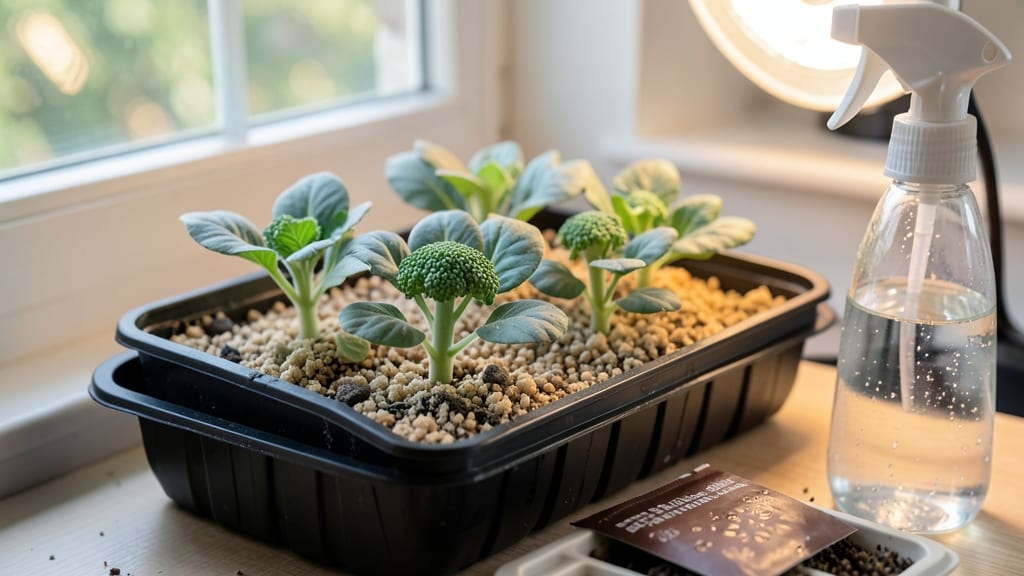
Planting broccoli seeds indoors starts with a warm, damp paper towel—the secret weapon for 50% faster germination than soil. 🌱 I learned this after watching my first batch of seeds sit for weeks without sprouting, while the towel method produced sturdy seedlings in just 4-5 days.
The key is patience during this stage; once those tiny roots appear, you'll want to move quickly to avoid leggy seedlings. You'll need basic supplies: biodegradable seed pots (or recycled containers), a well-draining seed-starting mix, and a heat mat or sunny windowsill.
Broccoli seeds need 60-75°F soil to germinate, so if your home runs cooler, a simple heating pad under the tray makes all the difference. Overwatering here is the #1 mistake—keep the mix moist but never soggy, or you'll risk damping-off disease.
By the time those first true leaves appear (about 10-14 days after germination), your seedlings will be ready for their own 3-inch pots with more light. The payoff? Transplants that hit the garden 2-3 weeks ahead of store-bought seedlings, giving them a stronger start and better resistance to pests.
Just watch for yellowing leaves—usually a sign of too much water or not enough light. This method works for cabbage, kale, and Brussels sprouts too, making it a versatile trick for cool-season crops.
The real magic happens when you see those dark green, sturdy seedlings ready for their outdoor home—proof that a little indoor prep changes everything.
📚 In This Guide
- What you need
- Instructions
- Tips and common mistakes
- Wrapping up and next steps
What you need
- ● Broccoli seeds: 20–30 seeds (choose a fast-maturing variety like ‘De Cicco’ or ‘Calabrese’ for quicker results).
- ● Seed-starting trays or pots: 2–4" deep with drainage holes (biodegradable peat pots or 12-cell trays work great).
- ● Seed-starting mix: 1–2 gallons of sterile, light potting soil (avoid garden soil—it’s too dense!).
- ● Grow lights or sunny windowsill: A full-spectrum LED grow light (12–16 hours/day) or a south-facing window (6+ hours of sunlight).
- ○ Plastic wrap or humidity dome: To lock in moisture and warmth (optional but highly recommended for speedy germination).
- ● Spray bottle: With water (room temp) for gentle misting.
- ○ Heat mat (optional): A seedling heat mat (70–75°F) to boost germination speed by 2–3 days.
- ● Small hand trowel or spoon: For planting seeds without crushing them.
- ● Label markers & tags: To track planting dates (broccoli takes 60–90 days to mature!).
- ● Fertilizer: Balanced liquid fertilizer (5-5-5 or 10-10-10) diluted to half-strength for first feeding.
- ○ Fan (optional): A small clip-on fan for gentle airflow to strengthen seedlings (prevents legginess!).
- ○ Thermometer (optional): To monitor soil temps (ideal: 65–75°F for germination).
Step-by-step instructions for starting broccoli seeds indoors
Here's how to coax those stubborn broccoli seeds into fast, vigorous seedlings—no waiting weeks for germination.
🌱 Step 1: Prep Seeds and Containers for Maximum Germination
Broccoli seeds have tough outer shells that slow germination, so I soak them first. Place 4-6 seeds (your serving count) in a small bowl of lukewarm water for 12 hours. This softens the seed coat and triggers faster sprouting—you'll see them swell slightly. While they soak, fill 4-inch deep biodegradable pots with sterile seed-starting mix (never garden soil—it's too dense).
Moisten the mix until it feels like a damp sponge—squeeze gently to test. The surface should hold together but not drip. Press the soil down lightly to remove air pockets, then create ¼-inch deep dimples with your finger. These tiny wells keep seeds at the perfect depth for quick germination. Here's the thing—broccoli seeds need warmth to sprout, so I place the pots on a seedling heat mat set to 75-85°F.
💧 Step 2: Sow and Create Ideal Germination Conditions
After soaking, gently place 1-2 seeds per pot into each dimple, spacing them ½ inch apart. Cover lightly with a thin layer of additional mix—just enough to obscure the seeds. Mist the surface with a spray bottle until evenly damp, then cover the pots with clear plastic wrap. This traps humidity and warmth, which broccoli seedlings crave. Place the pots in indirect light (no direct sun yet—it overheats them).
Check daily but resist watering. The plastic wrap keeps moisture levels perfect. You'll know germination is working when you see tiny sprouts in 5-7 days—that's the magic of pre-soaking. If condensation forms on the plastic, remove it for 10 minutes daily to prevent mold. Real talk: I've seen seeds sprout in as little as 3 days with this method, but 7 days is more typical.
☀️ Step 3: Provide Light and Prevent Leggy Growth
The instant seedlings emerge, remove the plastic wrap immediately—too much humidity now causes damping-off, a fungal disease that collapses stems overnight. Move the pots under grow lights or to a south-facing window where they get 14-16 hours of light daily. Broccoli seedlings grow fast but turn leggy without enough light, which means weak stems that break easily when transplanting.
Position the lights 2-3 inches above the seedlings and raise them gradually as the plants grow. You'll see strong seedlings have thick stems, deep green leaves, and compact spacing between leaves. If stems stretch thin and pale, your light is too far away. Here's where it gets fun—watch the first true leaves (the second set after the initial seed leaves) appear in 2-3 weeks. These are your signal to start fertilizing lightly with a half-strength organic liquid fertilizer.
✂️ Step 4: Thin and Harden Off for Transplant Success
When seedlings reach 2 inches tall with 3-4 true leaves, thin to the strongest seedling per pot using clean scissors. Snip at soil level to avoid disturbing roots. Broccoli plants need space—crowding leads to weak, disease-prone stems. Two weeks before your last frost date, begin hardening off by placing the pots outside in partial shade for 1-2 hours daily. Gradually increase exposure over 10-14 days, ending with full sun and wind conditions.
This toughens the seedlings so they don't bolt (flower prematurely) when planted outdoors. You'll know they're ready when they tolerate a full day outside without wilting. Transplant on a cloudy afternoon to reduce shock, burying the stem up to the first set of leaves. This encourages root growth and stabilizes the plant. Don't skip this step—I've lost entire batches of seedlings to transplant shock when I rushed them into the garden too soon.
Tips & tricks for perfect indoor broccoli seedlings
Speed up germination and prevent common pitfalls with these insider tricks that'll give you sturdy, healthy transplants every time.
Soaking Secret: The 12-hour soak in lukewarm water isn't just about speed—it's about breaking dormancy. I've found that using distilled water instead of tap water prevents chlorine damage to the delicate seed coats. After soaking, drain seeds immediately and pat them dry with a paper towel before planting. This removes excess moisture that could cause rot in the soil.
Temperature Matters: That 75-85°F heat mat range is critical, but consistency matters more than the exact number. I keep mine at 80°F and place a small thermometer on the soil surface to monitor. If your home runs cooler, consider using a seedling heat cable instead of a mat—it's more precise and prevents uneven warmth. Pro tip: Never let the soil temperature drop below 65°F, or germination slows dramatically.
Lighting Hack: For those 14-16 hours of light daily, I recommend using LED grow lights on a timer rather than relying on windows. Place the lights 2-3 inches above the seedlings and adjust as they grow. Watch for "light burn" (white patches on leaves)—this means you're too close. If using natural light, rotate pots daily so all sides get equal exposure. The first true leaves should appear in exactly 2-3 weeks if light conditions are perfect.
Harden Off Gradually: When increasing outdoor exposure from 1-2 hours to full sun, I add 30 minutes daily rather than doubling time. Start with morning shade and gradually move to afternoon sun. Watch for wilting—this is your plant's way of saying "too much, too fast." A simple trick: Place pots on a drip tray during hardening off to maintain consistent moisture levels without overwatering.
Pro Tips for Planting Broccoli Seeds Indoors
- Speed up germination and prevent common pitfalls with these insider tricks that'll give you sturdy, healthy transplants every time.
- Soaking Secret: The 12-hour soak in lukewarm water isn't just about speed—it's about breaking dormancy.
- Temperature Matters: That 75-85°F heat mat range is critical, but consistency matters more than the exact number.
Frequently asked questions
Got questions about growing broccoli from seeds indoors? You’re not alone! Here are answers to the most common queries to help you get started confidently.
When is the best time to plant broccoli seeds indoors?
Broccoli thrives in cooler weather, so aim to start seeds 8–10 weeks before your last frost date. For most U.S. zones, this means February or early March. Use a seed-starting heat mat (70–75°F) to speed up germination, which typically takes 5–10 days.
Can I plant broccoli seeds too early?
Yes, but be cautious! Starting seeds too early (e.g., January) risks leggy, weak seedlings due to limited light. If you must start early, use grow lights 12–16 hours daily. Alternatively, wait until 4–6 weeks before your last frost and use a cold frame outdoors for hardening.
Why aren’t my broccoli seeds germinating?
Common culprits include old seeds (use within 1–2 years), cold soil (keep temps above 60°F), or dampness (moisture is key, but avoid soggy trays). Try pressing seeds lightly into soil (¼-inch deep) and misting with warm water. If still stuck, test viability by soaking seeds overnight—floaters are likely non-viable.
Should I use soil or a seed-starting mix?
Always opt for a sterile seed-starting mix—it’s lighter, drains better, and lacks weeds/seeds. Regular garden soil can compact, suffocate roots, and harbor disease. Mix in perlite or vermiculite (20%) for extra aeration. Avoid compost-heavy mixes; broccoli prefers neutral to slightly acidic soil (pH 6.0–7.0).
What’s the fastest way to harden off broccoli seedlings?
Start 1–2 weeks before transplanting by placing seedlings in a sheltered spot (e.g., porch) for 2–3 hours daily, gradually increasing time. Use shade cloth on sunny days to prevent stress. Acclimate to wind and outdoor temps—this boosts survival rates by 30–50%!
Can I reuse containers or trays for broccoli seeds?
Yes, but sanitize first! Scrub containers with 10% bleach solution (1 part bleach to 9 parts water), rinse, and dry. Avoid reused trays if they harbored fungal diseases (e.g., damping-off). For long-term reuse, opt for biodegradable pots (like peat or coconut coir) to skip transplant shock.
Wrapping up and next steps
Growing broccoli from seeds indoors is a rewarding way to jumpstart your garden—especially when you use speed-germination tricks to boost those sturdy transplants! 🌱 With the right setup, patience, and a little care, you’ll soon be harvesting vibrant, nutrient-packed heads.
Now that you’re armed with the know-how, why not take the next step? Grab those seeds, set up your cozy indoor nursery, and watch your green thumbs shine. Happy planting—your future meals (and bragging rights) will thank you!