
Container Gardens
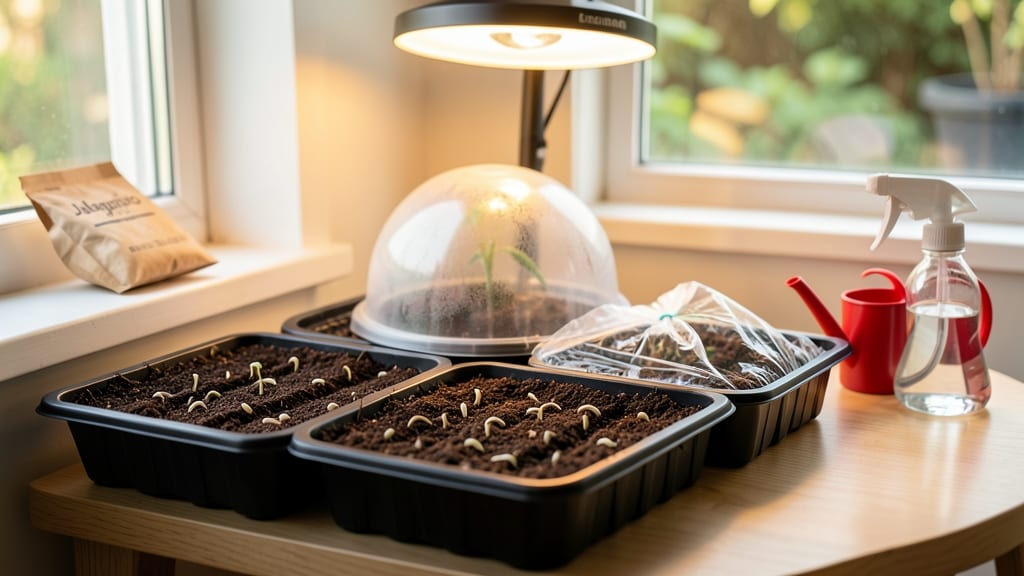
Starting jalapeño seeds indoors can mean spicy harvests months earlier than store-bought plants. 🌱 I’ve learned the hard way that slow germination wastes time—until I discovered how a simple heat mat cuts waiting time in half.
Those first green shoots? They’ll appear in 5-7 days with the right setup, not the usual two weeks.
The secret isn’t fancy equipment—just the right balance of warmth, moisture, and light. You’ll need seed-starting mix, small pots, a heat mat (or a warm spot near your fridge), and a grow light.
Most beginners overlook the heat mat step, but it’s the game-changer that turns floppy seedlings into sturdy plants ready for transplanting.
By the time you’re hardening off seedlings in late spring, you’ll be snipping fresh jalapeños weeks before your neighbors even think about planting. The flavor? Bold, fresh, and nothing like the waxy store-bought peppers. Plus, you’ll save money and avoid the disappointment of weak nursery starts.
Works for any indoor space—whether you’re growing on a sunny windowsill or under artificial lights. Let’s get those seeds sprouting fast!
📚 In This Guide
- What you need
- Instructions
- Tips and common mistakes
- Wrapping up and next steps
What you need
- ● Jalapeño seeds: 5–10 seeds (or more if you’re ambitious—just ensure they’re fresh and from a trusted source!)
- ● Seed-starting trays or small pots: 2–4" deep, with drainage holes (biodegradable pots are eco-friendly!)
- ● Seed-starting mix: Lightweight, sterile mix (avoid garden soil—it’s too dense!)
- ● Heat mat (critical for speed!): 70–80°F range (e.g., blank">Vivosun or blank">Grow Light options)
- ● Grow lights or sunny windowsill: 12–16 hours of light daily (LED or fluorescent bulbs work best)
- ● Spray bottle: For gentle watering (avoid drowning those tiny seeds!)
- ● Plastic wrap or humidity dome: To retain moisture while seeds germinate
- ● Labels & markers: To track varieties (trust us, jalapeños look alike at first!)
- ● Seedling heat pad (if your mat isn’t strong enough)
- ● Fertilizer (diluted fish emulsion or seaweed extract for early growth)
- ● Humidity tray (DIY with a shallow tray + pebbles + water)
- ● Thermometer (to monitor soil temp—75–85°F is ideal!)
- ● Tweezers (for delicate seed placement)
Step-by-Step instructions for starting jalapeno seeds indoors
Here's how I get peppers sprouting in days instead of weeks—using a heat mat and precise timing.
🌱 Step 1: Prepare Containers and Seed Starting Mix
Fill clean 2-3 inch deep cell packs or small pots with a sterile seed-starting mix designed for peppers. I avoid garden soil—it's too dense and often carries pathogens that stunt young seedlings. Moisten the mix until it holds together when squeezed but doesn't drip water. Press it down lightly so the surface is firm but not packed.
Jalapenos need excellent drainage, so I always add 20% perlite to the mix for extra aeration. Tap the containers gently on the table to settle the soil evenly. This ensures roots won't struggle to push through compacted areas later. The goal is a fluffy, even surface ready for planting.
🌱 Step 2: Sow Seeds at Proper Depth and Warmth
Plant 1-2 seeds per cell at a depth of ¼ inch—about the diameter of a pencil eraser. Sowing too deep delays germination because the seedling exhausts its energy before reaching light. Cover lightly with additional mix, then mist gently with a spray bottle until evenly moist. I label each pot with the date and variety—after a week of identical green sprouts, you'll forget which is which.
Here's the trick: place the trays on a seedling heat mat set to 80-85°F. This warmth mimics tropical conditions and speeds germination to 7-10 days instead of the usual 2-3 weeks. Keep the soil consistently moist but never soggy—pepper seeds rot quickly if overwatered. A humidity dome helps maintain even moisture without drowning the seeds.
☀️ Step 3: Provide Light and Monitor Germination
The instant you see green sprouts, remove the humidity dome immediately—trapped moisture invites damping-off disease that collapses stems overnight. Move seedlings under a full-spectrum LED grow light positioned 2-4 inches above the plants. Jalapenos need 14-16 hours of light daily to prevent leggy growth.
Watch for first true leaves (the second set after the initial cotyledons) as your signal to adjust light height. You'll see leggy growth if the light is too far away—thin, pale stems with leaves spaced far apart. Strong seedlings have thick stems, deep green color, and compact spacing between leaves. Raise the light as they grow to maintain that 2-4 inch gap.
🌿 Step 4: Thin and Harden Off Seedlings
Once seedlings show 2-3 true leaves, thin to the strongest plant per cell by snipping the weaker one at the base with scissors. This prevents root competition and gives your jalapeno room to develop. Water gently at the base—avoid overhead watering, which spreads disease. You'll notice new growth within a week if the plant is healthy.
Two weeks before your last frost date, start hardening off by placing seedlings outside in a sheltered, shaded spot for 1-2 hours the first day. Gradually increase outdoor time by 1 hour daily over 10-14 days, slowly introducing more sun and wind. Skipping this step burns leaves, breaks stems, and shocks plants severely. Once seedlings tolerate a full day outside without wilting, they're ready for the garden.
Tips & tricks for perfect indoor jalapeno seed starting
Real talk: those first green sprouts are worth every minute of prep work when you nail these key tricks.
Soil Science: The 20% perlite addition in Step 1 isn't just about drainage—it creates tiny air pockets that pepper roots absolutely crave. I've seen seeds rot within days when planted in straight seed-starting mix because peppers hate soggy feet. After mixing, run your finger through the soil: it should crumble like cake crumbs, not stick together like wet sand.
Heat Mat Hack: That 80-85°F range in Step 2 isn't arbitrary—it's exactly what tropical pepper plants experience in their native habitat. I use a digital thermometer to verify the mat's temperature because cheap models often run 5-10°F hotter than advertised. Pro tip: place a small thermometer directly on the soil surface where seeds will sit, not just on the mat itself.
Light Positioning: When adjusting your grow light in Step 3, think of it like a hairdryer—too far away and you get weak, leggy seedlings; too close and you burn the tops. I mark my light stand with tape at 2-inch and 4-inch heights to create visual guides. Watch for that "goldilocks zone" where leaves are dark green and compact, not stretched-out and pale.
Hardening Off Strategy: The gradual 1-hour daily increase in Step 4 works because it mimics how plants naturally acclimate to outdoor conditions. I start mine at dawn when temperatures are cooler, then move them back indoors before afternoon sun. This prevents the shock that causes leaves to crisp like autumn foliage. Think of it as giving your seedlings a gentle vacation, not a sudden move.
Pro Tips for Starting Jalapeno Seeds Indoors
- Real talk: those first green sprouts are worth every minute of prep work when you nail these key tricks.
- Soil Science: The 20% perlite addition in Step 1 isn't just about drainage—it creates tiny air pockets that pepper roots absolutely crave.
- Heat Mat Hack: That 80-85°F range in Step 2 isn't arbitrary—it's exactly what tropical pepper plants experience in their native habitat.
Frequently asked questions
Got questions about starting jalapeño seeds indoors?
Here are answers to the most common ones—so you can grow fiery peppers like a pro!
How long does it take for jalapeño seeds to germinate?
With a heat mat (75–85°F), germination usually takes 7–14 days. Without one, it can stretch to 3–4 weeks—or longer if seeds are old or stored poorly. Keep soil moist but not soggy, and stay patient! Pro tip: Soak seeds in warm water for 24 hours before planting to speed things up.
When is the best time to start jalapeño seeds indoors?
Start seeds 8–10 weeks before your last frost date for transplanting outdoors. For most climates, this means February–March. If you’re in a short-season area, aim for 6–8 weeks—jalapeños thrive in warm soil and can handle a little chill once established. Check your local frost dates!
Can I use regular potting soil for jalapeño seeds?
Yes, but light, sterile seed-starting mix works best—it drains well and avoids damping-off. Mix in 10–20% perlite or vermiculite for extra aeration. Avoid garden soil or compost-heavy blends, which can harbor fungi and compact, slowing germination. Skip the peat moss if possible—it’s eco-friendly to opt for coconut coir!
What do I do if my jalapeño seedlings look leggy or weak?
Leggy seedlings mean too little light. Move them 2–3 inches closer to grow lights (or a sunny south-facing window) and keep lights on 14–16 hours/day. If roots are crowded, transplant into larger pots (3–4 inches wide) with fresh soil. Yellow leaves? Check for overwatering—let the top inch dry between waterings. Rotate pots daily for even growth!
Can I start jalapeños from store-bought peppers?
Technically yes, but it’s unreliable. Seeds from hybrid peppers (like most grocery-store jalapeños) may not produce true-to-type plants. For consistent results, use heirloom or open-pollinated seeds from a reputable supplier. If you’re experimenting, save seeds from organic, non-hybrid peppers and dry them thoroughly before storing. Bonus: Try ‘Early Jalapeño’ or ‘Carolina Reaper’ for fast, fiery starts!
Wrapping up and next steps
Starting jalapeño seeds indoors with a heat mat is a rewarding way to jumpstart your spicy harvest—especially if you’re eager to beat short growing seasons or simply love the thrill of nurturing tiny plants into fiery delights! 🌱 With the right setup, patience, and a dash of warmth, you’ll soon be transplanting sturdy seedlings ready to thrive in your garden or containers. Now’s the time to roll up your sleeves and get growing!
Your next step? Set that heat mat, sow those seeds, and keep an eye out for those first green sprouts—you’ve got this! 💪