
Container Gardens
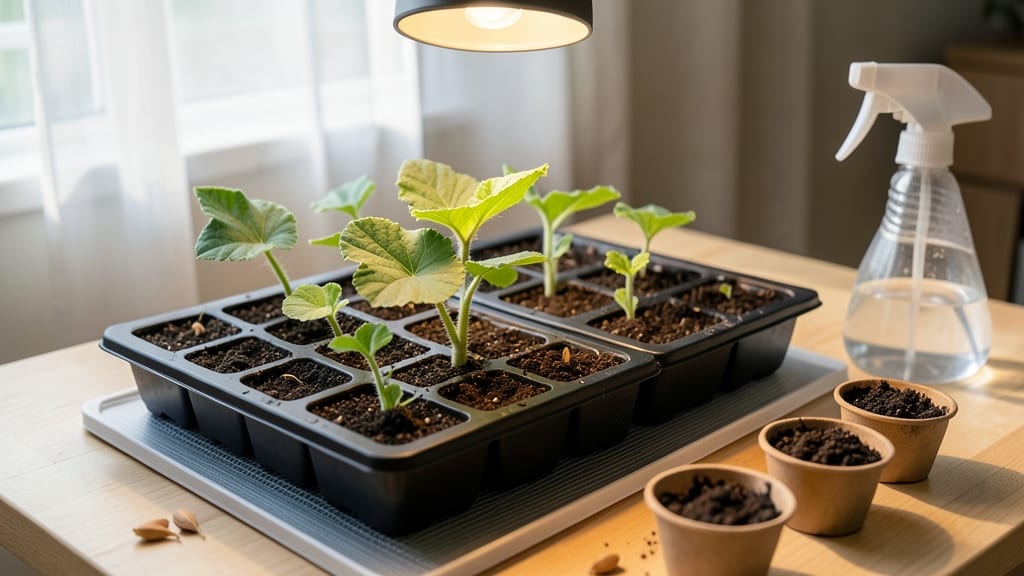
Starting butternut squash seeds indoors 4-6 weeks before your last frost date is the secret to burly, productive plants that outshine weak nursery starts.
Picture this: leggy, pale seedlings stretching toward the light because you jumped the gun, or stunted vines struggling to catch up after a late start. The 8-week countdown before frost is your golden ticket to avoiding both fates—and it’s easier than you think.
But here’s the catch: your exact start date depends on your local frost timeline, soil warmth, and even the variety you’re growing.
In Zone 6a, that means seed trays in early March for most gardeners, but a few weeks earlier or later if you’re dealing with slow germination or an early spring.
Below, I’ll break down how to pinpoint your perfect start window, adjust for tricky conditions, and keep those seedlings thriving until transplant time—so you’re harvesting plump, sweet 🎃 come fall.
How to calculate your ideal indoor start date for butternut squash seeds
Butternut squash (Cucurbita moschata) needs a precise indoor start time to thrive. Begin too early, and you risk leggy, weak seedlings that struggle to transplant. Start too late, and your harvest window shrinks—or worse, your plants won’t mature before frost.
The key lies in a simple 8-week countdown from your last spring frost date, adjusted for your USDA hardiness zone.
First, find your average last frost date using the USDA Plant Hardiness Zone Map or your local agricultural extension office. For example, in Zone 6a (like much of the Midwest), the last frost typically falls around May 15.
Count backward 8 weeks to land on your ideal indoor start date—around March 15. This timeline ensures your seedlings are 4-6 weeks old and sturdy enough for transplanting after frost.
However, your zone matters. Gardeners in Zone 5 (colder climates) should start seeds 2-3 weeks earlier (by March 1), while those in Zone 7+ can wait until late March or early April.
Adjust for early spring warmth too—if your area experiences unseasonably warm spells in February, you might push your start date slightly later.
Once you’ve nailed your indoor start date, prioritize light and warmth. Place seeds under grow lights (14-16 hours/day) or in a south-facing window with supplemental lighting.
Keep soil temps at 80-90°F using a heat mat until germination (5-10 days). After sprouts appear, reduce heat but maintain 70°F+ daytime temps to prevent stunted growth.
Transplanting too soon is a common mistake. Wait until your seedlings have 2-3 true leaves and are 4-6 weeks old. Harden them off by gradually exposing them to outdoor conditions for 1-2 weeks before the last frost.
This acclimation process reduces shock and boosts survival rates. For Zone 6a, this means transplanting by May 25—but adjust based on your local frost data.
If you’re in a warmer microclimate (e.g., near a lake or urban heat island), you might transplant 1-2 weeks earlier. Conversely, high-altitude gardeners should delay transplanting until soil temps consistently hit 60°F+, even if frost dates suggest otherwise. Always check 7-day forecasts before moving seedlings outdoors.
For container gardeners, choose 5-gallon pots or larger—butternut squash vines spread widely and need room. If space is limited, opt for bush varieties like 'Waltham' butternut, which mature in 80-90 days instead of the standard 100-120 days. This gives you a 2-4 week head start on harvest timing.
Track your progress with a seedling journal. Note germination dates, leaf counts, and any pests or diseases (like powdery mildew). This helps you refine your next year’s timeline and troubleshoot issues early. For example, if your seedlings bolt (send up flowers) too quickly, you may have started too
Critical factors that change your butternut squash seed starting timeline
Your butternut squash seed starting timeline isn't one-size-fits-all—it shifts based on soil warmth, daylight hours, and even the variety you choose. Cold soil delays germination by weeks, while longer daylight speeds up growth.
Ignoring these factors can leave you with weak seedlings or a harvest that arrives too late for optimal flavor.
For example, in Zone 5, I start seeds by March 1st to ensure they're ready by May's last frost, but in Zone 8, a March start risks overheating.
The key is balancing seedling maturity (80-100 days to harvest) with your local frost date—because a slow-growing variety like 'Waltham Butternut' needs more time than 'Gold Rush', which matures in just 85 days.
🌱
Start Early (8-10 Weeks Before Last Frost)
- ✅ Pros: Seedlings mature before frost
- ✅ Stronger transplants with more time
- ✅ Better for slow-growing varieties
Start Late (6-7 Weeks Before Last Frost)
- ✅ Cons: Risk of leggy seedlings
- ✅ Needs perfect light conditions
- ✅ Only works for fast varieties
Fast Varieties (e.g., 'Gold Rush')
- ✅ Pros: 85-day maturity
- ✅ Can start 6-7 weeks before frost
- ✅ Less risk of frost damage
Slow Varieties (e.g., 'Waltham')
- ✅ Cons: Needs 100+ days
- ✅ Requires 8-10 week start
- ✅ Needs warmer soil for germination
Soil temperature is your first hurdle: butternut squash seeds need 60-70°F soil to germinate. If your soil is cooler, use a heat mat or wait until nighttime temps stay above 55°F.
I’ve seen germination drop from 5 days to 2 weeks when soil was only 50°F—that’s a critical delay for your planting schedule.
Daylight length also plays a sneaky role. Shorter winter days stretch seedlings out, making them weak and spindly. To combat this, I supplement with a grow light for 14-16 hours daily. Without it, seedlings grow toward any available light, creating a leggy mess that’s hard to recover.
Even in spring, if your region gets less than 12 hours of daylight, extend light exposure to prevent stretching.
Unexpected weather throws another wrench in the works. A late frost can buy you time, while early warm spells might trick you into starting too soon. I always keep a backup plan: if germination stalls after 14 days, I replant a fresh batch.
Slow germination is common with old seeds or inconsistent moisture—never let soil dry out completely, or you’ll sacrifice weeks of growth.
🌿