
Propagation
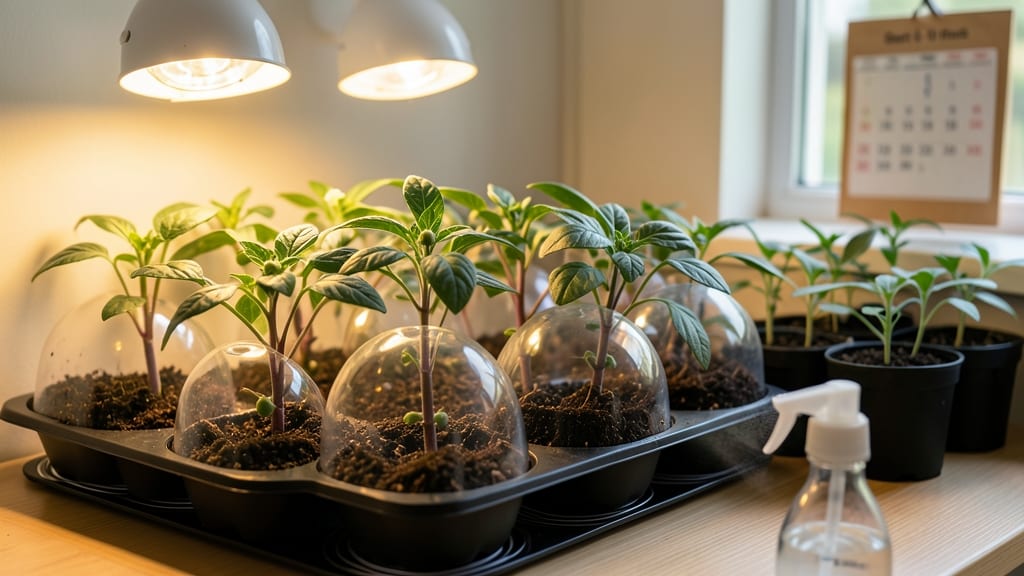
Starting hot pepper seeds indoors 8 weeks before your last frost is the secret to a bumper crop of fiery peppers 🌶️—but get the timing wrong, and you’ll either waste weeks on weak seedlings or miss the harvest window entirely.
Picture this: leggy, pale seedlings stretching toward a dim window, or robust plants already flowering when nighttime temps still dip below 50°F. Both scenarios mean lost time, money, and maybe even a failed crop.
The key? A precise countdown that accounts for your local climate, pepper variety, and indoor growing conditions.
Most gardeners in USDA Zone 6a (like me) start seeds in early February, giving peppers 10-12 weeks to mature before the last frost in mid-April. But if you’re in a warmer zone or the Southern Hemisphere, your window shifts dramatically—and so do the risks of bolting or stunted growth.
In this guide, I’ll break down the exact 8-week timeline for your region, plus how to adjust for slow germinators, grow lights, and transplanting like a pro. No more guesswork—just a foolproof plan for peppers that thrive from seed to harvest.
Hot pepper seed starting timeline: exact weeks before last frost
Timing your hot pepper seeds indoors is all about the 8-week rule, but your local climate zone changes everything. In USDA zones 5-8, where most home gardeners grow peppers, your start date shifts dramatically based on your last frost date and pepper variety maturity.
Get this wrong, and you’ll either have overcrowded seedlings or plants that bolt before producing peppers.
Hot peppers thrive in warm conditions and need 8-10 weeks indoors before transplanting outside. However, shorter-season varieties like jalapeños (60-70 days) can start slightly later, while longer varieties like habaneros (100+ days) require earlier starts.
Your local frost-free date is the anchor—count backward from there, and you’ll nail the perfect window.
🌱 Key Insight: Most gardeners in zones 5-8 start seeds in February or early March, but your exact date depends on whether you’re in a cooler Northern zone (5-6) or a warmer Southern zone (7-8). Let’s break it down by zone so you can calculate your precise start date.
| Climate Zone | Last Frost Date (Approx.) | Seed Start Window | Transplant Ready Date | Hot Pepper Variety Examples |
|---|---|---|---|---|
| Zone 5 | May 15 | March 15 - March 30 | May 1 - May 15 | Jalapeño, Bell Pepper |
| Zone 6 | April 20 | February 20 - March 15 | April 15 - April 30 | Cayenne, Serrano |
| Zone 7 | March 25 | January 20 - February 15 | March 15 - March 30 | Habanero, Thai Chili |
| Zone 8 | February 15 | December 15 - January 15 | February 1 - February 15 | Ghost Pepper, Carolina Reaper |
💡 Pro Tip: Adjust for short-season varieties by starting 1-2 weeks later, or extend the indoor period for longer-maturing peppers.
If you’re in zone 5, your last frost date is typically mid-May, so aim to start seeds by late March. This gives your seedlings 8 weeks indoors before transplanting in early May.
In zone 8, where frost is rare by February, you can start as early as mid-December for a spring transplant.
For gardeners in zones 9-10, the rules relax slightly—you can start seeds year-round, but winter starts (December-February) ensure peppers mature before summer heat peaks. However, most gardeners in these zones direct-sow in late winter to avoid transplant shock.
Here’s how to calculate your exact start date: Find your last frost date (check your local USDA zone map or extension office), then subtract 8-10 weeks. For example, if your last frost is April 15, start seeds by February 15 for a 9-week indoor period.
Use this formula for any pepper variety.
One common mistake is assuming all peppers follow the same timeline. Short-day varieties (like some habaneros) need 10-12 weeks indoors, while long-day varieties (like bell peppers) can handle 7-8 weeks. Always check the days to maturity on your seed packet—this is your non-negotiable deadline.
Don’t forget: Indoor lighting affects growth speed. If you’re using grow lights, seedlings may mature faster, allowing you to start slightly later. Without sufficient light, seedlings stretch and weaken, delaying transplant readiness. A 14-16 hour light day is ideal for hot peppers.
Once you’ve locked in your start date, mark it on your calendar and prep your seed-starting supplies—sterile seedling mix, heat mat (optional but helpful), and grow lights. With this timeline, you’ll have robust, healthy transplants ready to hit the garden at the perfect moment.
Critical factors that change your hot pepper seed starting time
Your hot pepper seeds don't follow a one-size-fits-all schedule—light exposure, temperature control, and pepper variety can shift your starting window by weeks. For example, jalapeños (60-75 days to maturity) need earlier starts than habaneros (90-120 days), which require more time to bear fruit.
Even a south-facing window vs. grow lights changes when you should begin sowing.
Temperature is another game-changer: seeds need 75-85°F soil to germinate, while seedlings thrive at 60-70°F during the day. If your home stays cooler, you might need to start seeds 2-3 weeks earlier to compensate. Ignoring these factors often leads to leggy seedlings or plants that bolt before producing peppers.
⚠️ WARNING: Timing Mistakes Can Ruin Your Harvest
Critical Timing Errors to Avoid
- Starting too early: Overcrowded trays and disease risk from damp conditions.
- Starting too late: Weak, stunted transplants with shorter harvest windows.
- Ignoring maturity days: Plants may bolt before fruiting in cooler climates.
🌱 Pro Tip: Adjust your start date by checking your pepper variety's days to maturity and local frost dates.
Let’s break down how each factor affects your schedule. Light exposure is critical—peppers need 14+ hours of light daily to prevent stretching. Without enough light, seedlings grow tall and spindly, making them vulnerable to breakage.
If you’re using a south-facing window, start seeds 4-6 weeks earlier than if you’re relying on grow lights, which give you more control over timing.
Temperature control extends beyond soil warmth. Seedlings struggle in drafty spots or near heating vents, which can cause uneven growth. Use a seedling heat mat (75-85°F) for germination, then move to a consistent 60-70°F environment once sprouted.
In Zone 5-6, this might mean starting seeds in late February, while Zone 8-10 gardeners can wait until mid-March.
Variety matters more than you think. Bell peppers (60-70 days) can start 2 weeks later than Carolina Reapers (120+ days), which need the full 8-10 week indoor head start.
Even within the same heat level, jalapeños and serranos have different growth rates. Always check the seed packet for days to maturity and adjust your schedule accordingly.
Troubleshooting delayed germination? Check your soil temperature—if it’s below 70°F, seeds may take 2-3 weeks longer to sprout. Stunted growth? Your seedlings might need more light or fertilizer.
And if your peppers bolt (send up flowers too early), you likely started them too late for your climate. Use these clues to fine-tune next year’s schedule.