
Flowers
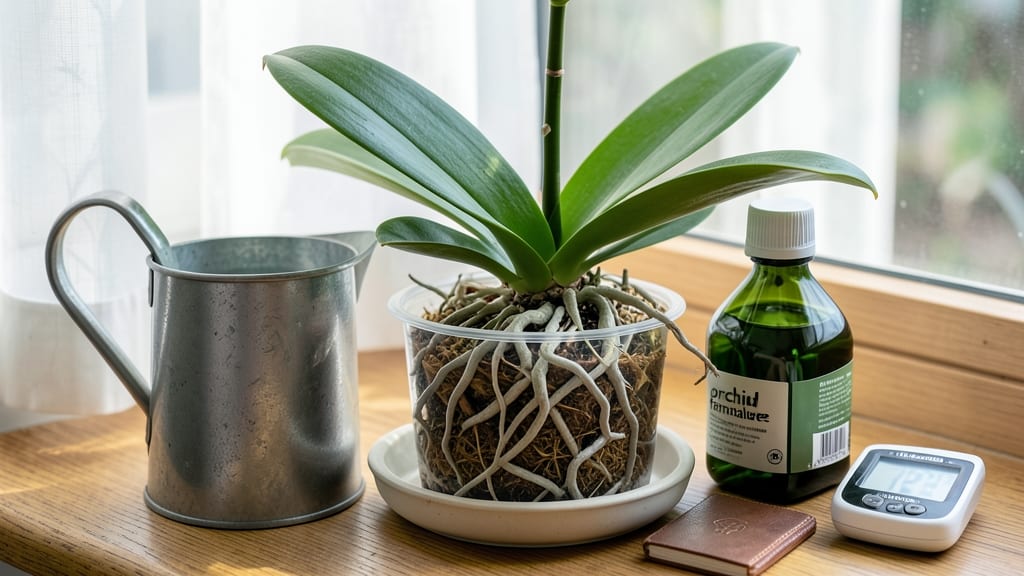
Why are my indoor orchids all roots and no flowers? That lush root system means your plant is thriving, but without blooms, something’s missing. Most growers overlook the subtle balance between light, nutrients, and dormancy cues that trigger flowers instead of just roots.
The biggest culprits? Too little light (orchids need bright, indirect light for 12+ hours daily) or over-fertilizing with nitrogen-heavy mixes. I’ve seen orchids with roots for years but no flowers because they were getting all the "food" for growth but none of the "signal" to bloom.
Even pot size matters—a cramped root system can’t support flowers.
Fix it by moving your orchid to a south- or east-facing window (or under grow lights) and switching to a bloom-boosting fertilizer. Cut back on watering slightly in winter to mimic natural dormancy—this trick alone often triggers buds within 8-12 weeks. The payoff? Stunning blooms that last for months.
Pro tip: Repot every 1-2 years into a slightly larger pot with fresh bark mix. Overcrowded roots can’t focus on flowers. Once you adjust these, your orchid will shift from root monster to bloom machine—no more frustration, just beauty.
The Hidden Triggers Behind No Blooms
Orchids are masters of survival, often prioritizing root growth over flowers when conditions aren’t ideal. If your indoor orchids are thriving with lush roots but stubbornly refuse to bloom, the issue likely stems from one (or more) of these key environmental or care-related factors.
Let’s break down the science—and what you can do about it.
Orchids are epiphytes, meaning they naturally grow in trees or rocks where nutrients and water are scarce. When conditions are too favorable—especially with excess nutrients or water—your orchid shifts energy from flowering to aggressive root expansion. Here’s why:
- Too Much Fertilizer 📊 Orchids thrive on low-nutrient conditions (think "just enough, not too much").
Over-fertilizing (especially with high nitrogen) signals the plant: "Hey, there’s plenty of food—let’s grow roots instead of flowers!" Nitrogen is the "growth hormone" for foliage and roots, while phosphorus (P) and potassium (K) trigger blooming.
A balanced 10-10-10 or 20-20-20 fertilizer is fine, but dilute it to half-strength and feed only every 2–4 weeks in spring/summer (skip fall/winter).
- Root-Bound Stress (But Not Enough) 🪴 While slightly root-bound orchids can bloom, extreme root congestion (where roots circle the pot like a pretzel) actually stresses the plant, halting flower production.
However, if the roots are too loose or the pot is too large, the orchid wastes energy trying to fill empty space. Solution: Repot every 1–2 years into a container 10–20% larger than the root ball, using firm bark mix (not loose soil).
Orchids need bright, indirect light—think of it as a sunbathing lounge, not a direct-beam tanning bed. Too little light = leggy roots, no blooms. Too much? Sunburned leaves and stalled growth. Here’s the breakdown:
- Not Enough Light 🌑 Without sufficient photosynthesis fuel, orchids conserve energy by pausing flowers.
Signs of low light: - Dark green, thin leaves (instead of silvery-green or speckled). - Long, weak stems (stretching toward the light). - No flower spikes for months. Fix: Move to a south- or east-facing window (or west with filtered light).
If indoors lacks natural light, supplement with a grow light (12–14 hours/day, 6–12 inches away).
- Too Much Direct Sun 🔥 Southern windows or harsh afternoon sun can scorch leaves, causing the orchid to shut down flowering as a survival tactic.
Look for: - Yellow or brown patches on leaves. - Crispy leaf edges. Fix: Use sheer curtains or place 1–2 feet away from the window. Variegated orchids (like Phalaenopsis) are more sun-tolerant but still need dappled light.
Orchids hate soggy roots—their roots need oxygen to absorb nutrients. When watering is off, the plant prioritizes root repair over blooms.
- Overwatering (The #1 Killer of Blooms) 💦 Root rot (from sitting in wet media) triggers a stress response, halting flower production.
Signs: - Mushy, black roots (healthy roots are silver-green when dry, green when wet). - Yellowing leaves or a sour, rotten smell. Fix: - Water only when the top 1–2 inches of mix are dry (stick your finger in—if it’s damp, wait). - Use a pot with drainage holes and a chunky bark mix (never soil). - Bottom-water (place the pot in a tray of water for 10–15 mins, then drain).
- Underwatering (The "Starvation Mode" Trap) 🏜️ While orchids store water in pseudobulbs (if they have them), chronic dehydration forces the plant to halt non-essential functions—like blooming.
Signs: - Wrinkled, shriveled leaves. - Dry, brittle roots (they’ll snap instead of bend). Fix: - Mist lightly 2–3 times a week (or use a humidifier). - Soak roots in room-temp water for 10 mins monthly to rehydrate.
Not all orchids bloom on a schedule—some need time to mature before they even consider flowering.
- Too Young 👶 Most orchids (especially Phalaenopsis) take 1–3 years to reach flowering age. If your plant is a baby (small leaves, no pseudobulbs), it’s biologically incapable of blooming yet.
- Over-Mature or Exhausted 🧓 After a big bloom, orchids need 6–12 months of recovery. If you’ve been re-potting or fertilizing aggressively, the plant may be too busy healing to produce flowers. Solution: Give it a rest period (lower temps, less water, no fertilizer in winter).
Orchids often require a temperature drop (even slightly) to initiate flowering. Without this cue, they stay in "growth mode" forever.
- No Temperature Fluctuation 🌡️ Most orchids need a 10–15°F nighttime drop (e.g., 65°F days, 55°F nights) to signal blooming time.
Without this, they keep growing roots. Fix: - Move to a cooler room at night (or near a window with drafts). - For Phalaenopsis, aim for 55–65°F nights in fall/winter.
- Sudden Temperature Shocks ❄️ Extreme cold or heat (below 50°F or above 90°F) can shock the plant, halting all growth—including flowers. Keep temps stable between 60–80°F during the day.
Pro Tip: 🌟 If your orchid has never bloomed, it might be waiting for the right conditions. Try adjusting one factor at a time (light, fertilizer, or temp) and track changes for 3–6 months.
Quick Fixes for Orchid Blooms
Now that you know the root causes (pun intended!) behind your orchid’s reluctance to bloom, let’s tackle the solutions with targeted, actionable steps. Below, we’ve mapped each common issue to a straightforward fix—plus prevention tips to keep your orchids thriving and flowering year after year.
Problem: Too much moisture or stagnant water suffocates roots, starving the plant of oxygen and nutrients. Solution:
- 🔥 Drainage First: Repot your orchid in a well-draining mix (e.g., bark chips, sphagnum moss, or perlite). Avoid heavy soil like garden dirt.
- 🍳 Watering Routine: Water only when the top 1–2 inches of the mix feel dry (stick your finger in to test!). Use room-temperature water and let excess drain completely.
- 👨🍳 Airflow Boost: Place your orchid in a spot with gentle airflow (like near a fan on low) to speed up drying between waterings.
💡 Prevention Tip: Use a clear pot to monitor root health—healthy roots are silvery-green, while rotten roots turn mushy and black.
Problem: Too little light = weak growth; too much light = leaf burn. Orchids need bright, indirect light (like near an east or north-facing window). Solution:
- ⏰ Light Adjustment: Move your orchid to a bright spot (avoid direct afternoon sun). If natural light is limited, supplement with a grow light (LED or fluorescent) for 12–14 hours/day.
- 🎯 Temperature Test: Place your hand near the plant—if it’s too hot, the light is too intense. If it’s cool, the light is insufficient.
💡 Prevention Tip: Rotate your orchid quarter-turns weekly to ensure even light exposure and prevent lopsided growth.
Problem: Too many nutrients (especially nitrogen) push leafy growth but block flowering. Weak or diluted fertilizer can also fail to trigger blooms. Solution:
- 🔪 Fertilizer Reset: Switch to a balanced orchid fertilizer (e.g., 20-20-20 or 10-10-10) and dilute to half-strength. Fertilize only every 2–4 weeks during active growth (spring/summer).
- 🍎 Nutrient Break: Stop fertilizing 2–3 months before you want blooms (e.g., if you want flowers by Christmas, cut off fertilizer in October).
- 🥗 Organic Boost: For a natural kick, use weak compost tea or fish emulsion (1 tsp per gallon of water) once a month.
💡 Prevention Tip: Flush the roots with plain water monthly to prevent salt buildup from fertilizer.
Problem: Orchids need a 10–15°F nighttime drop to trigger blooming. Without this, they stay in "vegetative mode." Solution:
- 🌡️ Temperature Trick: Place your orchid near a window at night where temps drop naturally (e.g., a screened porch or basement window). If your home stays too warm, use a small fan to simulate airflow changes.
- 🎯 Day-Night Split: Aim for 65–80°F days and 55–65°F nights. A heat mat under the pot (on low) can help if your home is too cold.
💡 Prevention Tip: If blooms still don’t appear after 3–4 months, try misting the leaves lightly in the evening to mimic humidity shifts.
Problem: Orchids only bloom after 1–2 years of growth.
If your plant is over 3 years old, it may need a growth spur to reboot. Solution: - 🔪 Prune & Divide: Cut back spent flower spikes (leave 1–2 nodes below the bloom) and divide the plant if it’s overcrowded.
Repot in fresh mix. - 🌱 Shock Therapy: Reduce watering for 2–3 weeks to stress the plant lightly—this can trigger new growth and future blooms.
💡 Prevention Tip: Replace old pots every 2–3 years, as roots outgrow their space and nutrients deplete.
If your orchid is healthy but still not flowering, try this 3-step trick:
- 🌞 Light Boost: Move it to the brightest spot (even if it’s artificial light).
- 🌡️ Cool Night: Drop temps by 10°F for 2–3 weeks (e.g., place near an AC vent at night).
- 🍃 Fertilizer Shift: Switch to a high-phosphorus fertilizer (e.g., 10-30-20) for 4 weeks to encourage blooming.
Remember: Orchids are patient plants—some take 6–12 months to respond to changes. Stick with the fixes, and you’ll see buds forming in no time! 🌸
Frequently asked questions
Why do my orchid roots look so healthy but still won’t bloom?
Healthy roots mean your orchid is thriving, but blooms require a different energy signal. Orchids prioritize roots when they sense excess nutrients (especially nitrogen) or stable, warm conditions. The key is to mimic their natural seasonal cues—reduce fertilizer in fall/winter and create a 10°F nighttime temperature drop to trigger flowering. Even with lush roots, orchids need this "rest period" to shift focus from growth to blooms.
How often should I fertilize orchids if I want flowers?
For blooms, fertilize every 4-6 weeks during spring/summer with a balanced 20-20-20 or 10-10-10 mix, but dilute to half-strength. Stop fertilizing completely in fall/winter to let the plant rest. Too much nitrogen (the first number) promotes roots, while phosphorus (the second number) triggers flowers. A quick trick: Switch to a high-phosphorus fertilizer (like 10-30-20) for 4 weeks to encourage blooming.
Can I force my orchid to bloom if it’s been years since the last flowers?
Start with a light adjustment—move it to the brightest spot (east or south window) or use a grow light for 12-14 hours/day. Next, create a temperature shift: Keep days at 70-80°F and nights at 55-65°F for 2-3 weeks. Finally, reduce watering slightly and avoid fertilizer for 6-8 weeks to stress the plant gently. Many orchids respond within 8-12 weeks with flower spikes.
What’s the best pot size for encouraging orchid blooms?
Use a pot that’s 10-20% larger than the current root ball—too big wastes energy filling empty space, while too small stresses the plant. Clear plastic pots are ideal because they let you monitor root health (healthy roots should be silver-green when dry). Repot every 1-2 years into fresh bark mix to refresh nutrients. A slightly snug pot also helps trigger blooms by creating gentle root-bound stress.
My orchid had flowers last year but won’t bloom again—what went wrong?
After blooming, orchids need 6-12 months of recovery. Common mistakes include over-fertilizing (which promotes roots), not reducing water in winter, or keeping temps too warm. Try this reset: Cut back old flower spikes (leave 1-2 nodes), repot in fresh mix, and mimic fall conditions (cooler nights, less water). Most orchids reward patience with another bloom cycle within 9-12 months.