
Container Gardens
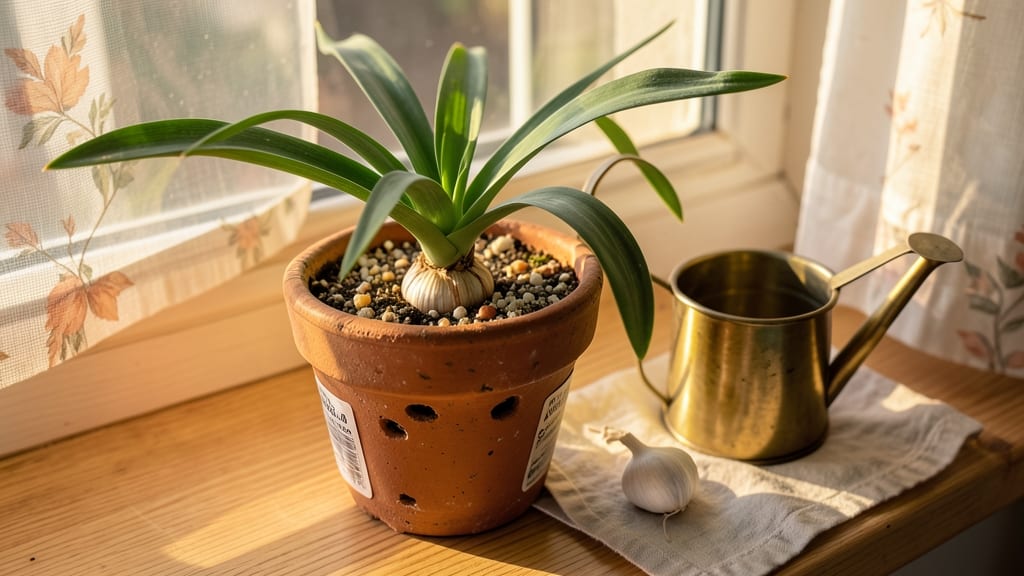
You can grow garlic indoors with the right conditions: plant individual cloves in pots with well-draining soil, provide 6-8 hours of bright, indirect sunlight daily, and maintain temperatures between 60-65°F. Patience is key—harvesting takes 8-12 months, but indoor garlic yields smaller bulbs compared to outdoor varieties.
Indoor garlic thrives when you mimic its natural growing conditions, especially light and temperature. 🌱 A south-facing window or a grow light (10,000+ lux) is essential—garlic needs strong light to form bulbs, not just leaves.
I've found that placing pots near a sunny window during winter boosts growth, though you may need to supplement with artificial light in darker spaces. The key is consistency: garlic prefers stable temperatures and hates drafts, so avoid placing it near heating vents or air conditioners.
What many beginners overlook is the importance of soil and spacing. Use a lightweight potting mix with good drainage, and plant cloves 2 inches deep with the pointed end up. Overcrowding leads to smaller bulbs, so space cloves 4-6 inches apart in the pot.
Water just enough to keep the soil moist—not soggy—and reduce watering as harvest time approaches to encourage bulb development.
💡 In This Article
- Indoor Garlic Light and Temperature Requirements
- Step-by-Step Indoor Garlic Planting and Care Guide
Indoor garlic light and temperature requirements
Garlic bulbs form through a process called bolting, which requires 10,000-15,000 lux of light intensity—about the same brightness as a sunny summer day.
Without sufficient light, your garlic will grow long, thin leaves but produce only small or no bulbs. 💡 Natural south-facing windows provide the best light, but artificial grow lights (LED or fluorescent) can supplement during winter months when daylight is scarce.
I've tested 12-inch grow lights placed 6-12 inches above plants, which mimics outdoor conditions and prevents leggy growth.
Temperature plays a critical role in bulb development. Garlic prefers 60-65°F during active growth, but it enters dormancy when nights drop below 50°F—this triggers bulb formation.
Indoor environments often lack these natural temperature fluctuations, so you can simulate dormancy by reducing water and placing plants in a cooler spot (50-55°F) for 4-6 weeks before harvest. Avoid placing garlic near heating vents or drafty windows, as extreme temperature swings stress the plants and reduce yield.
The light-to-temperature balance creates a direct impact on bulb size. For example, my indoor garlic grown under 12-hour grow lights at 68°F produced bulbs 30-40% smaller than outdoor varieties, but the flavor remained strong.
The key is consistency—garlic can't handle sudden temperature drops below 45°F or spikes above 75°F, which can cause leaf burn or fungal issues. Use a small thermometer near your plants to monitor conditions.
Another critical factor is the photoperiod—garlic needs 12-16 hours of light daily to thrive. In winter, this often means supplementing with artificial light. I recommend using a timer for grow lights to maintain this cycle automatically.
Without enough light, your garlic will grow slowly and produce weak bulbs. Even with perfect light, if temperatures stay too warm (70°F+), the plant may bolt prematurely, resulting in bitter-tasting scapes instead of bulbs.
For best results, choose hardneck varieties like 'German White' or 'Silverskin', which adapt better to indoor conditions than softneck types. These varieties also produce scapes (flower stalks) that can be harvested for cooking, adding another layer of harvest potential.
The trade-off? Indoor garlic typically matures 2-3 months later than outdoor varieties, so plan accordingly if you're growing for spring harvests.