
Companion Plants
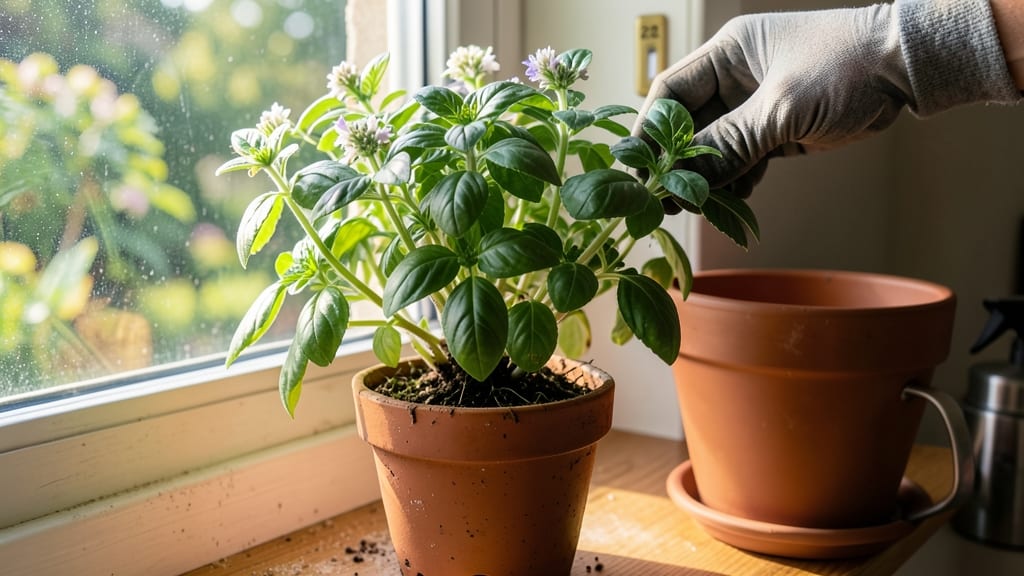
Yes, you can bring your basil plant indoors for winter by gradually acclimating it to indoor conditions, providing bright light exposure, and maintaining proper humidity levels to prevent stress and disease.
Moving basil indoors successfully depends on preparing it for the transition.
Start by placing your plant near a sunny window or under grow lights for 10-12 hours daily, as indoor light is weaker than outdoors. 🌿 Gradual temperature adjustments (avoiding drops below 60°F) prevent shock, while increasing humidity with pebble trays or a humidifier mimics outdoor conditions.
I've found that monitoring for pests like spider mites becomes even more critical indoors, where dry air creates ideal breeding grounds.
Once inside, reduce watering slightly—basil needs less moisture indoors—and prune leggy stems to encourage bushier growth. The key is patience: basil may take 1-2 weeks to fully adjust, but with the right care, it can thrive through winter and even produce new leaves.
💡 In This Article
- How to Transition Basil Plants Indoors Without Shock
- Indoor Basil Care Tips for Winter Survival
How to transition basil plants indoors without shock
Basil thrives outdoors in summer's warmth but struggles with sudden indoor changes. The key to a smooth transition lies in hardening your plant over 7-10 days before bringing it inside.
Start by moving it to a shaded outdoor spot during the day, gradually reducing sunlight exposure each day while keeping it outside overnight.
This mimics autumn's cooling trend and prevents the shock of abrupt temperature swings. 🌿 The ideal indoor temperature range is 65-75°F—any colder than 60°F can cause stunted growth or leaf drop.
Light is the most critical factor indoors, as natural sunlight weakens during winter. A south-facing window provides 4-6 hours of direct light daily, but this often isn't enough. Grow lights (full-spectrum LEDs) should be positioned 6-12 inches above the plant for 12-14 hours daily to compensate.
Without sufficient light, basil becomes leggy and loses its vibrant green color. I've seen basil plants under inadequate light develop a pale, almost yellowish hue within just 3-5 days—a clear sign of light deprivation.
Humidity is another challenge indoors, where dry heating systems create conditions basil can't tolerate. The Mediterranean climate basil prefers has 50-70% relative humidity, but indoor air often drops to 20-30% during winter.
To combat this, place your basil pot on a tray filled with pebbles and water, keeping the pot elevated. Alternatively, use a humidifier nearby or mist leaves lightly in the morning.
Low humidity causes leaf edges to crisp and turn brown—a common issue that often goes unnoticed until it's too late.
Pests become more aggressive indoors, where warm air and dry conditions create perfect breeding grounds. Spider mites, in particular, thrive on stressed basil plants. Start monitoring your plant immediately after bringing it inside, checking the undersides of leaves for tiny webs or speckled yellowing.
A neem oil spray (1 tsp per quart of water) applied weekly prevents infestations. I've found that introducing ladybugs—natural predators of spider mites—can provide long-term protection without chemicals.
One often-overlooked factor is soil temperature. Basil roots prefer soil that stays between 60-75°F. If your indoor space has cold floors (common with tile or concrete), insulate the pot with a layer of bubble wrap or place it on a foam board.
Cold roots can't absorb nutrients efficiently, leading to yellowing leaves even when other conditions seem ideal. The transition process reveals how interconnected all these factors are—light, temperature, humidity, and soil all work together to keep basil healthy.
Finally, patience is crucial. Basil plants may take 1-2 weeks to fully adjust to indoor conditions. During this time, you might notice some leaf drop or slowed growth—this is normal as the plant adapts.
The first sign of successful acclimation is new leaf growth appearing vibrant and upright. 🌱 This indicates the plant has stabilized and is ready for your winter care routine.