
Container Gardens
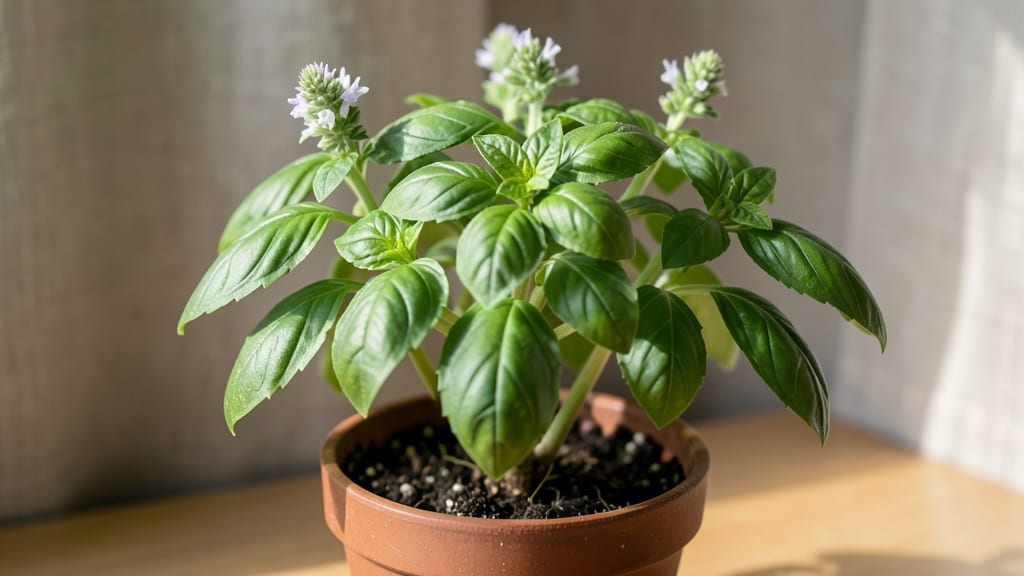
Growing sweet basil indoors turns your kitchen window into a fragrant herb factory 🌿—no greenhouse or fancy equipment needed. I’ve grown basil indoors for years, and the secret is matching its Mediterranean roots to what you can provide: bright light, consistent moisture, and a little pruning love.
The first time I saw purple stems turn green again after a simple trim, I was hooked.
Start with a 6-inch pot and well-draining potting mix (no garden soil!). Basil thrives in 4-6 hours of sunlight daily—a south-facing window or a grow light works perfectly. Water when the top inch feels dry, but never let it sit in soggy soil.
A spray bottle keeps humidity up, since indoor air is often too dry for basil’s tropical taste.
Pinch off flowers to encourage leaf growth, and harvest regularly by cutting stems just above leaf pairs. With the right care, your plant will stay productive for 6+ months, giving you fresh basil for pesto, salads, and more—no store-bought wilt ever again. The smell alone makes it worth it.
This method works in apartments, kitchens, or even bathrooms with good light. The key is consistency: basil forgives minor mistakes but rewards attention with bold, flavorful leaves all year. Ready to grow?
📚 In This Guide
- What you need
- Instructions
- Tips and common mistakes
- Wrapping up and next steps
What you need
- ● Sweet basil seeds or seedlings: Choose Genovese, Purple Ruffles, or Spicy Globe varieties for flavor and aesthetics. Quantity: 3–5 seeds per pot (or 1–2 seedlings).
- ● Containers: Use pots with drainage holes (4–6 inches in diameter for 1–2 plants). Materials: Terracotta, ceramic, or fabric grow bags. Quantity: 1–2 pots per plant.
- ● High-quality potting mix: Opt for a well-draining blend (e.g., 60% peat/coir, 30% perlite, 10% vermiculite). Avoid garden soil!
- ● Drainage trays or saucers: To catch excess water and prevent root rot. Quantity: 1 per pot.
- ● Watering can or spray bottle: For gentle, even hydration. Tip: A rose attachment helps avoid soil displacement.
- ● Grow lights or sunny windowsill: Natural light: South- or west-facing window (6+ hours of sunlight daily).
- ● Artificial light: LED grow lights (12–16 hours/day, 6–12 inches above plants). Wattage: 20–40W per plant.
- ● Fertilizer: Balanced liquid fertilizer (e.g., 10-10-10 or fish emulsion). Frequency: Every 4–6 weeks.
- ● Pruning shears: Sharp scissors for harvesting and shaping (sterilize with rubbing alcohol!).
- ● Humidity dome or plastic wrap: Keeps seedlings cozy until germination (remove after sprouts appear!).
- ● Self-watering planters: Reduces maintenance for busy plant lovers.
- ● Basil companion plants: Try thyme or parsley in the same pot for a fragrant duo!
- ● pH test kit: Ideal soil pH for basil: 6.0–7.0.
Step-by-step instructions for growing sweet basil indoors
Here’s how to grow lush, flavorful basil year-round using just a sunny windowsill and basic supplies.
🌱 Step 1: Choose and Prepare Your Containers
Select containers with drainage holes—6-inch pots work perfectly for each plant. I like terra cotta because it breathes and prevents root rot, but any container with drainage will do. Fill each with high-quality potting mix, not garden soil, since it compacts too much indoors.
Press the soil down lightly to remove air pockets, then water it until moisture runs freely from the drainage holes. This ensures even moisture distribution from the start. If your mix is too dry, add water gradually until the surface feels damp but not soggy.
🌿 Step 2: Plant Seeds or Transplants Correctly
For seeds, sow 2-3 per pot at a depth of ¼ inch. Cover lightly with more potting mix and mist gently with water. If using transplants, dig a hole twice as wide as the root ball and place the plant so the top of the roots sits just below soil level.
Thin seedlings to one strong plant per pot once they develop 2-3 true leaves. I pinch off the weaker stems at the base—this prevents competition and encourages bushier growth. Keep the soil consistently moist but never waterlogged during this phase.
☀️ Step 3: Position for Optimal Light
Basil thrives in 6+ hours of direct sunlight daily. A south-facing window is ideal, but east or west works too. If your basil stretches toward the light with pale leaves, it’s not getting enough. Rotate the pot a quarter turn weekly so all sides grow evenly.
If natural light is insufficient, supplement with a grow light kept 4-6 inches above the plant for 12-14 hours daily. You’ll notice leaves darken and stems thicken within a week—this means your light is working. Avoid placing basil near cold drafts, which stunt growth.
💧 Step 4: Water and Fertilize for Maximum Flavor
Water when the top inch of soil feels dry, which usually means every 2-3 days depending on humidity. I water at the base to avoid wetting leaves, which can cause fungal issues. Let excess water drain completely—basil hates soggy roots.
Feed with a balanced liquid fertilizer (10-10-10) every 4-6 weeks during active growth. You’ll taste the difference in flavor—fertilized basil has a richer, sweeter profile. Avoid over-fertilizing, though; too much salt burns roots and leaves.
✂️ Step 5: Prune and Harvest for Continuous Growth
Pinch off the top set of leaves when the plant reaches 6 inches tall. This encourages bushier growth and prevents legginess. Regular harvesting also boosts production—cut stems just above a leaf node to stimulate new branches.
Harvest leaves in the morning for peak flavor. You’ll see new growth within 1-2 weeks if you keep the plant well-lit and moist. If your basil flowers, snip them immediately—they signal the plant to focus on seeds instead of leaves, ruining flavor and yield.
Tips & tricks for perfect indoor basil growth
A few simple strategies will help you avoid common pitfalls and grow basil that tastes as fresh as store-bought—if not better.
Container Selection: While 6-inch pots work well, consider using self-watering pots for beginners. They maintain consistent moisture levels, which is crucial since basil hates soggy roots. If using terra cotta, soak the pots in water for 10 minutes before planting—this helps prevent cracks from sudden temperature changes.
Light Optimization: The 6+ hours of direct sunlight is non-negotiable, but don't overlook indirect light sources. Place your basil near a bright white LED bulb (like those used for task lighting) if natural light is limited. These bulbs emit less heat than grow lights while still providing the spectrum basil needs. Position it 8-12 inches away for best results.
Fertilizer Timing: When feeding with that 10-10-10 fertilizer every 4-6 weeks, split the dose into two applications—half now and half two weeks later. This gradual approach prevents salt buildup in the soil, which can actually burn roots. I also recommend using half the recommended strength on the first application to let your basil acclimate.
Harvesting Technique: Always harvest with clean, sharp scissors or pruning shears to avoid tearing leaves. Cut just above a leaf node (the point where leaves attach to the stem) at a 45-degree angle. This encourages branching and prevents water from pooling on the cut stem, which can cause rot. Morning harvests yield the most flavorful leaves because the plant's natural sugars are at their peak after a night's rest.
Pro Tips for Grow Sweet Basil Indoors
- A few simple strategies will help you avoid common pitfalls and grow basil that tastes as fresh as store-bought—if not better.
- Container Selection: While 6-inch pots work well, consider using self-watering pots for beginners.
- Light Optimization: The 6+ hours of direct sunlight is non-negotiable, but don't overlook indirect light sources.
Frequently asked questions
Got questions about growing sweet basil indoors? You’re not alone—here are answers to the most common ones to help you thrive!
How much light does sweet basil need indoors?
Sweet basil thrives with 6–8 hours of bright, indirect sunlight daily. A south-facing window or a grow light (12+ inches away) works best. If leaves yellow or stretch, it’s a sign of insufficient light—adjust placement or supplement with artificial light.
How often should I water indoor sweet basil?
Water when the top inch of soil feels dry (about 1–2 times per week). Overwatering causes root rot, so ensure pots have drainage holes. Pro tip: Use room-temperature water and avoid soggy soil—stick your finger in to check!
When and how should I prune sweet basil?
Prune regularly to encourage bushiness: Snip the top leaves just above a pair of lower leaves when the plant reaches 6 inches tall. Harvest leaves as needed, but avoid cutting more than 1/3 of the plant at once to prevent stress.
What pests should I watch for, and how do I treat them?
Common pests include aphids, spider mites, and whiteflies. Spray infested areas with neem oil or insecticidal soap, or wipe leaves with a damp cloth. Isolate affected plants to prevent spread. Prevention tip: Keep your basil healthy with proper light and airflow!
Can I grow sweet basil indoors without a sunny window?
Yes! Use a grow light (LED or fluorescent) for 12–16 hours daily, positioned 6–12 inches above the plant. Rotate the pot occasionally for even growth. While natural light is ideal, grow lights make indoor basil possible year-round.
How long does sweet basil take to grow indoors?
From seed, expect 6–8 weeks for harvestable leaves. If starting with a young plant, you’ll see growth in 2–3 weeks. Patience pays off—consistent care yields flavorful basil faster!
Wrapping up and next steps
Growing sweet basil indoors is easier than you think—just a little sunlight, patience, and love can turn your kitchen into a fragrant herb garden! 🌱 With the right setup, you’ll enjoy fresh, vibrant leaves year-round, perfect for cooking, teas, or even homemade remedies.
Now that you’re equipped with the know-how, why not start your first plant today? Try propagating from a store-bought bunch or pick up seeds, and soon you’ll be harvesting basil like a pro.
Pro tip: Share your progress with fellow gardeners—inspiration grows when we connect! 🌟