
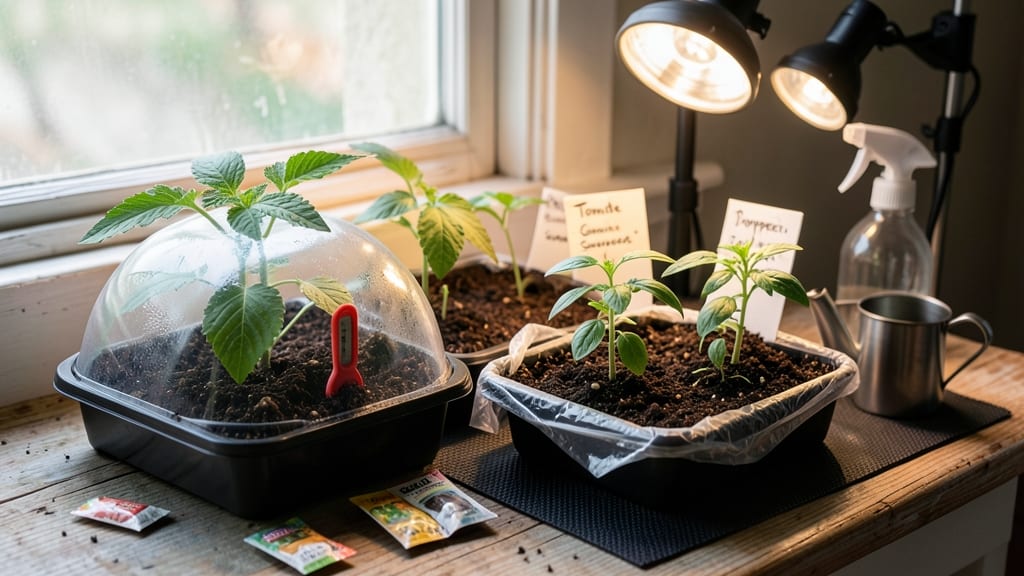
When to Start Seeds Indoors in Zone 7: Exact Week-by-Week Schedule for Stronger Plants

How To

When to Start Seeds Indoors in Zone 7: Exact Week-by-Week Schedule for Stronger Plants

To start seeds indoors in Zone 7, aim for 6-8 weeks before your last frost date — typically late February to early March — to give seedlings a strong, sturdy foundation before transplanting.

Timing your seed-starting schedule in Zone 7 can mean the difference between thriving seedlings and weak, leggy plants — so why leave it to guesswork? A few weeks off either way, and you’re either stuck with crowded trays or plants that bolt before they even set fruit.

Most General Vegetable Seeds (Zone 7) 🌱 need a head start indoors, especially warm-season crops like tomatoes and peppers, which won’t tolerate cold soil. Cool-season veggies like lettuce and broccoli can go in a little later, but rushing them risks leggy, etiolated seedlings.

Below, I break down the exact week-by-week schedule for Zone 7, including how to adjust for early heat spikes, the best containers to use, and how to avoid common pitfalls like damping-off or overcrowding.

Zone 7 seed starting timeline: exact weeks before last frost for 20+ common vegetables

Getting your Zone 7 seed starting timeline right means stronger seedlings and a more productive garden. With our last frost date typically around April 15, timing is everything—start too early, and you’ll deal with leggy, overcrowded seedlings; too late, and your plants won’t mature before summer heat.

This schedule covers 20+ common vegetables, from tomatoes to broccoli, so you can plan with confidence for 2024.

For Zone 7 gardeners, the key is understanding each plant’s days to maturity and transplant timing. Warm-season crops like peppers and eggplants need a long indoor head start, while cool-season lettuce and spinach can go straight into the ground earlier.

Below, I’ve broken down the exact weeks before last frost to start seeds indoors, plus transplant windows for each variety.

Pro Tip: Use a seedling heat mat for slow germinators like peppers (70°F soil temp) and keep grow lights 12-16 inches above seedlings to prevent stretching. Adjust your schedule if you experience late frosts—some years, the last frost can hit May 1 in Zone 7’s cooler microclimates.

Vegetable Weeks Before Last Frost to Start Indoors Transplant Outdoors Days to Maturity Notes
Tomatoes 6-8 weeks April 20-May 1 60-85 days Needs warm soil; use heat mat for germination.
Peppers 8-10 weeks May 1-15 60-90 days Slow to germinate; keep soil at 75°F+.
Eggplant 8-10 weeks May 1-15 70-90 days Loves heat; wait until soil is 60°F+.
Broccoli 6-7 weeks March 20-April 10 50-80 days Cool-season crop; avoid transplant shock.
Lettuce 4-6 weeks March 1-April 15 30-60 days Can direct-sow; succession plant every 2 weeks.
Cucumbers 3-4 weeks April 20-May 10 50-70 days Fast grower; use trellis for vertical space.
Spinach 4-6 weeks March 1-April 10 30-50 days Bolt-resistant varieties like 'Bloomsdale' work well.
Basil 6-8 weeks April 20-May 1 30-45 days Hates cold; wait until soil is 50°F+.

How to adjust your seed starting schedule for Zone 7’s unique climate challenges

Zone 7 gardeners face a tricky balancing act: late spring frosts can damage tender seedlings, while early heat waves can scorch them before they're ready for transplanting.

My 2024 schedule starts seeds in late February for cool crops like broccoli, but I adjust timelines based on soil temperature trends—not just calendar dates.

One of my biggest mistakes was starting tomato seeds too early. By mid-March, my seedlings were 6 inches tall but leggy from stretching toward weak winter light. The solution? Delay warm-season starts until early March and use grow lights immediately to prevent this common pitfall.

⚠️ callout warning ⚠️

Zone 7 Warning: Don't rely on average last frost dates—your local microclimate matters! Check 5-year frost records for your specific area. For example, Charlottesville averages frost by April 15, but Richmond often sees late frosts until May 1. Adjust your schedule 2 weeks earlier if you're in a frost-prone pocket.
Pro Tip: Use a soil thermometer—most seeds need 65-75°F soil to germinate. If your indoor temps hover above 75°F, your seedlings may rot before sprouting. I keep my seedling trays on a heat mat set to 70°F for consistent germination.

For heat-loving plants like peppers and eggplants, I've learned to start seeds 4-6 weeks later than tomatoes. These plants hate cold soil and will stunt if transplanted before the ground reaches 60°F. My trick? Use biodegradable pots and keep them in a cool greenhouse until soil warms naturally.

Light is another critical factor in Zone 7. My south-facing windows provide only 4 hours of direct light in winter, so I supplement with LED grow lights on a 14-hour timer.

Without this, my basil seedlings grow tall and weak—perfect conditions for damping-off disease. I also rotate trays daily to prevent uneven growth.

Don't forget about hardening off—this 7-10 day process is crucial in Zone 7's variable spring weather. I start by placing seedlings outside for 2 hours daily, gradually increasing to full sun exposure.

Skipping this step means your plants will bolt or wilt when transplanted into real garden conditions.

Finally, keep a seedling journal to track what works each year. Note when you started seeds, germination rates, and any weather anomalies. Last year, an unexpected heatwave in April forced me to delay transplanting by 3 weeks—something I'll account for in future schedules.

With these adjustments, you'll avoid the common mistakes that turn promising seedlings into garden disappointments. 🌱

★★★★★4.7(1 review)
Categories How To